

A corporate scavenger hunt is a structured team building activity where participants work in small groups to find items, solve clues, complete challenges, or accomplish tasks — in an office, outdoors, virtually, or across a city. It is one of the most effective team building activities for improving communication, collaboration, and cross-departmental connection because it creates genuine shared challenge rather than manufactured fun. This guide covers every format, 50+ ideas organized by use case, how to plan one, how to run one, and how to know when to bring in a professional facilitator.
What Is a Corporate Scavenger Hunt?
A corporate scavenger hunt is a team-based activity where groups of employees work together — under time pressure, across a defined space, and toward a shared goal — to find items, solve clues, complete physical or creative challenges, or accomplish tasks that require genuine collaboration.
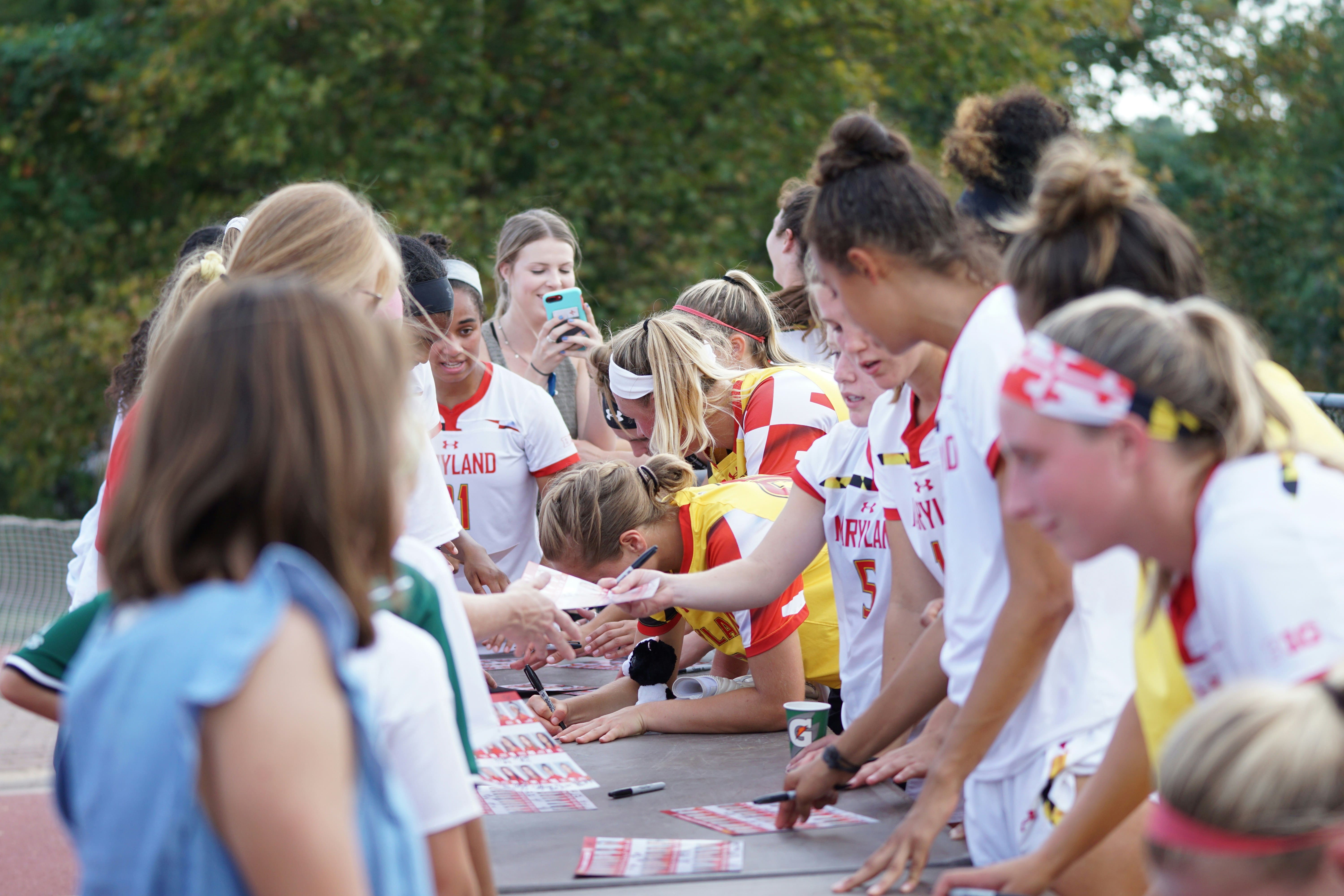
Unlike most team building activities that involve sitting and listening, a scavenger hunt demands active, distributed participation. Every team member has a role. Decisions happen fast. Communication breakdowns become immediately visible — and immediately fixable — in real time.
That combination of movement, mild pressure, and shared stakes is what makes corporate scavenger hunts one of the most versatile and genuinely effective team building tools available. They work indoors and outdoors, in-person and virtually, for teams of 10 and teams of 2,000. They can be run in 45 minutes or designed as a half-day program. They can be lighthearted, brand-aligned, competitive, philanthropic, or built around specific learning objectives.
Full Tilt Teams has designed and facilitated corporate scavenger hunt events for groups across North America for years. What we consistently see: the teams that get the most from a scavenger hunt aren't the ones that win — they're the ones where the activity surfaces something real about how they work together, and someone names it afterward.
This guide gives you everything: ideas, formats, planning frameworks, clue templates, and the honest answer to whether you should run it yourself or bring in a professional.
Why Scavenger Hunts Work for Team Building (The Science)
Corporate scavenger hunts aren't just popular because they're fun. They work because the structure of a well-designed hunt replicates — in a low-stakes environment — the exact dynamics that determine whether a team succeeds or fails in real work.
They force genuine communication. A study cited by organizational psychology researchers consistently shows that 69% of managers report discomfort communicating with employees — and communication barriers cost companies tens of millions annually in lost productivity. A scavenger hunt creates a context where clear, fast communication isn't optional. Teams that can't communicate cleanly fall behind. Teams that can, don't.
They build cross-departmental connection. Research from Future Workplace found that employees with strong workplace friendships are significantly less likely to leave their organization. Scavenger hunts, particularly when teams are deliberately cross-functional, create the kind of brief, warm, shared-success interactions that workplace friendships are built on.
They use experiential learning. David Kolb's Experiential Learning Theory — the same framework that underpins all of Full Tilt's team building programs — establishes that adults learn and retain most effectively through concrete experience followed by structured reflection. A scavenger hunt is the experience. A well-run debrief is the reflection. Together they create behavioral change rather than just entertainment.
The ROI is measurable. Research cited by team building analysts puts the return on structured team building investment at up to $7 for every $1 spent, measured through engagement, retention, and productivity metrics. Organizations implementing scavenger hunts specifically report 18% higher productivity and stronger team cohesion scores versus control groups.
They reveal real dynamics. Who leads under pressure? Who withdraws? Who finds creative solutions? Who delegates and who hoards decisions? A scavenger hunt surfaces all of this in 90 minutes — information that usually takes months to accumulate through normal work interaction. For leadership teams in particular, this diagnostic value is often more important than the activity itself. See how this connects to what we explore in team building interventions that actually work.
Scavenger Hunt vs. Treasure Hunt: What's the Difference?

These terms are often used interchangeably, but they describe structurally different activities — and choosing the wrong format for your team's goal is one of the most common planning mistakes.
Scavenger Hunt: Teams receive a list of items to find, photos to take, tasks to complete, or clues to solve — in any order, across a defined area. Non-linear. Teams can split up and tackle tasks simultaneously. Works best for larger groups, higher energy, and goals around collaboration and communication.
Treasure Hunt: Teams follow a sequential chain of clues — each clue leads to the next location, which reveals the next clue. Linear. The whole team moves together. Works best for smaller groups, leadership cohorts, onboarding, or situations where you want the team to experience a shared journey rather than a distributed challenge.
Most modern corporate programs blend both: an opening treasure-hunt-style clue leads to the base, then teams split into scavenger-style distributed challenges. Full Tilt's Scavenger Hunt program uses exactly this hybrid structure — sequential entry point, distributed execution, collective debrief.
Which is right for your team?
GoalBest FormatCross-functional connection, large groupScavenger HuntLeadership alignment, small groupTreasure HuntOnboarding new employeesTreasure Hunt or hybridHigh energy, competitive eventScavenger HuntCompany culture and values reinforcementCustom scavenger huntConference or offsite openerScavenger Hunt
Types of Corporate Scavenger Hunts
Before picking ideas, pick a format. The format determines everything else: planning complexity, facilitator requirements, materials needed, and what skills the activity actually develops.
1. Indoor Office Scavenger Hunt
Runs inside your workplace. Uses the physical office environment, company knowledge, colleagues, and available materials as the content of the hunt. Lowest planning overhead. No logistics. Works for any group size. Can run in as little as 30 minutes. Best for teams that are new to each other, onboarding cohorts, or teams with limited time or budget.
Full office scavenger hunt ideas are in the supporting article below →
2. Outdoor City Scavenger Hunt
Teams explore a defined urban area, completing photo challenges, finding landmarks, interacting with locals, and solving location-based clues. High energy. Requires more planning — route design, safety briefing, logistics coordination. Works best with 2 to 6 hours available. One of the most popular formats for corporate offsites and company retreats because it combines city exploration with team development. Full Tilt's outdoor team building programs are built around exactly this format.
3. Virtual Scavenger Hunt for Remote Teams
Runs entirely on video platforms. Participants search their home environments, complete digital challenges, submit photo/video evidence, and compete on a shared leaderboard. Zero travel, zero logistics. Works across time zones. Best for remote-first teams, distributed organizations, or as a complement to an in-person event for team members who cannot attend physically. See our full guide to virtual team building activities for the broader context.
4. Hybrid Scavenger Hunt
Some participants are in-person; others join remotely. The hunt is designed so both groups have equivalent experiences — no in-person advantage. Requires careful design to prevent the remote/in-person divide from widening rather than narrowing. When done well, hybrid hunts are one of the most powerful formats for distributed teams because the shared challenge makes location irrelevant.
5. Photo and Video Scavenger Hunt
Teams use smartphones to capture evidence of completed challenges — photos, short videos, creative interpretations of prompts. No physical items to collect. Digital submission. Works in any environment. Particularly effective because the review and voting process (teams vote on best submissions) extends the activity naturally and creates a shared artifact.
6. GPS or App-Based Scavenger Hunt
Teams use a scavenger hunt app (GooseChase, Actionbound) or GPS coordinates to navigate to locations, unlock clues, and submit evidence digitally. Real-time leaderboards. Scales to any group size. The technology layer adds energy and removes facilitation overhead — the app tracks everything.
7. Company Culture Scavenger Hunt
Designed around your organization specifically. Clues reference company history, values, products, clients, team members, and office culture. Reinforces institutional knowledge, helps new hires learn the organization, and creates a sense of shared identity. High customization requirement. Worth it for onboarding programs, annual events, and culture-building initiatives.
8. Charity Scavenger Hunt
Teams complete challenges that contribute to a charitable outcome — collecting donations, completing tasks for a partner nonprofit, or building something that gets donated. Combines the energy and collaboration of a scavenger hunt with the meaning and purpose of a CSR activity. Full Tilt's charitable team building programs include structured charity scavenger formats alongside programs like our Helping Hands and Bicycle Build activities.
50+ Corporate Scavenger Hunt Ideas (Organized by Format)
Indoor Office Scavenger Hunt Ideas
These are designed to run inside any workplace in 30 to 60 minutes. No external logistics. Works for 10 to 200 people split into teams of 4 to 6.
Knowledge and Culture Challenges
- Find and photograph the company's founding date displayed somewhere in the office
- Locate and recite the company's mission statement from memory — photograph the source
- Get a signature from someone in every department in the building
- Identify three core company values and find a physical example of each displayed in the office
- Find the most recent company award or recognition displayed anywhere in the office
- Locate a piece of office decor and explain in 30 seconds what it says about the company culture
People and Connection Challenges7. Find someone who has been at the company longer than 10 years and get one piece of advice from them — on camera8. Take a team photo with someone from a department you've never worked with directly9. Get three colleagues to demonstrate their most useful work skill in under 15 seconds each — on video10. Find someone whose job title you didn't fully understand and have them explain it to you — then explain it to camera yourself11. Get a colleague from each floor or wing to write one word describing the team on a sticky note — collect them all12. Take a photo where your whole team is holding something that represents your team identity
Creative and Problem-Solving Challenges13. Build the tallest freestanding structure possible using only items found at your desk — photograph it14. Create a 30-second commercial for the company using only office supplies as props15. Write and perform a company theme song using only three items from the office kitchen16. Recreate a famous painting using colleagues as subjects and office supplies as props17. Find five items that spell out the company name using their first letters18. Build a functioning paper airplane that travels at least 10 feet — video evidence required
Discovery and Exploration Challenges19. Find the oldest piece of technology still in use in the office20. Locate the emergency exit furthest from your team's usual workspace21. Discover a room or space in the building you've never entered before — photograph it with your team22. Find three items in the office that have been there since the company moved in23. Photograph your team in five distinctly different locations in the building within 10 minutes24. Find something in the office that shouldn't be there — most creative interpretation wins bonus points
Trivia and Knowledge Challenges25. Answer five questions about company history correctly — questions provided at the start26. Identify which team member joined the company in which year — most correct answers wins27. Find three pieces of information about the company's founding that most employees don't know28. Locate and name every piece of branded merchandise in the office
Outdoor Corporate Scavenger Hunt Ideas
These run outside the office — in a surrounding neighborhood, city center, park, or across a conference venue campus. Plan for 90 minutes to 4 hours. Teams of 4 to 6. Requires a safety briefing and defined boundaries.
City Exploration Challenges29. Find and photograph your team at five landmarks within a one-mile radius — with a creative pose at each30. ABC Photo Hunt: photograph something beginning with each letter of your company's name31. Find a business that has been operating for more than 25 years nearby and get their story on video32. Conduct a one-question street interview: "What's the most important thing about working in a great team?" — three responses minimum33. GPS Challenge: navigate to three pre-set coordinates and complete a 60-second task at each location34. Neighborhood History Hunt: find three buildings or plaques with historical significance and document what you learn
Creative and Competitive Challenges35. Food Challenge: find ingredients for the most creative team-themed sandwich from nearby food vendors36. Random Act of Kindness Hunt: complete five specific acts of kindness and document each on video37. License Plate Challenge: find license plates containing all letters in your company acronym38. Recreate a famous landmark photo with your whole team as subjects39. Find and document the most interesting street art within your defined area40. Best Team Portrait: find the most visually interesting backdrop within your zone and capture the best group photo — judged by popular vote
Problem-Solving Under Pressure41. Complete five tasks using only items you can find or borrow — nothing purchased42. The Stranger Challenge: get five strangers to teach your team one skill each — on video, under 10 minutes total43. Decode three location-based clues that lead to a final checkpoint — treasure hunt style finale within the scavenger format44. Find the highest and lowest points within your defined area and take a team photo at each
Virtual Scavenger Hunt Ideas for Remote Teams

These run on Zoom, Teams, or any video platform. No travel, no logistics, no breakout rooms required unless specified. Teams of 3 to 5. Runs in 45 to 90 minutes. For a deeper library of remote team activities, see our guide on team building activities for remote teams.
Home Environment Challenges45. Find and show something in your home that is older than you46. Bring back the most unusual item within arm's reach of your desk — 60-second time limit47. Find something that represents your professional life and something that represents your personal life — hold both up simultaneously and explain48. Show the most inspiring thing in your home workspace — explain why in 30 seconds49. Virtual Show and Tell: bring one object that tells your team something they don't know about you
Digital and Creative Challenges50. Design a team logo using only emojis — submit via chat51. Virtual Scavenger Hunt Bingo: complete a custom bingo card of tasks (each square = one challenge) — first team to fill a row wins52. Background Challenge: find or create the most creative virtual background that represents your team's current project53. Caption Contest: facilitator posts a team-related image, fastest team to write the funniest caption wins the round54. Team Name Challenge: using the first letter of each team member's first name, create a team name and acronym — most creative wins
Scavenger Hunt Ideas for Small Groups (Under 20 People)
Small groups allow for more personal, relationship-focused designs. Every individual matters more in a small team hunt — there's nowhere to disappear.
Best formats for small groups: Treasure Hunt (sequential), Company Culture Hunt, Photo and Video Hunt, Leadership-specific hunts
Design principle for small groups: depth over breadth. Fewer challenges, longer engagement per challenge, more debrief time. A small group hunt that surfaces one genuine insight about how the team operates is worth more than a busy 40-task checklist where nobody reflects.
For a leadership team specifically, combine the scavenger format with a values-alignment discussion. Use mission, vision, and values alignment as the thematic framework for the clues — so every challenge connects back to how the leadership team wants to operate. This turns an activity into a strategic session.
Scavenger Hunt Ideas for Large Groups (50 to 2,000+)
Large group scavenger hunts require different architecture. The hunt itself becomes the vehicle for connection at scale — designed so that people who would never interact otherwise end up on the same team, solving the same problem, laughing at the same moment.
Design principles for large groups:
- Divide into cross-functional teams of 4 to 6 — never let people self-select into their usual groups
- Use a centralized scoring system visible to all teams simultaneously — live leaderboard
- Design challenges that require the whole team to contribute, not just the most outgoing member
- Include one challenge that requires interaction with a team from a different group
- Build in a shared finale — everyone converges for the final reveal and debrief
Full Tilt has designed and facilitated large group team building events for groups from 50 to 2,000+ participants. At this scale, logistics matter as much as creative design. The experience of a 500-person scavenger hunt is completely different from a 20-person one — the facilitation, the scoring, the debrief structure, and the safety protocols all need to scale accordingly.
Large group scavenger hunt formats that work:
Station-Based Hunt: Teams rotate through fixed stations where they complete timed challenges. Controlled, equal participation, scalable to any size.
Roaming Hunt: Teams move freely across a defined zone completing challenges in any order. Higher energy, more unpredictable, requires more active facilitation.
City-Wide Hunt: Teams spread across a city with GPS check-in points and a live digital leaderboard. Most logistically complex. Most memorable. Requires professional facilitation for groups over 100.
App-Based Hunt at Scale: Platform tools like GooseChase allow hundreds of teams to submit photo/video evidence simultaneously with real-time scoring. Reduces facilitation overhead significantly at large scale.
How to Plan a Corporate Scavenger Hunt (Step-by-Step)
Step 1: Define the Goal
This step is skipped most often and causes the most problems. "Fun" is not a goal. A goal is: we want to break down silos between marketing and product. We want our new hires to understand our company culture in 90 minutes. We want our leadership team to experience how they make decisions under pressure.
The goal determines the format, the challenge design, the team composition, and the debrief questions. Get this wrong and everything else is random.
Step 2: Decide Format, Time, and Location
Match your format to your goal (see the Types section above). Set a realistic time budget — most well-run corporate scavenger hunts run 60 to 120 minutes including briefing and debrief. Location is driven by format: indoor for quick, low-logistics events; outdoor city for high-energy offsites; virtual for remote teams.
Step 3: Design or Source Your Challenges
Build 15 to 25 challenges for a 90-minute hunt. More than 25 and teams feel rushed. Fewer than 12 and there isn't enough variety to generate different types of team interaction.
Challenge mix for a balanced hunt:
- 4 to 6 knowledge challenges (company culture, team trivia, industry knowledge)
- 4 to 6 creative challenges (photo, video, build something, perform something)
- 4 to 6 physical challenges (find something, go somewhere, interact with someone)
- 2 to 4 problem-solving challenges (decode a clue, solve a puzzle, navigate to a location)
- 1 to 2 charity or community challenges (optional — adds meaning, especially for CSR-focused events)
Step 4: Assign Teams Deliberately
Do not let people choose their own teams. Cross-functional, cross-seniority, mixed-tenure teams always produce better outcomes from a team building perspective. Use random assignment or deliberate design — never self-selection.
Step 5: Brief, Run, Debrief
The briefing (10 minutes): Rules, boundaries, scoring, time limit, safety. Make it crisp. The energy of the briefing sets the energy of the hunt.
The hunt (60 to 90 minutes): Active facilitation for large groups. Lighter touch for small groups. The facilitator's job during the hunt is to watch the team dynamics — not just the leaderboard.
The debrief (15 to 20 minutes): This is where the value is created. Without a debrief, you've run a fun event. With a debrief, you've run a team building program. Ask:
- "What did you notice about how your team made decisions?"
- "Where did communication break down — and how did you fix it?"
- "Who stepped up that you didn't expect to? Who did you see differently after this?"
- "What's one thing from how you operated in this hunt that you want to carry into how you work next week?"
For groups that need deeper work than a scavenger hunt debrief can provide, this is often the moment where a team building consulting conversation becomes relevant. What surfaces in the debrief sometimes reveals challenges that require a more sustained intervention.
Step 6: Follow Through
Document the debrief insights. Share them with the group within 48 hours. Assign any commitments made. The decay rate of team building impact without follow-through is steep — within two weeks, most of the behavioral shift fades without reinforcement. Our guide on how to measure team building ROI covers exactly how to track whether the activity produced lasting change.
Corporate Scavenger Hunt Clue Ideas and Templates
Good clues balance three things: they're solvable with team effort, they reward knowledge of the environment or company, and they're fun to figure out. Here are 20 clue templates you can customize.
Riddle-style clues (adapt these to your office or city):
- "I hold thousands of conversations but never speak a word. Find me where ideas are born." → Conference room whiteboard
- "Every journey in this building starts and ends with me. I go up, I go down, but I never fall." → Elevator
- "I know everything that has happened here but say nothing unless you ask. Visit me and ask about the day the company was founded." → Company archive / intranet / office manager
- "You stare at me for eight hours a day but never truly see me. Find the hidden detail on my face." → Desktop screensaver / office clock / branded mug on their own desk
- "I connect everyone in this building without a single word. Follow me to where I begin." → Network server room / IT desk / ethernet cable run
- "I was here before the company was. Find me and tell us what I know." → Building landmark / original tenant nameplate / founding artifact
- "Teams that win together come here together. Find the spot most associated with celebration." → Trophy cabinet / celebration wall / kitchen where birthdays are marked
- "I speak the language of the company. Every value we hold is written on my face." → Core values display / mission statement wall
- "I am the connective tissue of every project. Without me, nothing ships. Find me and name my counterpart." → Project management system display / physical Kanban board
- "I start every new chapter. Find where stories begin." → Reception desk / lobby / new hire welcome wall
Photo prompt clues (teams must photograph their solution):
- "Capture your team embodying the company value you feel strongest about right now."
- "Find the most interesting view from the highest accessible point in this building."
- "Recreate the company logo using only people — no props."
- "Take a photo that could honestly be used in the company's next recruitment campaign."
- "Document the most unexpected collaboration you can engineer in the next 10 minutes."
Action clues (teams must complete a task):
- "Interview three people who have been here for different amounts of time. Ask each: what do you wish you'd known in your first month? Report back with their answers."
- "Get every team member to teach the rest of the group one skill — work-related or not — in under 60 seconds each. Video required."
- "Negotiate something. Get a colleague in another department to agree to do something for your team this week. Document the agreement."
- "Find the person in the building with the longest commute. Document their journey."
- "Create a 60-second 'pitch' for why your team is the best team in the company. Perform it to a colleague not on your team. Film their reaction."
How to Score and Judge a Team Building Scavenger Hunt
Scoring design matters more than most organizers realize. It determines whether the hunt feels competitive and energizing or frustrating and exclusionary.
Points-based scoring (most common):Assign point values to challenges based on difficulty. Simple find = 10 points. Creative challenge = 25 points. Bonus challenge = 50 points. Track on a shared leaderboard updated in real time (app) or at checkpoint intervals (facilitator).
Bonus point categories that reward the right behaviors:
- Most creative solution (+25 points)
- Most inclusive team participation (+15 points — every member must appear in at least one submission)
- Best debrief answer (+20 points — awarded after, not during)
- Funniest moment (+10 points — team vote)
Tie-breaker design:Never use speed as the only tiebreaker — it disadvantages older participants and those with mobility considerations. Better tiebreaker: quality of a specific creative challenge, voted on by all participants.
When not to use competitive scoring:If your team's core challenge is trust deficit or interpersonal conflict, purely competitive scoring can deepen divides rather than bridge them. In this case, design collaborative scoring — all teams contribute to a single shared score — or use completion-based scoring where the goal is finishing, not winning.
When to Run It Yourself vs. Hire a Professional Facilitator
This is the honest question most scavenger hunt guides avoid.
Run it yourself when:
- Your team is healthy, connected, and you need energy and fun more than insight
- You have a small group (under 25) with a low-complexity format
- Time and budget are constrained and you're comfortable facilitating
- You're using an app-based platform that handles logistics automatically
- The goal is celebration or social connection, not behavioral development
Hire a professional facilitator when:
- Your group is 50 or more — logistics and safety alone justify it
- The team has real friction, trust issues, or structural problems you want the hunt to address
- You want the debrief to produce genuine behavioral change, not just post-event reflection
- You're running an executive or leadership team through the activity
- The event is part of a larger conference, offsite, or company-wide initiative
- You want the activity custom-designed around your company's specific culture, values, and goals
The difference between a well-facilitated corporate scavenger hunt and a self-run one is usually the debrief. A professional facilitator knows how to create the psychological safety that allows real observations to surface — and how to connect those observations to specific team dynamics that need to change. That skill doesn't come from running a good event. It comes from expertise in team building facilitation and organizational behavior.
Full Tilt's Corporate Scavenger Hunt Program
Full Tilt's Scavenger Hunt is a custom-designed, expert-facilitated program for groups of 12 to 500+. It runs indoors, outdoors, or in hybrid format across any North American city.
What makes it different from a self-run hunt:
Every hunt is designed specifically around the client's team composition, goals, and context. We don't run the same program twice. If your team is post-merger, the hunt surfaces integration challenges. If your team is newly formed, the challenges prioritize rapid connection. If your leadership team is the participant group, the design is calibrated to reveal strategic alignment gaps — not just produce a fun afternoon.
Our facilitators are experienced organizational development professionals — not event staff. They watch dynamics during the hunt, shape the debrief around what actually happened in the room, and provide the team with observations that take most organizations months of normal work to accumulate.
Program specifications:
- Group size: 12 to 500+ participants
- Team size: 4 to 6 per team
- Duration: 90 minutes to half-day
- Format: Indoor, outdoor, hybrid, or virtual
- Location: Your office, any city, any venue, or fully remote
- Facilitation: Full Tilt expert facilitators included
For teams that want to go further than a single event — combining a scavenger hunt with a training program or multi-phase consulting engagement — our professional development training and team building training programs give you the architecture to build on what the hunt reveals.
Frequently Asked Questions
What is a corporate scavenger hunt?
A corporate scavenger hunt is a structured team building activity where groups of employees work together — under time pressure — to find items, solve clues, complete challenges, or accomplish tasks across a defined space. It can run indoors, outdoors, virtually, or in hybrid format. The goal is to develop genuine collaboration, communication, and cross-functional connection through shared challenge rather than passive participation. Unlike most team building formats, everyone is active for the entire duration.
How long should a corporate scavenger hunt be?
Most effective corporate scavenger hunts run 60 to 120 minutes of active hunt time, plus 10 to 15 minutes for briefing and 15 to 20 minutes for debrief. Total event time is typically 90 minutes to 2.5 hours. Shorter hunts (under 45 minutes) don't generate enough shared experience for meaningful team development. Longer hunts (over 2 hours) tend to lose energy in the final third. The debrief should never be cut — it is where the behavioral value is created.
What is the best corporate scavenger hunt for a large group?
For large groups (50 to 2,000+), the best formats are station-based hunts (teams rotate through fixed challenge points), app-based hunts (teams use digital platforms to submit evidence and track scores in real time), or city-wide hunts (teams spread across a defined area with GPS check-in points and live leaderboards). All large group hunts should use deliberate cross-functional team composition, a centralized scoring display, and a structured group debrief. Full Tilt has designed and facilitated large group team building programs for groups from 50 to 2,000+ participants across North America.
What are good scavenger hunt ideas for work?
The best work scavenger hunt ideas fall into four categories: knowledge and culture challenges (test and reinforce company knowledge), people and connection challenges (force genuine interaction across departments), creative challenges (photo, video, build something), and problem-solving challenges (decode clues, navigate to locations). This article's 50+ ideas cover all four categories across every format — indoor, outdoor, virtual, and hybrid. For office-specific ideas organized by a printable list format, our supporting article on office scavenger hunt ideas covers over 60 ready-to-use challenges.
What is the difference between a scavenger hunt and a treasure hunt for team building?
A scavenger hunt is non-linear — teams receive a list of items, tasks, or challenges and complete them in any order, often splitting up. A treasure hunt is sequential — each clue leads to the next location. Scavenger hunts suit larger groups and communication/collaboration goals. Treasure hunts suit smaller groups and shared journey experiences. Most professional corporate programs blend both formats: a treasure-hunt-style opening clue reveals the base, then teams split into scavenger-style distributed challenges.
How do you make a corporate scavenger hunt not feel forced?
Four things: deliberate team composition (never let people self-select into their usual groups), challenges that reward genuine creativity and knowledge rather than physical speed, a facilitator who creates psychological safety before the hunt begins, and a debrief that connects the experience to real work. The forced feeling in most corporate activities comes from disconnection between the activity and the team's real challenges. A well-designed scavenger hunt — especially one built around the team's specific context — feels relevant rather than manufactured. Our guide on how to avoid team building activities everyone hates covers the broader principles.
Can a scavenger hunt be done virtually for remote teams?
Yes, fully. Virtual scavenger hunts run on any video platform — Zoom, Teams, Meet — and use participants' home environments, digital challenges, photo/video submissions, and shared leaderboards. The best virtual hunt formats use the home environment as the content of the hunt (rather than trying to replicate an office hunt digitally), assign deliberate cross-functional teams, and run in 60 to 90 minutes. For a full library of remote-specific ideas, see the virtual section of this guide above.
How much does a corporate scavenger hunt cost?
Self-run hunts using free app platforms (GooseChase has a free tier, Actionbound has a trial) can cost close to zero. Professionally facilitated hunts for corporate groups typically range from $1,500 to $8,000+ depending on group size, format complexity, location, and customization level. For Full Tilt's specific program pricing, get a quote here — we provide clear, itemized proposals after a brief discovery conversation.
What scavenger hunt apps are best for corporate team building?
The most widely used platforms for corporate scavenger hunts are GooseChase (flexible, user-friendly, real-time photo/video submission and leaderboards), Actionbound (GPS-enabled, strong for city-wide hunts), and TurfHunt (location-based, outdoor focus). For virtual-only hunts, a simpler approach using shared Google Forms for submissions plus a manually updated leaderboard works for groups under 30. For groups over 100, a dedicated app is essential to manage submissions and scoring at scale.
What should a team building scavenger hunt debrief include?
A good scavenger hunt debrief takes 15 to 20 minutes and asks three types of questions: observation questions ("What did you notice about how your team operated?"), connection questions ("Where did you see that same pattern in your real work?"), and commitment questions ("What's one thing from this hunt you want to carry into next week?"). The facilitator should share specific observations from watching the teams — not just moderate a general discussion. This is the difference between a debrief and a chat. For deeper guidance on what makes team building activities stick, see our article on team building interventions that really work.
Related Resources From Full Tilt Teams
- Full Tilt Scavenger Hunt Activity Page — Program specs, group sizes, and quote request
- 17 Team Building Scavenger Hunt Ideas — Our original scavenger hunt idea library
- Office Scavenger Hunt Ideas: 60+ Challenges Ready to Use — The supporting article in this cluster
- All Team Building Events — Full program catalog
- Outdoor Team Building Programs — Outdoor activity options
- Large Group Team Building — Programs designed for 50 to 2,000+
- Team Building Consulting Guide — When a single event isn't enough
- 150 Icebreaker Questions for Work — For warming up before the hunt
- Quick Team Building Activities — 5–15 minute activities for the same day
- 30 Team Building Games for Meetings — Shorter format companion