

The problem with most summer team building ideas for companies isn’t the event itself. It’s the assumption that activity alone moves the needle. So leaders plan the corporate offsite with workshops, experiences, fun activities, and shared moments. By Friday, the photos look great. By Monday, everyone returns to the office working in the same silos, reporting along the same lines, and dealing with the same cross-functional tension.
Nothing changed because the structure didn’t.
When planning team building events for employees in the summer, the real work begins before anyone books the venue.
HR leaders need to decide what the mid-year reset should change to help cross-functional teams work more effectively together. Without that diagnostic layer, the corporate offsite becomes another well-run interruption.
The strongest mid-year resets follow three strategies: identify the friction slowing execution, match the format to the tension, and define what should look different by Q4.
This article shows how to turn company offsite planning ideas into measurable performance shifts before Q4 pressure exposes the same cracks.
We’ll break down the structural strategies behind effective summer resets and show how leaders turn summer energy into execution momentum.
Because the real value isn’t what happens in the room—it’s what changes in the weeks that follow.
Why Summer Team Building Ideas for Companies Work Best as a Mid-Year Performance Reset
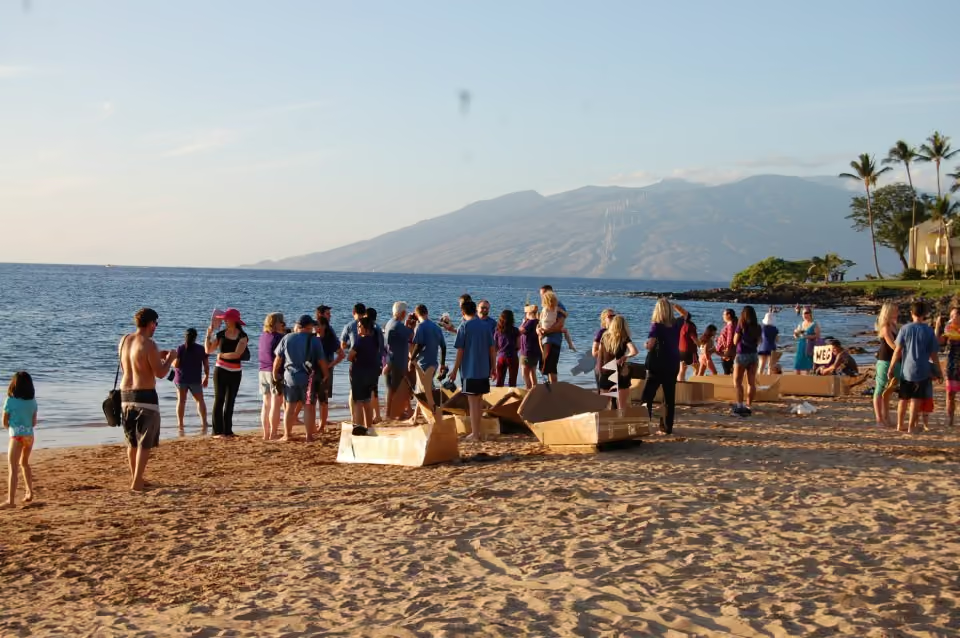
Summer works best as a mid-year reset because leaders have enough metrics to analyze performance in Q1–Q2. Budgets still have room, leadership calendars are more flexible, and summer offers better conditions for shared outdoor experiences. Employees are already in vacation mode, and the weather usually allows you to plan a range of outdoor team building activities.
Summer also changes how people engage. Better weather, longer days, lighter calendars, and outdoor settings make honest conversation easier, and help teams reconnect in ways that rarely happen in indoor office environments.
How should companies plan summer team building?
Companies should start planning summer team activities 3–6 months before the event. Early planning gives HR teams better venue choice, stronger attendance, and more outdoor options. It also gives time to analyze what needs to improve—decision speed, trust repair between departments, role clarity, leadership confidence, or ownership under pressure.
Then the format has to fit the problem. If you pick activities before you know what needs to change, you end up with another generic program. The right format must support the outcome. Not the other way around.
Why Q2–Q3 is the ideal budget and energy cycle for team realignment
By Q2–Q3, leaders have a pretty good idea where performance has slipped or where there’s room for improvement. The first part of the year may have exposed missed handoffs, delayed approvals, repeat friction points, and managers who should be making decisions, but keep pushing them back to senior leaders for approval.
Mid-year intervention prevents problems from developing later in the year. It makes team building cheaper and more cost-effective. Team alignment workshops become part solution, part prevention.
This strategy allows leaders to boost corporate offsite ROI by addressing teamwork issues before they’ve hardened into annual norms or behavior patterns.
The Difference Between Summer Team Building Activities and Business Outcomes
Summer team building activities are the format. Business outcomes are what change after people return to work.
The reason some HR leaders think team building doesn’t work is that they focus on activities rather than outcomes. They want to “make it fun.” They want people outside, away from laptops, building camaraderie, and enjoying the weather. The day gets built around energy, shared laughs, and giving employees a break from routine.
That’s where the value of employee engagement summer programs leaks.
If planning the team activity fails to connect the experience to a business problem, Monday looks exactly like the week before. And upper management will start questioning if team building is a worthwhile investment.
The better move is to use the activity as the delivery system for a specific leadership behavior.
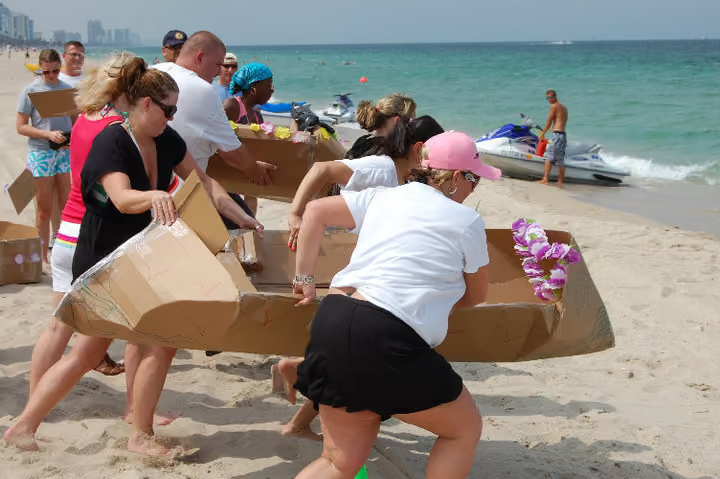
Take FullTilt’s Cardboard Boat Build. On the surface, it’s fun, competitive, and perfect for summer team retreats—and it is. But the real business value comes from what teams have to do under pressure. They must assign roles, make judgment calls, collaborate, communicate, and create an outcome with limited resources. This maps directly to real workplace skills.
Leaders can use this kind of team event to strengthen delegation, improve decision-making speed, expose weak planning habits, and demonstrate how cross-functional coordination holds up under time and resource constraints.
The outdoor activity creates engagement. The business outcome is stronger execution in the workplace.
How Do You Combine Team Building with Performance Improvement?
Combine team building with performance improvement by identifying what is slowing the business first. Then, choose activities that directly strengthen the behavior causing it. Summer team building activities should improve how teams communicate, decide, delegate, and rebuild trust—not just create a shared experience.
Strong summer programs usually follow three diagnostic checks before the agenda is built.
- Use quarterly planning data to find the real friction.
Review where Q1–Q2 execution slipped. Look at delayed approvals, missed handoffs, recurring leadership escalations, or departments working from different assumptions. The offsite should solve a visible operating problem, not a vague morale concern. - Match workshops to structural issues.
If the slowdown stems from unclear ownership, weak delegation, or leaders avoiding difficult calls, workshops can improve outcomes by helping leaders refine their decision-making process. - Use shared experiences when the issue is trust or silo behavior.
Outdoor challenges, problem-solving builds, and shared-pressure activities work best when departments need better collaboration, stronger communication, or a more natural reconnection outside formal reporting lines.
This is where summer team activities stop being a seasonal morale-boosting event and become a strategy to improve teamwork effectiveness in the second half of the year.
Summer Team Building Ideas for Companies for Trust and Relationship Repair
Mistrust harms cross-functional teamwork. The thing is that it rarely shows up as open conflict first. It shows up in slower replies, repeated check-ins, guarded communication, and departments protecting their own priorities instead of helping work move across the business.
Summer team building activities can rebuild trust. Employees participate in shared challenges where success depends on fast communication, visible reliability, and coordinated decisions under time pressure. Teams start trusting again when they have to plan together, adapt in real time, and depend on each other’s follow-through.
Cardboard Boat Build: Trust Under Pressure Starts With Shared Decisions
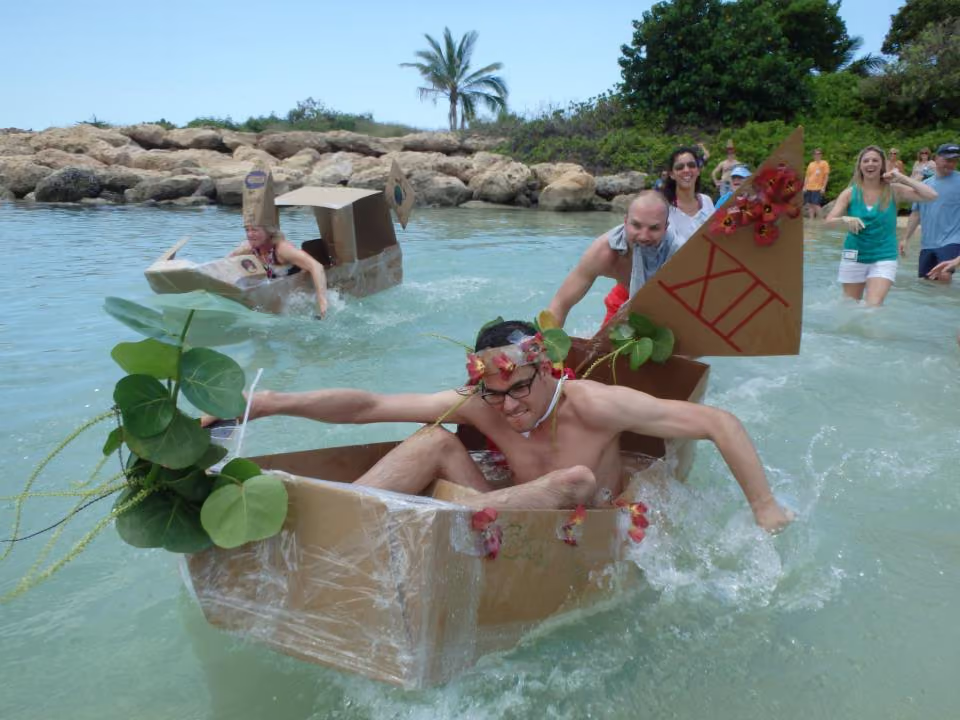
The Cardboard Boat Build team challenge works because it teaches teamwork lessons in a fun, controlled environment.
In this outdoor summer event, one group owns the cardboard hull design. Another controls the tape and reinforcement choices. Someone has to make the call on speed versus stability, and the rest of the team has to move with it.
When people hesitate, recheck simple calls, or protect their own part of the build, the weakness shows fast—usually before the boat even hits the water.
That’s what makes it useful for teams stuck in second-guessing loops.
If slow handoffs are draining momentum, book the Cardboard Boat Build Challenge to strengthen trust and faster decision-making.
Domino Effect Challenge: Repair Team Trust by Making Every Handoff Count
The Domino Effect Challenge works best when trust breaks down between cross-functional teams.
In this team event, individuals must work together, delegate, and trust the decisions made by others. Success—just like in the workplace—depends on everyone working together as a cohesive group. Every section has to pass cleanly into the next, and nobody can see the full result until every handoff holds.
That’s where the weakness shows.
If one team changes the sequence without updating the next group, or timing assumptions don’t match, the full chain reaction stops. It mirrors exactly what happens when departments work from different assumptions and small misses spread into wider delays.
Expected Outcome: Cleaner cross-functional handoffs and stronger follow-through.
If small trust gaps keep creating wider delays, book the Domino Effect Challenge to improve teamwork collaboration.
How do you rebuild trust through summer team building?
Rebuild trust through summer team building by using shared outdoor challenges that force teams to communicate clearly, rely on each other’s follow-through, and make decisions together under pressure. Trust grows when people experience dependable handoffs, visible accountability, and successful problem-solving outside normal office dynamics.
Summer Team Building Workshops for Alignment and Strategic Planning
Alignment usually fails after the kickoff, not during it. It usually happens because no one owns the final decision.
Here’s what typically happens: Everyone leaves the meeting, thinking priorities are clear. Then Marketing pushes speed. Operations protect the process. Production is dealing with glitches and QC. All the while, leadership assumes ownership was obvious. By the next review, the work has shifted in three directions.
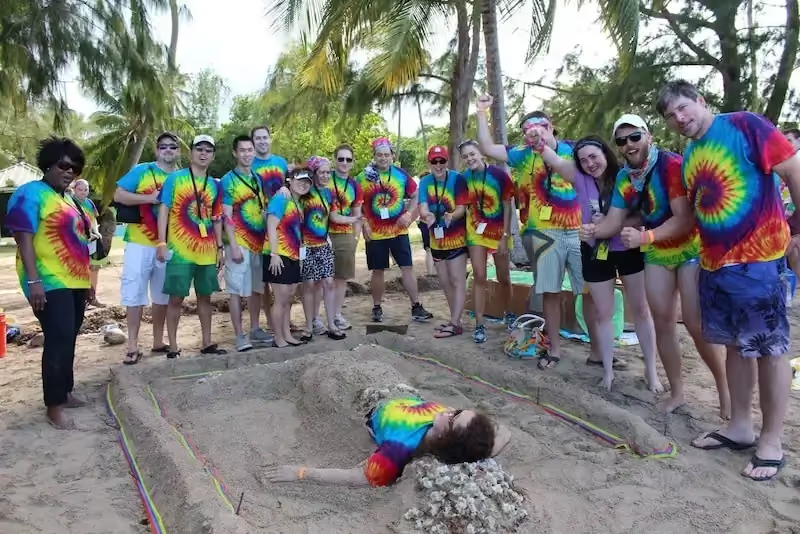
Summer workshops for team building resolve alignment issues by forcing teams to take ownership and communicate outcomes.
Scavenger Hunt: Sharper Strategic Alignment Through Shared Decision Paths
A scavenger hunt works because it shows how fast teams split when the goal is shared, but the path isn’t. One group follows the clue word-for-word. Another tries to go faster. Someone else keeps questioning the plan.
The lesson is learned fast: shared goals fail when execution assumptions stay unspoken.
As teams work out clues and progress, they get better at clarifying and working together toward a common goal. This carries over in the workplace. They learn to share information faster, agree on the next step, stick to it, and delegate responsibilities. The result? Fewer delays caused by teams working from different assumptions.
Expected Outcome: Sharper alignment on priorities and execution choices.
If teams leave planning sessions with different interpretations, book the Scavenger Hunt to make strategy drift visible early.
Survival X – Corporate Castaways: Stronger Priority Setting Under Pressure
When the pressure is on, everything can get labeled priority, and that just sets the project up for failure.
Survival X puts participants in situations where they must survive various challenges using limited materials. This is where alignment issues surface. One person pushes shelter. Another prioritizes water. Then one group starts building defenses before the basics are covered. No one decided what happens first.
During this summer team outdoor event, teams must decide what to handle now, what to wait on, and who owns the next move as conditions keep shifting. The lessons learned carry straight back into the workplace—clearer sequencing, stronger ownership, and fewer leadership teams wasting time because every priority sounds equally important.
Expected Outcome: Better sequencing and ownership in strategic plans.
Book Survival X Corporate Castaways to strengthen leadership alignment when priorities keep competing.
How do you combine team building with performance improvement?
Combine team building with improved performance by identifying the business problem first, then choosing the right team event. The experiential activity should teach lessons in a relaxed, safe, controlled environment that can then be transferred to the workplace. The right team building activities improve work weeks and months after the event.
The Best Summer Team Building Offsite Planning Ideas for Hybrid Teams
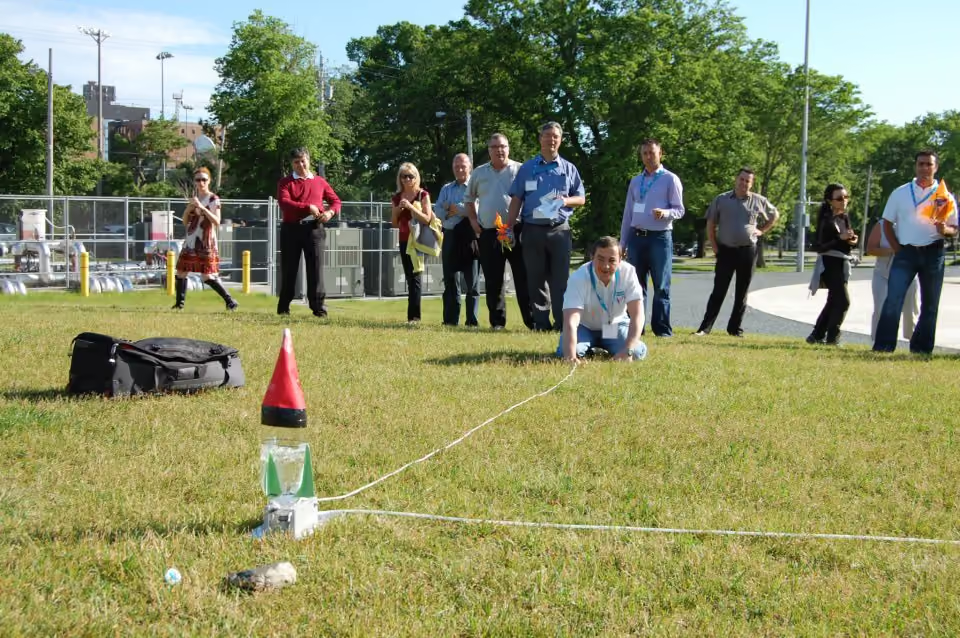
Hybrid teams usually don’t struggle with effort. The challenge is preventing distance from turning small misunderstandings into bigger execution gaps. Office employees can arrange meetings to discuss collaboration. In the meeting room, body language, tone, and in-person communication make communication easier. Across a screen, it’s a different story.
That’s why summer offsite planning for hybrid teams has to go beyond “getting everyone together.” The best ideas are built to reconnect communication paths, rebuild shared context, and create lessons that still hold when half the team is back behind screens the next week.
Minute to Win It: Faster Communication Loops for Hybrid Teams
Hybrid teams must work hard to avoid losing momentum in small moments. A message sits too long in chat. A handoff gets assumed instead of confirmed. By the time people compare notes, the task has already moved off two different interpretations.
Minute to Win It compresses that failure into seconds. Teams have one minute, one constraint, and no room for vague instructions. Participants quickly learn the importance of clear messaging, quick support, and immediate adjustment to affect outcomes.
That crossover is what hybrid teams need back at work—shorter communication loops, quicker recovery, and fewer delays caused by silence.
Expected Outcome: Faster response and cleaner virtual handoffs.
Book Minute to Win It to sharpen how hybrid teams communicate under time pressure.
Rocket Challenge: Better Planning Across Distributed Workstreams
Hybrid team planning often feels aligned during meetings. But gaps can show up later, when one team moves ahead on the design, another is working to a different timeline, and the missed checkpoint only becomes obvious when the final output no longer fits together.
Rocket Challenge has been designed to help teams plug planning gaps quickly. Participants are tasked with designing, building, testing, and protecting fragile cargo—a raw egg—with a parachute landing system. There are no shortcuts. Only clear communication and precise execution will ensure success.
In the workplace, that lesson improves milestone planning, shared checkpoints, and how distributed teams manage execution without losing the thread.
Expected Outcome: Stronger milestone alignment across hybrid teams.
If you want your teams to improve planning discipline across distributed teams, book the Rocket Challenge as part of your employee engagement summer program.
Summer Team Building Activities for Employee Well-being and Retention
High employee turnover rates are rarely about pay. Employees who stop feeling connected to the team, the work, or the company’s culture are more likely to leave. It’s estimated that replacing a single employee can cost between one-half and two times the employee’s annual salary. Forty-two percent of employee turnover is preventable.
Mid-year team activities to reset performance are powerful tools for interrupting that drift and strengthening employee retention. The right shared experiences rebuild energy, belonging, and a clearer sense of contribution before disengagement hardens into turnover.
Art of Flight: Rebuild Energy Through Shared Creativity and Momentum
Burnout often looks like low initiative. You’ll notice that employees stop volunteering ideas, stick to safe routines, and protect only the work directly in front of them. The team still functions, but the spark and mutual support that keep people engaged start to fade.
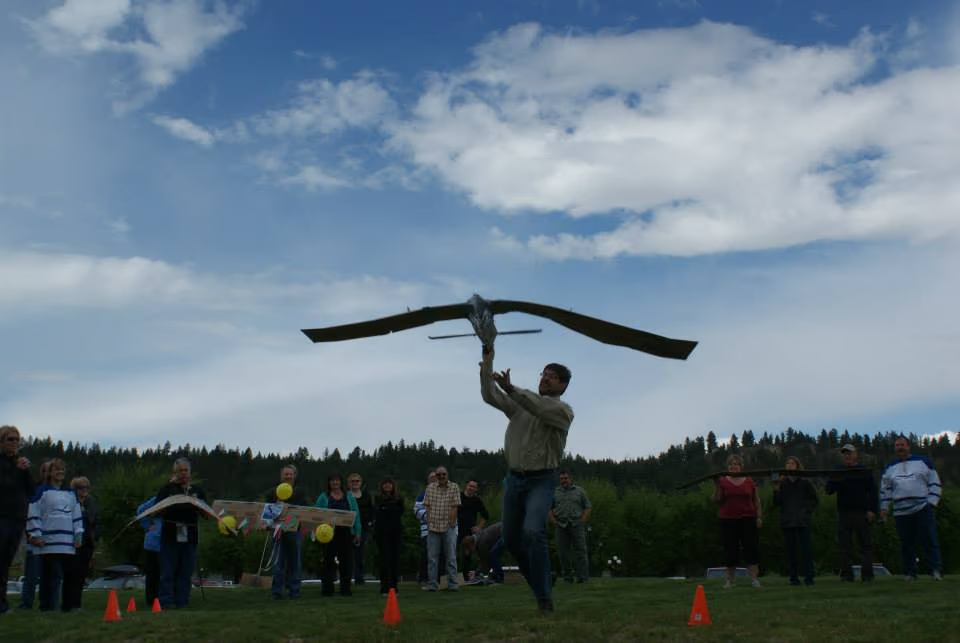
Art of Flight changes that. Teams build an aircraft from simple office materials and see if it flies. The creative problem-solving gets momentum back. People contribute in new ways. Back at work, you see more ideas, better communication, and higher engagement.
Expected Outcome: Higher engagement and renewed team energy.
Book the Art of Flight to re-energize teams showing early signs of disengagement.
The Great Mandala: Stronger Belonging Through Shared Vision
Employee retention weakens when people can’t see how their work connects to the company’s direction. The tasks get done, but the emotional link to the mission fades, which is where quiet disengagement often begins.
When employees see how their work contributes to the bigger picture, they are more likely to feel engaged. That’s where The Great Mandala comes in. The team event gives employees something they can build together.
Teams create individual panels that join into a single larger visual message, making contribution, purpose, and shared ownership visible in real time. That crossover matters in the workplace—people feel more connected to the vision, more invested in outcomes, and more likely to stay committed to the team around them.
Expected Outcome: Stronger belonging and commitment to the company vision.
Secure The Great Mandala for your next corporate offsite this summer to strengthen retention through shared purpose and contribution.
Summer Team Building Activities for Leadership Development and Decision Confidence
Leadership development matters most when the team stops moving because decisions keep slowing down.
Managers ask for one more review. Ownership stays blurry. Straightforward calls get escalated because no one wants to carry the risk alone. Over time, confidence drops, and the leadership layer starts protecting certainty instead of pace.
Planning corporate team retreats during the summer can help address leadership issues head-on. The right outdoor challenges force participants to deal with the pressure around delegation, negotiation, timing, and judgment calls. With limited information, leaders have to decide, adjust quickly, and live with the consequences.
Mission Incredible: Stronger Leadership Judgment in Unfamiliar Conditions
Strong leadership is rarely a problem when everything is going right. But cracks in decision-making can appear when leaders lose their usual context. It could be a new location, unclear variables, or moving objectives. It’s quickly obvious who adapts and who stalls while waiting for perfect information.
Mission Incredible is a bespoke team building activity tailored to your leadership objectives. Participants must navigate an unfamiliar environment, assign responsibilities, and keep the mission moving against time and location-based constraints.
The crossover back at work is immediate—better delegation, sharper organizational strategy, and more confident judgment calls when the situation changes faster than the original plan.
Expected Outcome: Faster leadership judgment under changing conditions.
Book Mission Incredible to strengthen decision confidence when leaders need to adapt fast.
Spuds of Thunder: Better Trade-Off Decisions Under Live Pressure
Leadership teams often struggle when strategy shifts into live trade-offs. Resources compete, alliances change, and people hold too tightly to their original plan even when the conditions clearly demand a new move.
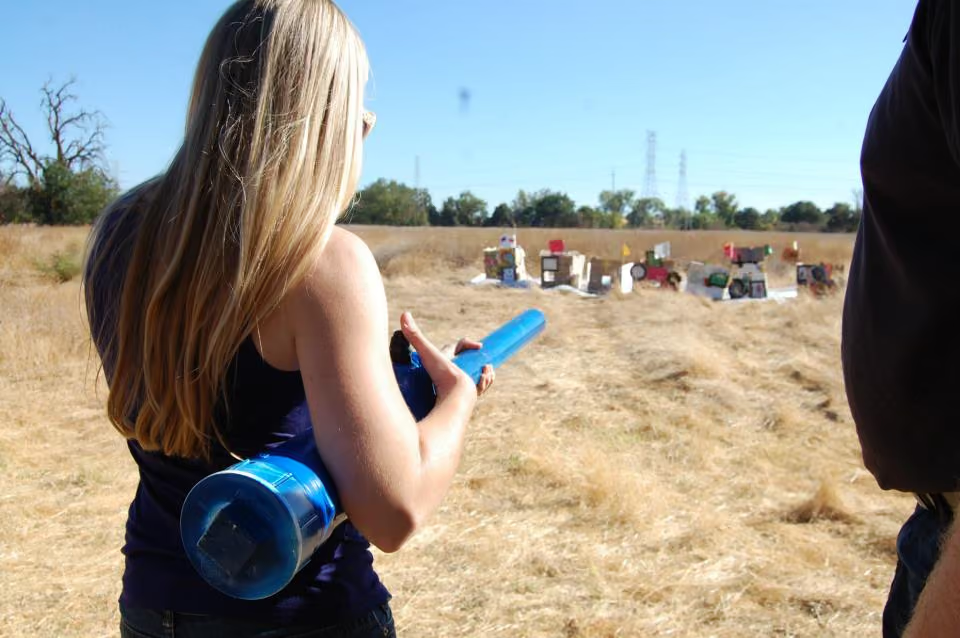
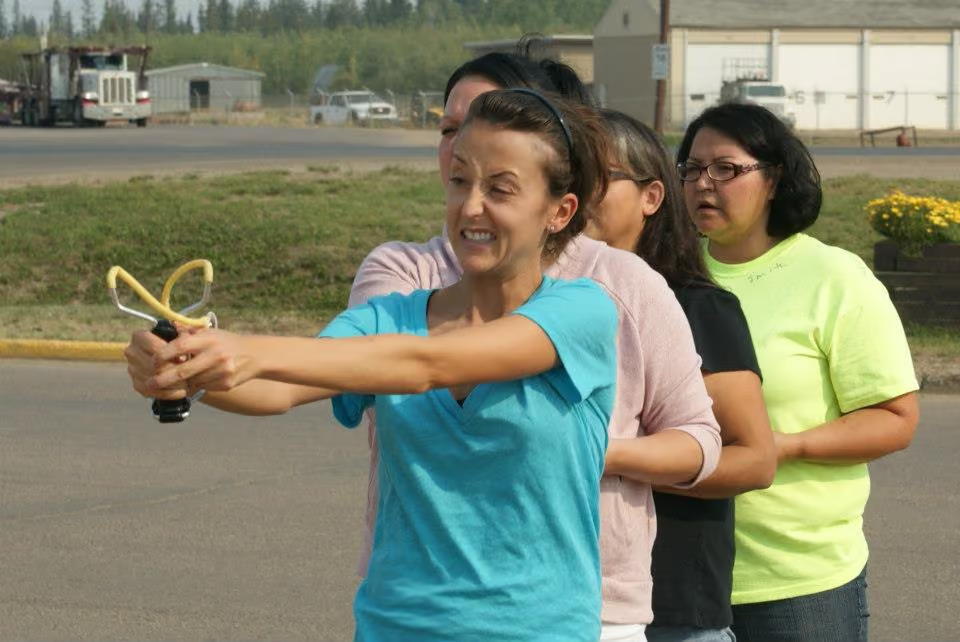
Spuds of Thunder makes that pressure impossible to ignore. Teams build fortresses, negotiate alliances, deploy resources, and react to spud attacks in real time. The only way to survive is to sharpen strategic decision-making and make it fast. In the workplace, that translates into stronger negotiation, better resource allocation, and more confident leadership when priorities start colliding.
Expected Outcome: Stronger decision confidence when priorities collide.
Use your next team retreat to plan the Spuds of Thunder if you want your leaders to make better decisions under live competitive pressure.
What summer offsite formats help leaders make better decisions?
Simulation-based summer offsites improve decision confidence because team training interventions show moderate performance gains of 20–25 percent in objective team outcomes across meta-analyses. Scenario challenges, live trade-off exercises, and outdoor leadership simulations work best because leaders must make fast calls with visible consequences.
Inclusive Summer Team Building Ideas for Women: Leadership & Well-being
Women’s leadership development often stalls not because of capability but because the environment rewards the loudest voice in the room. In a male-dominated environment, it can be challenging to be heard.
Corporate summer team activities can also focus on strengthening leadership skills for women. Shared challenges widen who gets to lead, who sets the pace, and whose judgment affects the next decision—vital for leadership confidence.
The Amazing Race is ideal for summer team building because it can be focused on leadership development. The event creates repeated moments of visible decision ownership. Teams must move quickly to decipher clues, choose routes, and adapt on the move. It gives emerging women leaders space to direct the group in a safe environment.
Choose the Amazing Race for your next summer team building event to help women in your organization strengthen their leadership presence.
Beach Olympics offers an opportunity to focus on well-being in an outdoor setting. The event switches the focus from performance pressure to shared energy and mutual support. The mix of relay races, volleyball, and creative beach challenges gives a chance to reconnect on a new level. Perfect for reducing stress and rebuilding connections that you can’t do in the office.
Book Beach Olympics as an inclusive team building event to get your employees emotionally recharged and strengthen workplace relationships.
What are inclusive team building ideas for diverse teams?
Inclusive team building ideas work best when they create multiple ways to lead—strategy, pacing, communication, creative thinking, and decision-making. Inclusive teams are 17% more likely to report high performance, so rotational outdoor challenges, clue-based races, and collaborative problem-solving formats help diverse teams contribute more fully and perform better together.
A Strategic Framework for Company Offsite Planning and ROI Measurement
HR leaders need a framework that proves the offsite changed how work moves, not just how people felt in the room.
Use a simple Plan → Execute → Measure structure. It keeps the event tied to business friction before the venue is booked, makes the live experience easier to facilitate, and gives leadership a clean ROI story after the offsite.
Plan
Start with the operational slowdown, not the activity.
Pick one measurable business issue:
- slower cross-functional handoffs
- delayed approvals
- low manager confidence
- poor delegation
- trust breakdown between departments
Then define the 30–90 day KPI that should move:
decision cycle time, project slippage, employee engagement, leadership confidence scores, retention risk, or escalation volume.
Execute
Run the offsite as a controlled behavior intervention.
Every workshop, simulation, or outdoor challenge should force the exact leadership behavior you want to improve:
faster judgment, clearer ownership, stronger role clarity, or better collaboration under pressure.
This is where summer formats become useful. They create visible decision moments that are easier for HR and leadership teams to observe.
Measure
Track what changed in the 30–90 days after:
- Behavior shift: faster decisions, cleaner delegation, fewer repeat meetings
- Team metrics: handoff speed, project velocity, manager confidence
- Business impact: retention, reduced delays, fewer escalations, revenue protection
How to Measure ROI of Team Building Events?
Use the standard HR ROI formula:
- ROI % = (Business Value Gained – Total Offsite Cost) / Total Offsite Cost × 100
This formula gives HR leaders a clear way to connect team building spend to retention savings, productivity gains, and faster execution.
When HR Leaders Should Book a Summer Offsite Instead of Running Internal Team Building Events
Summer offsites work better than internal team building because the environment itself shifts the conversation.
Studies suggest that outdoor team building boosts well-being, leadership development, performance, and creativity in ways indoor events can never match. Employees are more willing to challenge assumptions when they’re outside the office and away from the same day-to-day hum of the office.
Book an external summer offsite when you notice:
- Same friction: Internal events lift morale, but the same handoff misses, slow approvals, and silo behavior return by Monday.
- Neutral space: Cross-functional tension is easier to surface when teams are outside the office and no department “owns” the room.
- Leadership blind spots: Managers are more likely to see weak delegation, decision hesitation, and ownership gaps when the normal hierarchy is disrupted.
- Q4 risk: Waiting too long turns small trust gaps and slow execution into year-end delivery problems.
- Measurable shift: If HR needs visible movement in retention, decision speed, or trust scores, offsites create stronger behavior transfer than internal morale sessions.
That’s usually the point where staying internal costs more than stepping outside.
Book a Summer Offsite That Turns Team Building Into Performance Momentum
The best summer offsites do more than get your people outside to have some fun. They change how leadership teams communicate, make decisions, and follow through when the pressure is on.
If the same friction keeps slowing performance, FullTilt Team Development can turn your next offsite into visible momentum before Q4 exposes the cost of waiting.
Ready to make your mid-year team performance reset count? Contact FullTilt Team Development today and click Free Quote for more information.