

A team operating model describes how teams work together. It’s how people, processes, and decisions come together inside a team. If you manage teams, this directly impacts how decisions are made, responsibilities are shared, and how smoothly work moves between people and teams.
Without a clear organizational operating model, teams rely on informal systems and rules. You’ll see that decisions take longer, issues escalate, and projects stall. In the end, the whole system becomes muddled because accountability becomes harder to pin down.
This article explains how a team operating model creates consistency, reduces delays, and gives team leaders a clearer view of how their teams operate.
Why Team Operating Models Matter More Than Org Charts Now
Most organizations still rely on org charts to explain how teams are set up. They show reporting lines, titles, and formal responsibility. That information still matters—but it no longer describes how work actually gets done.
As teams grow more interconnected, the limits of org charts become easier to spot. Work moves across teams far more often than it moves up and down a hierarchy. Decisions don’t follow neat lines. Delays don’t show up on a chart. That’s where problems start.
Why org charts stopped explaining how work actually happens
Org charts worked well when teams worked together in tighter groups. Boundaries were clearer. Work passed through fewer hands. Decisions stayed close to one manager or function.
In the modern workplace, work rarely stays in one place. A task might start in one team, depend on input from another, and then stall along the way because everyone’s waiting on a decision and no one’s quite sure who makes it.
On paper, org charts look structured. But this cannot be termed a “modern operating model” because it doesn’t reflect current ways of working. You’ll notice this gap most clearly in meetings when progress depends on coordination, not authority.
The execution gap leaders feel but struggle to name
Sticking to outdated ways of working creates a noticeable gap in handoffs. Delivery times are longer, yet teams seem busier than ever. To resolve the issue, team leaders schedule additional check-ins to move work forward faster, but this only slows processes further.
You would think this is a communication issue, a team motivation problem, or even a lack of discipline. In reality, it’s an issue with the organizational operating model. All leaders have done is add more updates and more processes without changing the operating model.
How speed, scale, and AI are exposing weak structures
As organizations grow and expand, problems surface faster. Also, teams are rarely located in one building. Hybrid work means some team members may work from home or live in other countries and time zones. When diverse teams depend on the same calls, small delays can stack up quickly.
Artificial Intelligence has the potential to streamline teamwork and collaboration. But paired with an outdated operating model, it just adds another layer of pressure. It exposes gaps even more. It increases the speed and volume of work on a system that wasn’t designed for pace.
What a Team Operating Model Really Is (And What It Is Not)
Teams don’t struggle because they lack charts, frameworks, or plans. They struggle because no one has a shared picture of how work is meant to move once it starts. A team operating model exists in that space. It sits closer to daily decisions than strategy, and closer to work than structure.
When it’s missing, people rely on habit. Or memory. Or whoever spoke last in the meeting. That can work for a while. It usually does—until the work spreads.
A practical definition grounded in how teams work day to day
A team operating model describes how a team handles work as it comes in, moves forward, and gets finished. It determines:
- Who makes which calls.
- What happens when work crosses a boundary.
- Where things pause when priorities clash.
Most teams already work to some type of operating model—it’s just informal. It’s usually built from past decisions, unspoken rules, and workarounds that developed under pressure. New joiners pick it up slowly because there’s no obvious structure. Others guess. Some avoid certain decisions altogether.
The model becomes most evident when something unexpected happens. A deadline moves. A dependency breaks. A decision needs to be made quickly, and no one is sure who should take it.
Team operating model vs organizational operating model
An organizational operating model looks at the company as a whole. Functions, layers, major processes. It helps leaders think about scale and coordination at a high level.
A team operating model sits lower. Closer to the work. It concerns how one group actually functions within that larger system. Two teams in the same organization can share the same org operating model and still work very differently day to day.
That difference usually shows up at the seams. One team moves quickly and resolves issues as they arise. Another waits for clarity, approval, or alignment before acting. On paper, both look fine. In practice, the experience of work isn’t the same.
Operating models vs business models and org design
Business models have different goals than operating models. They focus on how value is created and sustained. What they sell and to whom. Org design focuses on how people are arranged to support that goal. Both matter. Neither explains what happens once work lands on a team’s desk.
Operating models sit in between. They shape how decisions are made inside the structure and in service of the business model. When they’re vague, teams fill the gaps themselves. When they’re overly rigid, work finds ways around them.
Org Charts vs Operating Models – Why Structure Alone Fails
Org charts are still necessary in any organization. But they cannot support modern operating models when several teams must collaborate.
Here’s a real-life scenario that illustrates what happens when there are no clear communication channels within an organization.
A product team is tasked with developing a new feature. The team involves project managers setting the scope, designers shaping the flow, and engineers planning the delivery. Inside the teams, collaboration happens seamlessly because ownership, priorities, and trade-offs are clear.
During development, other teams must get involved. But without a clear team model, informal paths develop. Certain people get looped in because they’ve helped before. But things stall. A senior leader gets looped in to unblock the bottleneck and get the project back on track.
The next time, teams get reorganized around a new product model. Teams realign. Titles change. But without a clear operating model, the same team rituals will appear.
The Five Core Components of a Team Operating Model
Teams that must collaborate require a model to operate as a single entity. This keeps everyone “on the same page.” It creates decision-making frameworks, clear responsibility connections, and predictable movement across boundaries. Instead of relying on habit, teams have a shared way of operating that doesn’t crumble under complexity.
These five components capture what makes that possible. Each one addresses a specific point where work typically slows or fragments, and together they define how teams operate consistently in real conditions, not just on paper.
Decision rights – who decides, when, and how
A fundamental aspect of team models is knowing who makes decisions, when they are made, and how input is gathered. They sit beneath job titles and outside organizational charts, shaping how work gets accomplished when multiple teams are involved.
Clear decision-making frameworks mean that teams don’t pause to negotiate authority or wonder about the next step. Work progresses with fewer escalations because everyone understands where the call sits and what happens next.
Roles, ownership, and accountability boundaries
Team operating models clarify ownership boundaries—essential as work begins to move. As tasks move through planning, delivery, review, and adjustment, it’s vital to know who owns the work at each stage. What matters most is not who originally received it, but who continues to carry the work.
Clear boundaries around role, accountability, and ownership ensure nothing is stretched beyond its limits. As boundaries hold, work doesn’t drift as pressure and urgency build. It remains assigned to a named owner until a deliberate handoff.
Handoffs, interfaces, and cross-team flow
Most project delays don’t come from slow execution. They come from waiting for input, feedback, approval, or for another team to finish their part. Handoffs and dependencies are typically the number one reason for avoidable delays.
Well-designed organizational operating models clarify what must be completed before work can move forward. It’s where timing matters more than hierarchy. It builds dependencies into the workflow so they are expected rather than being surprises.
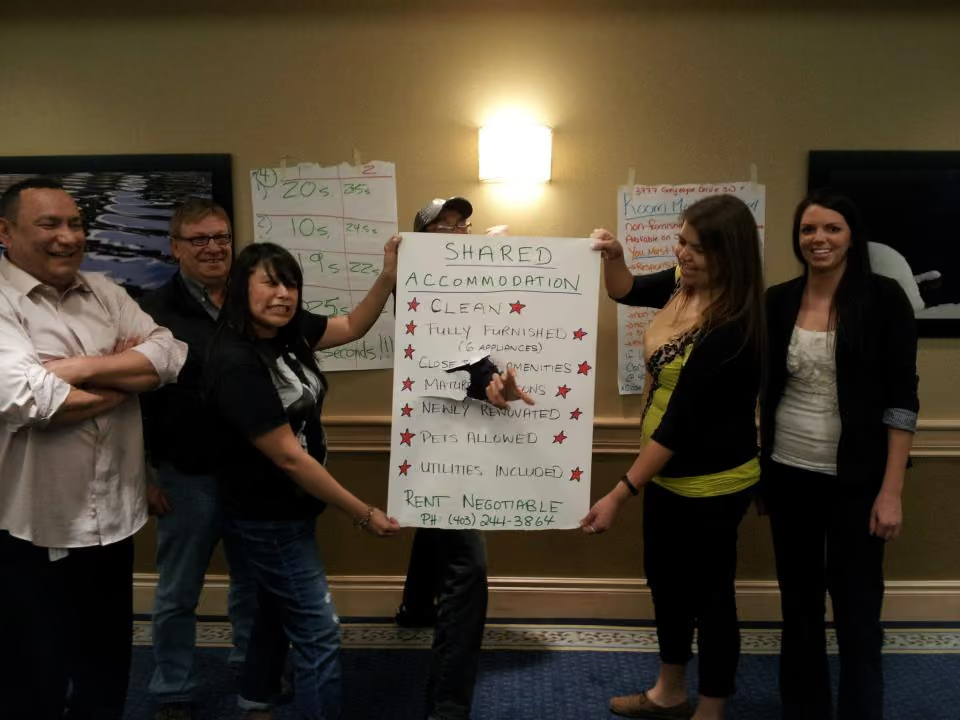
This is something teams often notice during FullTilt’s Cross-Boundary Communication team building activity. Employees learn to create more efficient handoffs so work doesn’t slow down or stall.
Feedback and course correction
Any team member knows that work rarely goes as planned. Priorities shift. Assumptions change. Small issues appear long before visible failures. The question isn’t whether teams drift, but how quickly the drift gets noticed.
Clear and productive feedback must be a core component of how multiple teams collaborate. Course correction and feedback show up as regular signals, short loops, and shared checkpoints to identify and resolve issues early. Teams can adjust while options are available rather than discussing what went wrong.
Escalation and governance paths
Clear, deliberate escalation paths are vital for resolving problems that can’t be addressed at the team level. The pathway is essential because trade-offs have a ripple effect, impacting the success of the entire project.
An escalation path in a multi-team organizational structure looks like this: Each team member should know what to raise, when to raise it, and who should be involved in the escalation. This pathway prevents everyday decisions from drifting upward while ensuring real issues surface early enough to act.
Governance becomes a support mechanism, not a bottleneck, and leadership attention goes where it actually adds value.
Decision Rights, Handoffs, and Accountability—How to Connect Work Across Teams
A modern team operating model ensures that nothing stalls as work crosses teams. Teams close decisions on time, handoffs happen when they should, and accountability doesn’t drift. If something must escalate, the process remains purposeful.

The four areas below show how teams can work together when multiple stakeholders are involved.
Each one highlights what a strong team operating model enables, followed by examples of targeted team building activities. The goal isn’t theory—it’s seeing what works, and how teams learn to operate that way under real conditions.
Decisions that close, not linger
In a strong team operating model, decisions have a clear home. Teams know which calls must be made quickly, which require input, and which can wait. That clarity prevents work from circling the same questions and keeps momentum intact as priorities shift.
Team members can experience how to deal with tight deadlines in FullTilt’s Optimal Time Management module. Through fun activities, they learn vital time management skills to juggle even the busiest work schedules and stay focused.
Accountability that stays with the outcome
Effective operating models distinguish contribution from ownership. Many people may support the work, but responsibility for the outcome stays with one person. That clarity holds even when work crosses teams or conditions change midstream.
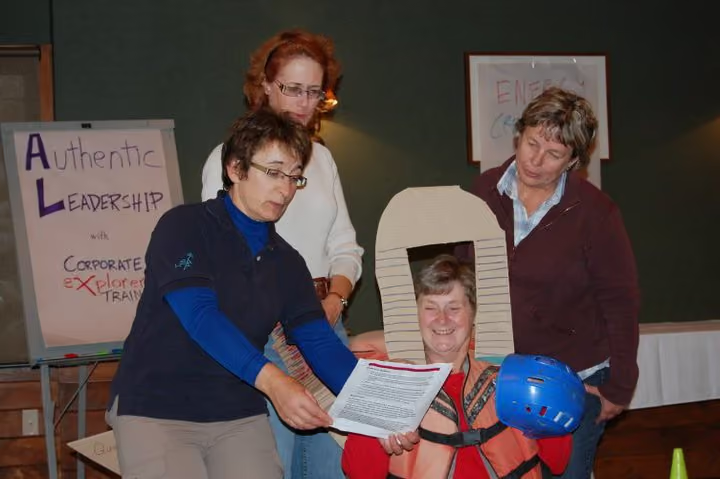
FullTilt’s Authentic Leadership program was designed to help participants take ownership of their decisions and also motivate others. During the team activities, people complete tasks multiple times. The goal? Each time, they must adjust approaches and leadership style as conditions change. Accountability becomes visible, not as authority, but as follow-through, integrity, and trust when outcomes are uncertain.
Handoffs that don’t turn into waiting
Transferring work to another team is when friction usually shows up as work moves between teams. Well-designed team operating models help team members know the following:
- What must be completed before passing work on
- What information travels with it
- When responsibility officially changes hands
Group members can learn the best teamwork practices in FullTilt’s 8 Productive Practices team building event. During the activity, participants move through hands-on challenges that require clear coordination and timely information exchanges. They learn the importance of disciplined practices in keeping work moving between teams.
Escalation that helps without taking over
In a healthy operating model, escalation has a purpose. Teams raise issues early and intentionally, while everyday decisions stay close to the work. Leadership involvement adds clarity rather than becoming a default step.
FullTilt Team Development designed the 360 Degree Behavioural Matrix for team members to learn different communication and behavioral styles. As participants work together, they realize how various styles influence when issues are raised, how feedback is delivered, and how perspectives are interpreted.
Use the 360-Degree Matrix to build awareness of how escalation and communication choices affect collaboration and productivity.
Where AI Fits Into Team Operating Models (And Where It Breaks Them)
Artificial intelligence first shows up in everyday work, not in strategy decks. A summary lands in an inbox sooner than expected. A draft appears before the meeting starts. Complex analysis that once took hours is completed in a matter of seconds. Tasks move forward before anyone’s agreed on the next step.
The output is ready, but the decision isn’t. That’s the benefit of AI-based processes and how they challenge existing operating models.
When AI speeds things up but decisions stall
AI benefits team operating models by streamlining them. In other words, the distance between work starting and output appearing is shorter. Drafts circulate earlier. Analysis reaches teams sooner. Options surface before people are ready to make a decision. The reality? Wider gaps appear.
You’ll often notice this in meetings. Better material shows up on the agenda, but the same questions remain open. What’s more challenging is that AI can surface many options, scenarios, and comparisons. With more choices to consider, discussions rarely finish faster. So, follow-ups are scheduled.
Over time, a pattern sets in. Output arrives sooner and in higher volume. Decisions arrive later. The technology doesn’t create the gap. It was already there, now made harder to ignore under tighter timelines and heavier choices.
Real-World Operating Model Patterns
Examples of modern operating models in high-growth companies tend to look similar in practice, even when the industries differ. The patterns show up in how decisions are made, how work moves between teams, and how ownership holds when things change.
What follows isn’t a set of templates—it’s a set of operating behaviors that repeat where growth doesn’t overwhelm execution.
Work progresses without constant intervention
The most common result when modern operating models work well is fewer interventions from team leaders. They don’t need to be involved in day-to-day workflows. Work moves for stretches without anyone checking in to unblock it. Tasks get picked up, moved forward, and completed without side messages asking who needs to weigh in next.
When something does slow down, it’s raised while the work is still live. Not as a crisis. Not as a rescue request. Just a signal that something needs attention before it turns into a stoppage.
Teams absorb change without slowing down
Modern operating models keep teams busy and productive. Something can shift halfway through the week, a deadline can move, or another team adds a dependency. None of that affects workflow. Nobody rewrites the plan, but nobody ignores the change either. Work keeps moving, just slightly differently than before.
You don’t see a flurry of messages asking how this is supposed to work now. No meeting appears to realign roles. People adjust what they’re doing based on what’s in front of them, not what was agreed three steps earlier.
By Friday, the work has moved on. Not because the change didn’t matter, but because it didn’t force everything else to stop.
Problems surface early, not late
A small issue arises while there’s still time to address it. A dependency doesn’t line up. A piece of work isn’t ready when expected. Someone flags it while the rest of the work is still active.
It doesn’t arrive as a last-minute escalation. There’s no scramble to recover lost ground. The problem is visible early enough that it becomes part of the work, not a reason to stop it.
These are real-world patterns when organizations get their operating models spot-on.
Growth adds volume, not confusion
As headcount increases, more work runs at the same time. Requests come from more places. Another team gets added to the loop. Unlike the past, adding more volume to workloads doesn’t create bottlenecks. Workflows stay consistent—tasks enter, move, and exit the system seamlessly.
The questions leaders hear change too. Fewer “who owns this?” messages. More conversations about capacity and sequencing. The volume goes up, but the way work behaves doesn’t start feeling unfamiliar.
How to Diagnose Your Current Team Operating Model
No cookie-cutter, one-size-fits-all team operating model works across the board. Determining what’s going on with your current system requires more than diagrams and workshops. It starts by paying attention to what repeats during normal work.
Certain signals show up consistently when an operating model is doing its job. Others appear when the structure is quietly slowing execution.
Signals your operating model is working
When a team operating model holds, leaders notice fewer interruptions and fewer surprises. Work still gets messy, but it doesn’t keep breaking in the same places.
Positive signs include:
- Work moves for days without needing leader intervention
- Issues are raised while options still exist, not after deadlines slip
- Teams adjust priorities without resetting how they work together
- New joiners pick up how work flows by watching it happen
- Fewer side conversations to clarify ownership or next steps
Warning signs your structure is slowing execution
When the operating model isn’t doing enough, the same friction points keep resurfacing. Leaders often respond by adding meetings or oversight, even though the underlying issues don’t change.
Red flags:
- Decisions revisit the same questions across multiple meetings
- Progress depends on specific people being available
- Teams wait for clarity that never quite arrives
- Escalations show up late, usually under time pressure
- Work looks busy, but delivery timelines keep stretching
What to examine before changing anything
The instinct to redesign structure is strong, especially under pressure. Before making changes, it helps to look closely at how work already behaves.
Examine where these scenarios occur:
- Where work pauses most often
- Which decisions regularly get deferred or revisited
- How handoffs actually happen, not how they’re supposed to
- Who teams turn to when something isn’t clear
- What problems keep repeating across different projects
What not to “fix” prematurely
Some problems feel structural but aren’t. Changing them too early often creates more disruption without improving how work moves.
Factors that require deeper analysis to learn if they really need changing:
- Reporting lines that aren’t causing day-to-day friction
- Team boundaries that still support delivery
- Individual performance issues that are really system issues
- Tools or processes teams already work around effectively
- One-off failures that don’t repeat
Five Steps to Design an Operating Model for Cross-Functional Teams
Designing an operating model for cross-functional teams isn’t about fixing dysfunction. It’s about giving teams what they need to keep work moving when pressure shows up. Each step below starts with a practical need teams experience once work crosses boundaries, then shows how that need gets built into the model.
Step 1: Define how work moves between teams
Cross-functional teams need shared expectations when work is handed off. Without that, progress depends on follow-ups, meetings, or personal relationships—especially when timing is tight.
- Define what must be true before work moves to another team
- Specify where work sits when those conditions aren’t met
- Make it explicit who pushes work back when inputs are missing
- Use one visible location for handoff status, not private messages
Step 2: Assign decision ownership for time-critical moments
Cross-functional teams need someone who can act when alignment isn’t possible. When deadlines compress, teams look for authority, not consensus.
- Name the role that decides when speed matters more than precision
- Clarify which decisions do not require escalation
- Define a fallback owner when the primary decision maker is unavailable
- Document these rules where teams actually look during delivery
Step 3: Build capacity limits into shared work
Cross-functional teams need protection from overload that isn’t visible on any one team’s plan. When shared work piles up, coordination becomes the constraint.
- Set limits on how many cross-team initiatives can run at once
- Define what happens when capacity is exceeded
- Make trade-offs explicit instead of negotiating each time
- Give teams a reference point to push back without friction
Step 4: Reduce reliance on meetings to move work forward
Cross-functional teams need progress even when calendars are full. Meetings collapse under pressure, but the work still has to move.
- Standardize the inputs required for work to proceed
- Establish clear readiness checks instead of verbal confirmation
- Create a single holding place for blocked work
- Design handoffs that don’t assume real-time conversation
Step 5: Design escalation that doesn’t override the model
Cross-functional teams need escalation to unblock work without resetting expectations. When escalation rewrites the rules, teams adapt around it.
- Specify where escalations land and who responds
- Define what authority applies during escalation
- Keep escalation paths consistent, even when leaders step in
- Avoid one-off exceptions that teams repeat later
Diagnose How Your Teams Actually Operate Today
Most teams don’t need another framework. They need a clear view of where work slows, decisions drift, and pressure changes behavior.
FullTilt Team Development helps organizations recognize those patterns through real-world scenarios played out in experiential team-building activities. You can forget surveys or theory. Get in touch today and start with a proper diagnosis, not another assumption on how your teams actually operate under load. That’s where the work starts.