

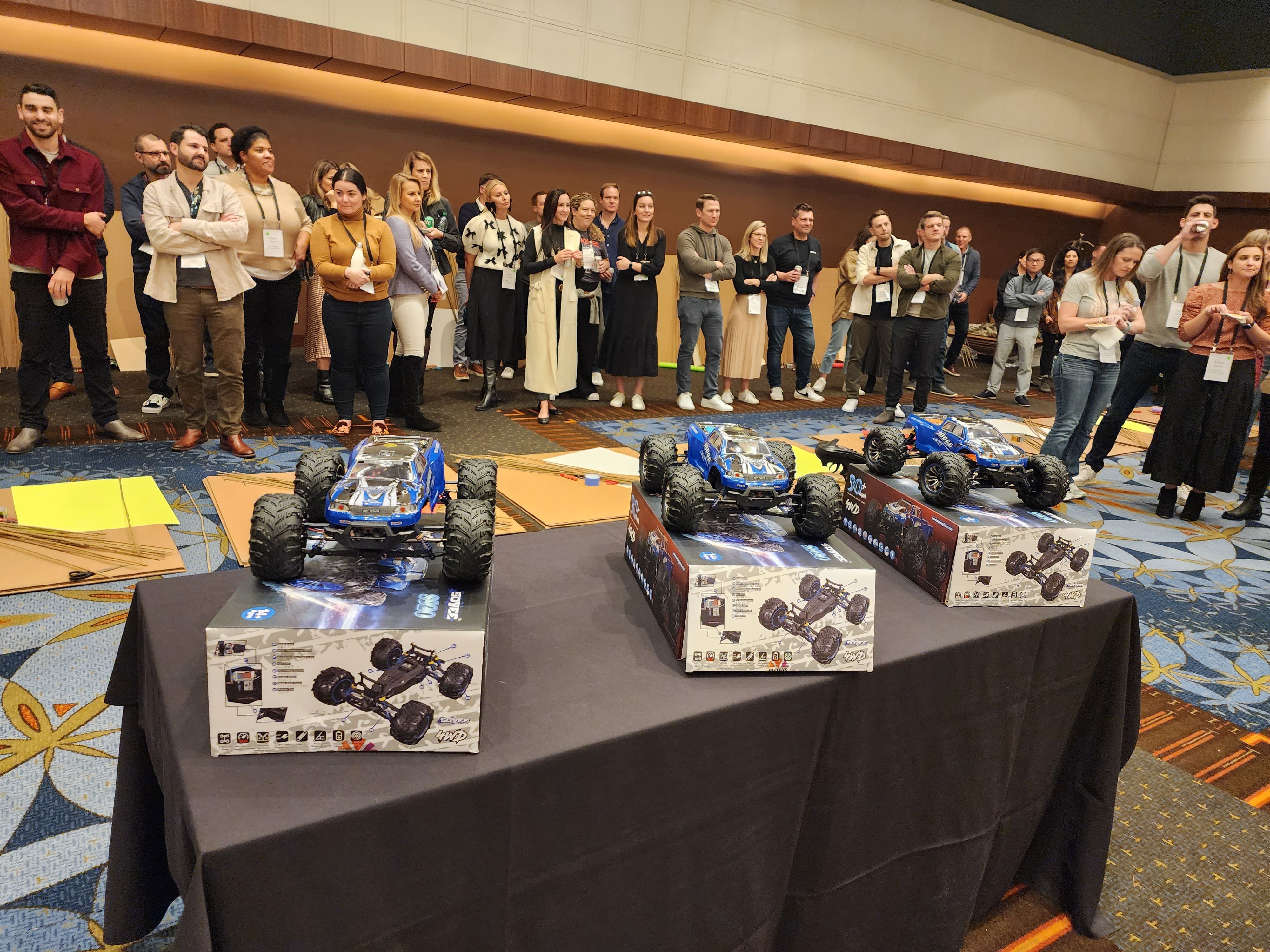
Sales is the one function where morale shows up directly in the numbers. A disengaged rep doesn't just feel flat — they make fewer calls, chase fewer deals, and leave sooner. With U.S. employee engagement at an 11-year low (roughly 31%, Gallup 2026), the teams carrying your revenue are as exposed as any in the building.
The fix isn't another spiff or a motivational email. It's structured, well-run sales team building activities that rebuild the energy, trust, and communication that high performance depends on — and that translate back to the pipeline. This guide gives you 25+ activities segmented by purpose, plus how to choose and how to measure the return.
Why sales teams need specialized team building
Generic team building treats every department the same. But a sales floor has a distinct culture: individual quotas, public leaderboards, constant rejection, and a comp plan that rewards the individual over the group. That structure produces performance — and, left unchecked, isolation and burnout.
Purpose-built sales activities work with that reality instead of ignoring it. They channel the competitive instinct into team wins, give reps low-stakes practice at the exact skills that close deals (discovery, listening, handling objections, telling a story), and rebuild the camaraderie that makes a hard week survivable. The downstream effect shows up where it matters: stronger collaboration on complex deals, faster ramp for new reps, and lower attrition on a role that's expensive to re-hire. For the broader case, see how team building boosts employee engagement.
Types of sales team building activities
Sales activities fall into five buckets. The strongest programs mix them rather than leaning on one.
Competitive activities
Channel the sales instinct into team-vs-team challenges. Highest energy, best for kickoffs and morale resets.
Strategy-based activities
Force reps to plan, prioritize, and adapt under constraints — mirroring how they run a territory or a complex deal.
Communication & trust exercises
Sharpen the core sales skills — listening, clarity, feedback — in a setting where mistakes are free.
Fun & energizing activities
Pure connection and release. Lower on skill-building, high on the camaraderie that retains people.
Virtual sales team activities
For distributed and inside-sales teams, designed to keep remote reps genuinely engaged rather than watching a screen.
25+ sales team building activities (detailed)
Each activity below lists its objective, how it works, ideal team size, time, and the skills it builds. Where an item links to a FullTilt experience, we run it end to end.
Competitive activities
1. The Amazing Race (Sales Edition)
Objective: Cross-team collaboration under time pressure
Size: 15–500+
Time: 2–4 hr
Builds: Strategy, communication, hustle
2. Pitch Battle Royale
Objective: Sharpen storytelling and objection handling
Size: 8–40
Time: 60–90 min
Builds: Pitching, thinking on your feet
3. Corporate Escape Room
Objective: Problem-solving under a clock
Size: 6–100+
Time: 60–90 min
Builds: Collaboration, prioritization
4. Beach Olympics
Objective: High-energy morale reset
Size: 20–500+
Time: 2–3 hr
Builds: Energy, friendly competition
5. Minute to Win It (Sales Challenges)
Objective: Fast, inclusive competition
Size: 12–500+
Time: 1–3 hr
Builds: Energy, quick teamwork
6. Leaderboard Auction
Objective: Strategic risk-taking
Size: 10–60
Time: 60 min
Builds: Strategy, negotiation
7. Survival X — Corporate Castaways
Objective: Prioritization and resource strategy under constraints
Size: 15–300
Time: 2–3 hr
Builds: Strategy, decision-making
8. Deal Simulation Tournament
Objective: Practice a full sales cycle in miniature
Size: 6–30
Time: 90 min
Builds: Full-cycle selling, feedback
9. Territory Wars
Objective: Strategic planning and negotiation
Size: 8–40
Time: 60–90 min
Builds: Planning, negotiation
10. Business Case Sprint
Objective: Consultative, value-based selling
Size: 8–40
Time: 75 min
Builds: Value selling, exec presence
11. Iron Chef (Sales Kitchen)
Objective: Collaboration and creative problem-solving
Size: 12–100
Time: 2–3 hr
Builds: Adaptability, teamwork
12. Blindfold Navigation
Objective: Precise communication and trust
Size: Pairs (any total)
Time: 30 min
Builds: Clarity, trust
13. Active Listening Relay
Objective: Strengthen active listening skills
Size: 8–40
Time: 30 min
Builds: Listening, discovery
14. Two Truths and a Pitch
Objective: Build connection and persuasion
Size: 6–30
Time: 30 min
Builds: Persuasion, rapport
15. Feedback Circle
Objective: Normalize peer coaching
Size: 6–20
Time: 45 min
Builds: Coaching, trust
16. Perfect Square
Objective: Communication without visual cues
Size: 6–20
Time: 30 min
Builds: Verbal precision, leadership
17. Charity Bicycle Build
Objective: Foster purpose and team pride
Size: 12–500+
Time: 1.5–3 hr
Builds: Purpose, collaboration
18. Sales Karaoke / Pitch Slam
Objective: Loosen people up and build confidence
Size: 8–50
Time: 45 min
Builds: Confidence, delivery
19. Office Olympics
Objective: Low-cost energy boost
Size: 10–60
Time: 60 min
Builds: Morale, camaraderie
20. Human Bingo (Sales Mixer)
Objective: Fast connection for teams
Size: 15–200
Time: 20–30 min
Builds: Networking, rapport
21. Trivia Showdown
Objective: Inclusive team competition
Size: 10–200
Time: 45–60 min
Builds: Product knowledge, teamwork
22. Virtual Escape Room
Objective: Remote problem-solving
Size: 6–100
Time: 60 min
Builds: Remote collaboration
23. Virtual Pitch Slam
Objective: Remote pitch practice
Size: 6–40
Time: 60 min
Builds: Pitching, presence on camera
24. Remote Scavenger Hunt
Objective: Energize remote teams
Size: 6–60
Time: 30–45 min
Builds: Energy, connection
25. Virtual Coffee Roulette
Objective: Encourage ongoing 1:1 connections
Size: Any
Time: 15 min/week
Builds: Cross-team relationships
26. Sales Metrics Bingo (Gamified Quarter)
Objective: Sustain motivation and behaviors
Size: Any
Time: Ongoing
Builds: Habits, momentum
Best activities for different sales scenarios
For underperforming teams
Lead with connection and small wins before anything competitive. Charity builds, Feedback Circles, and trust exercises rebuild the foundation; avoid leaderboards that spotlight the gap.
For high-performing teams
Feed the competitive fire and add skill depth — Pitch Battle Royale, Deal Simulations, escape rooms. High performers disengage from anything that feels remedial.
For new sales teams
Prioritize rapport and role clarity: Human Bingo, The Amazing Race, and Two Truths and a Pitch accelerate the "we're a team" feeling and speed up ramp.
For remote teams
Keep everyone actively participating — Virtual Escape Rooms, Pitch Slams, and Coffee Roulette beat any webinar-style "fun." See our thinking on continuous team building.
For sales kickoffs (SKO)
Go big and shared: Beach Olympics or an Amazing Race for energy, a charity build to close on purpose, and a Pitch Battle to sharpen the message for the year. For big SKOs, see our large-group team building guide.
Mistakes companies make with sales team building
- Generic activities. A one-size-fits-all "fun day" ignores the competitive, high-pressure culture of a sales floor and lands flat.
- No connection to sales goals. If the activity doesn't sharpen a real skill or rebuild real trust, it's entertainment, not enablement.
- No ROI measurement. Without a before/after read, you can't defend the budget or repeat what worked.
- Only rewarding closed-won. Team building that celebrates behaviors and effort — not just the top rep — is what lifts the whole team.
- Skipping the debrief. The ten minutes of "what did this show us about how we work?" is where the learning sticks.
How to choose the right sales team activity
Use a simple decision framework:
- Name the goal first — energize, align, onboard, or reward. The goal picks the category.
- Match the format to the team — competitive for high performers, connection-first for struggling or new teams, virtual-native for remote.
- Weigh budget vs impact — an in-house Office Olympics is nearly free; a facilitated offsite or charity build costs more but lands harder and scales.
- Indoor, outdoor, or offsite — match to season, group size, and how "special" the moment needs to feel. Our outdoor guide helps here.
When you want it done properly — facilitated, scaled, and tied to an outcome — our corporate event planning team handles it end to end, and our team building training options add a development layer.
Measuring the ROI of sales team building
Decide your metrics before the event, then read them after. The most useful:
For a full framework, see measuring the ROI of team building. Engaged teams are linked to markedly higher profitability and lower turnover — on a sales floor, even a small, durable lift pays for the event many times over.
Frequently asked questions
What are the best sales team building activities?
The best sales team building activities blend competition, strategy, and communication practice — pitch battles, corporate escape rooms, deal simulations, and field-day challenges like Beach Olympics or The Amazing Race. Choose based on your goal: energize, align, onboard, or reward.
How do you motivate a sales team?
Motivate a sales team by combining recognition, autonomy, and shared purpose — not just money. Team activities that celebrate effort and behaviors (not only closed-won), plus purpose-driven experiences like charity builds, rebuild the intrinsic motivation that spiffs alone can't sustain.
What are quick sales team energizers?
Quick energizers include Minute to Win It challenges, a 20-minute Human Bingo mixer, a Pitch Slam, or a trivia round. Each takes under an hour, needs little setup, and resets energy fast between quarters or during a kickoff.
Do team building activities actually improve sales performance?
Yes — indirectly but measurably. Team building improves communication, trust, and morale, which show up in pipeline velocity, conversion, and retention. The key is choosing activities tied to real sales skills and measuring before and after.
What are good virtual sales team building activities?
Strong virtual options include virtual escape rooms, remote scavenger hunts, virtual pitch slams, and recurring "coffee roulette" pairings. The rule is participation — everyone active, not watching — which is what separates a good remote activity from a boring call.
How often should sales teams do team building?
A big shared event each quarter (kickoffs, resets) plus lightweight, ongoing touches — a weekly coffee pairing, a gamified metric — works best. Connection decays, so a rhythm beats a single annual event.
What are the best activities for a sales kickoff (SKO)?
For an SKO, pair a large-group energizer (Beach Olympics, The Amazing Race) with a purpose moment (a charity build) and a skill session (Pitch Battle Royale). It sends people back to the floor energized, connected, and sharper on the message.
How do you build trust in a sales team?
Build trust through structured, repeated experiences where reps rely on each other and give real feedback — Feedback Circles, blindfold and communication exercises, and shared challenges. Trust is built through experience, not stated in a meeting.
What activities work for an underperforming sales team?
Start with connection and small wins, not competition. Charity builds, trust exercises, and Feedback Circles rebuild the foundation; leaderboard-heavy activities can deepen the hole for a struggling team.
Are sales team building activities worth the budget?
When tied to a goal and measured, yes. Sales roles are expensive to re-hire and ramp, so even a modest lift in retention or conversion typically outweighs the event cost. Measure pipeline velocity, conversion, morale, and retention to prove it.
What's the ideal group size for sales team building?
It depends on the format. Skill exercises work best at 6–30; energizers and large kickoffs scale to hundreds using parallel formats. Match the activity to your exact headcount — see our large-group guide.
Can team building help reduce sales rep turnover?
Yes. Turnover on sales teams is heavily driven by burnout and isolation. Regular activities that rebuild connection and purpose are a direct, measurable lever on retention — see team building retention strategies.
Bringing it together
Sales performance is a team sport dressed up as an individual one. The reps hitting quota consistently are almost always the ones who feel connected, coached, and energized — and structured team building is how you manufacture that on purpose.
Pick activities that match your goal, run them well, and measure the return like you'd measure any sales investment. When you want it facilitated and tied to outcomes, our team can design and run the whole thing.