

The single biggest mistake new managers make with team building is waiting — either waiting until things go wrong, or waiting until they feel settled enough to invest. The first 90 days as a manager are when the team forms its foundational assumptions about how you lead, whether you can be trusted, and what kind of culture this team is going to have. That formation happens whether you invest in it deliberately or not. The question is whether you shape it or leave it to chance. This guide gives you the complete framework: week one through month three, the specific activities and conversations that build trust fast, and the ongoing structure that sustains it.
Why the First 90 Days Define Everything
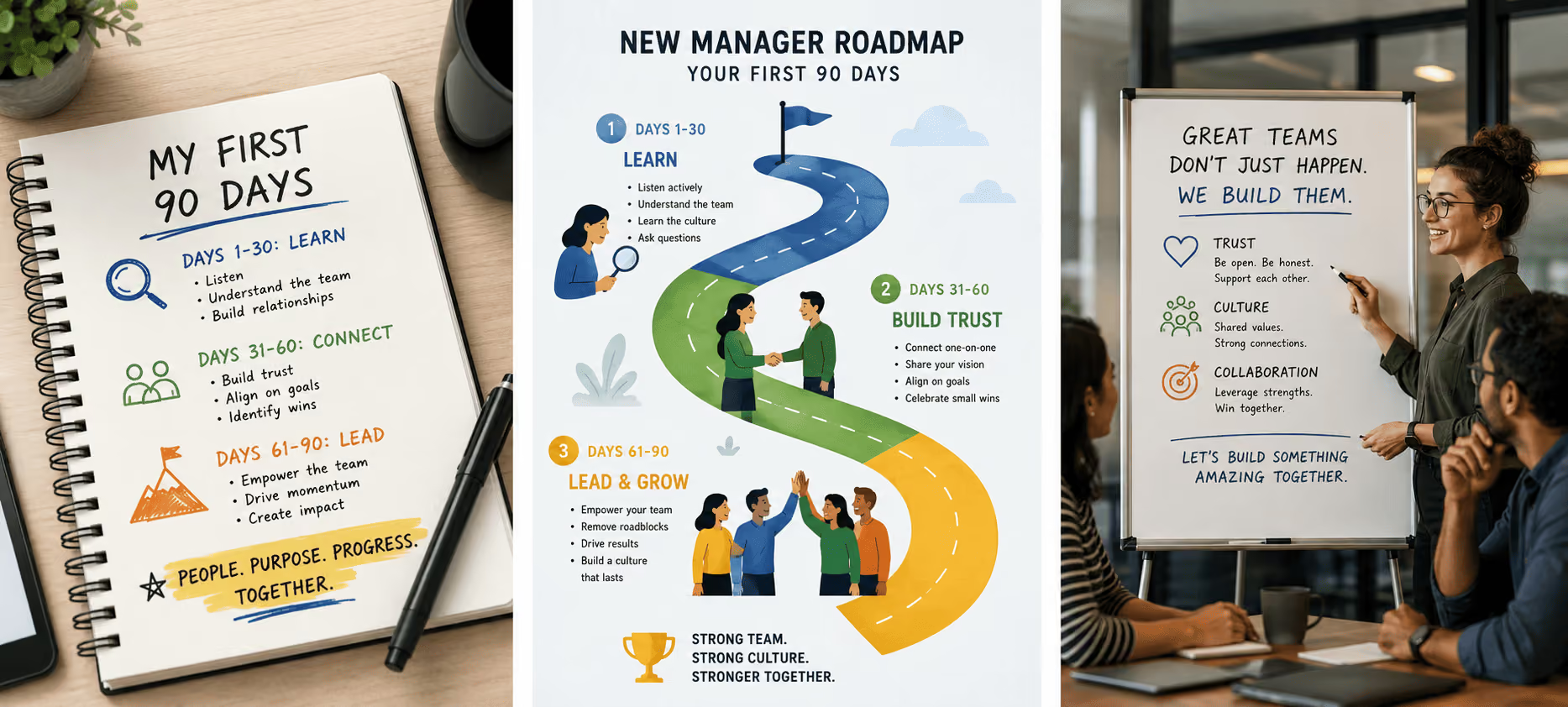
Research on organizational psychology consistently shows that the mental models employees form about a new manager in the first 30 to 90 days are remarkably stable. Early impressions — of leadership style, trustworthiness, competence, and cultural intention — tend to persist and shape how the team interprets everything the manager does afterward.
Put simply: the culture you build in the first 90 days is the culture you'll manage for years. A team that forms around genuine psychological safety, clear norms, and mutual trust in the first three months will navigate future challenges — difficult quarters, organizational changes, personnel conflict — with those foundations intact. A team that forms around uncertainty, guardedness, and unclear expectations will accumulate relational debt that compounds every time something goes wrong.
The stakes are documented. Gallup's 2026 research shows that managers account for 70% of the variance in employee engagement scores. McKinsey research shows that newly promoted managers who invest in deliberate team building in their first 90 days see 40% higher team performance scores at the 12-month mark than those who don't. The early investment is not a nice-to-have. It is the highest-leverage work a new manager does.
The problem is that most new managers are not given a team building framework — they're given a job description, a portfolio of responsibilities, and the implicit expectation that building culture is a secondary concern behind delivering results. This guide corrects that.
For the broader context on how team building produces measurable outcomes, our team building ROI guide covers the evidence base.
What New Managers Get Wrong About Team Building
Before the framework, the three mistakes that are most common - and most costly - for new managers.
Mistake 1: Treating Team Building as a One-Time Event
New managers typically plan one team building event - a lunch, a happy hour, a team activity - in their first month and consider the culture-building box checked. The research on this is consistent: one-time events produce temporary improvements in mood and morale that decay within four to six weeks without reinforcement. The team building that produces lasting outcomes is a sustained cadence of small, consistent positive interactions — not a single event, however excellent.
Mistake 2: Performing Instead of Connecting
Many new managers use early team interactions to establish their competence, authority, and strategic vision — performing for the team rather than genuinely connecting with it. This is understandable: new managers feel pressure to demonstrate that they deserve the role. But the team is not watching to evaluate competence in the first 30 days. They are watching to evaluate trustworthiness. Competence impresses. Genuine curiosity and authentic listening build trust.
Mistake 3: Assuming the Team Is Fine
Teams that appear to be functioning well on the surface — hitting targets, avoiding conflict, maintaining polite collegiality — are not necessarily operating at anything close to their potential. Many high-performing teams are high-performing despite significant relational deficits: accumulated resentments, unspoken conflict, unclear roles, and a psychological safety floor that is far lower than leadership assumes. New managers who inherit apparently healthy teams and proceed without genuine diagnostic investment often discover significant culture problems only when something goes wrong and the underlying fragility is exposed.
For the diagnostic framework on identifying what's actually happening beneath the surface of a team, our team building consulting guide covers the professional assessment approach.
The Foundation: What Your Team Needs Before Any Activity
Before planning any team building activity, establish three foundational conditions. Without them, activities produce entertainment rather than development.
Psychological safety as the prerequisite. Amy Edmondson's foundational research at Harvard Business School establishes that teams only perform at their potential when members feel safe to speak up, take risks, and admit mistakes without fear of punishment. Psychological safety is built through consistent manager behavior, not through team building events. Your team building activities accelerate psychological safety — they don't create it. The creation happens through how you respond to the first mistake someone makes in front of you, how you handle the first disagreement in a team meeting, and whether you acknowledge your own uncertainties and limitations.
Clear working norms before fun. Team building in the absence of clear shared norms produces a pleasant experience with no behavioral change. Before your first team building activity, have an explicit conversation with your team about how you want to work together: communication norms, decision-making processes, meeting culture, and what you collectively agree to do when things go wrong. The norms conversation is often the most important team building session a new manager runs — and it costs nothing.
Individual understanding before group investment. You cannot build a team without understanding the individuals in it. Before planning group activities, invest in genuine one-on-one relationships with each team member. Not performance check-ins. Genuine curiosity conversations: what motivates them, what frustrates them, what they're proud of, what they find difficult, what they need from a manager to do their best work.
For the structure of effective one-on-one conversations with new direct reports, our manager training gap guide covers the specific skills that distinguish effective manager relationships.
Week One: The Listening and Learning Phase
The objective of week one is not to impress. It is to understand. New managers who spend week one communicating their vision, establishing their leadership style, and signaling their competence consistently underperform managers who spend week one listening, asking genuine questions, and communicating genuine curiosity about their team.
Day 1–2: Individual Listening Sessions
Schedule a 30-minute one-on-one with every direct report in your first two days. The structure is simple:
Questions to ask:
- "What's working well in this team that you'd like to see protected?"
- "What's not working that you'd like to see change?"
- "What do you need from a manager that you haven't always gotten?"
- "What should I know about this team that I wouldn't learn from any report or briefing?"
- "What are you personally working on that you're most proud of right now?"
Your role: Listen. Take notes. Do not defend, explain, promise, or redirect. The purpose of this conversation is signal collection, not agenda-setting.
These conversations produce the intelligence you need to make every subsequent team building decision well. They also send an immediate signal about how you lead: not by telling, but by asking.
Day 3–4: Team Observation
Before running any group format, observe the team in its natural working context. Watch how they interact in their existing meetings. Who speaks most? Who defers? Where does disagreement surface and where is it suppressed? Who are the informal influence nodes — the people others look to before forming opinions? This observation is diagnostic gold.
Day 5: First Group Touchpoint (User Manual Session)
On the last day of week one, run your first structured group format: the User Manual. Each team member — including you — completes a short document describing their working style, communication preferences, feedback preferences, and what they need from colleagues to do their best work. Share these in a facilitated group session.
The User Manual accomplishes three things simultaneously: it creates genuine mutual knowledge between team members who may have worked alongside each other for years without this depth of understanding; it establishes a norm of explicit communication about working style rather than assumption; and it positions you as someone who invests in understanding people rather than just managing them.
For quick team building activities that work well in the week-one context, see our quick team building activities guide and our icebreaker questions resource for the most effective week-one prompts.
Month One: Building Relational Infrastructure
The objective of month one is building the relational infrastructure — the actual relationships, working norms, and communication habits — that will determine how the team navigates everything that comes after.

Week 2–3: Structured Team Meeting Ritual
Establish a consistent, structured team meeting format that includes a brief team building element every week. Not a long activity — a five-minute structured touchpoint that creates positive interaction before business content begins.
Formats that work for week-two and week-three team meetings:
- Rose/Bud/Thorn: Each person shares one positive from the week (rose), one challenge (thorn), and one thing they're looking forward to (bud). Three minutes, goes around the room or screen.
- Weekend in Three Words: Each person describes their weekend (or something non-work) in exactly three words. Creates genuine personal discovery without requiring extended sharing.
- One Question: One rotating question asked at the start of each meeting — professional or personal, never invasive, always optional. The rotation means different people contribute each week.
These micro-moments are not substitutes for deeper team building investment. They are the connective tissue that maintains relational momentum between larger investments. For a full library of formats, see our 30 team building games for meetings guide.
Week 3: Team Working Agreement
Facilitate a 60-minute team session to co-create your Team Working Agreement. This is a structured conversation — not a manager speech — where the team collectively defines:
What we commit to:
- How we communicate (channels, response expectations, meeting norms)
- How we make decisions (who decides what, how disagreement is handled)
- How we support each other (what asking for help looks like, how we cover for each other)
- What we do when something goes wrong (accountability without blame)
The working agreement is a living document, not a mission statement. It should be short (one page), specific (behavioral rather than aspirational), and revisited quarterly.
The process of creating it is as valuable as the document it produces. The team discovers how they think about working together — areas of agreement, genuine differences of expectation, and implicit assumptions that were never stated.
Week 4: First Genuine Team Experience
At the end of month one, run a genuine team building experience — something more substantial than a meeting touchpoint. This is the first event that creates shared memory: a moment the team will reference as the start of something rather than just another workday.
Format options for month-one team experience:
For teams of 6–15: A half-day facilitated program — either an outdoor challenge, a creative competition, or a facilitated assessment workshop. The size allows genuine personal interaction.
For teams of 15–50: A professionally facilitated team program with deliberately cross-functional team assignments (important: never let people self-select their groups). Full Tilt's most popular programs include formats that work well for a first-month team experience.
For teams inheriting significant organizational change (post-merger, post-restructuring, or RTO transition): the return to office team building framework applies directly — the relational dynamics of new management and RTO transition are closely parallel.
The debrief is everything. Whatever format you choose, protect 20 minutes at the end for a facilitated debrief. One question: "What happened in that program that you also see in how we work together?" The team will answer. Those answers are the most useful diagnostic data a new manager can gather in the first month.
Individual Check-In at Day 30
At the 30-day mark, hold a brief individual check-in with every direct report — different from the week-one listening session. This one asks specifically:
- "What's going well in the first month that you'd like to keep?"
- "What's one thing I could do differently that would make your work easier?"
- "Is there anything from our first-week conversation that I should follow up on?"
The 30-day check-in signals that week one's listening was genuine, not performative. Managers who follow up on early conversations build trust faster than those who don't.
Month Two: Creating Shared Identity
The objective of month two is creating genuine shared identity — a sense that this is a team with a specific culture, specific values, and a specific way of doing things that is distinct from other teams in the organization.
Behavioral Assessment Workshop
Month two is the right moment to introduce a formal behavioral assessment — DISC, Enneagram, or Myers-Briggs — as a facilitated team workshop.
The timing matters. At month one, the team hasn't yet accumulated enough shared working experience for assessment results to feel immediately relevant — they're abstract profiles applied to people you don't yet know well. At month two, the team has enough experience of each other for the assessment results to land as recognition rather than revelation: "That explains why we communicate the way we do."
A professional DISC or MBTI workshop gives the team a shared language for the differences that generate the most friction: communication style, decision-making speed, conflict approach, and energy orientation. With this language, the team can navigate differences explicitly ("I know you prefer written communication before decisions, so let me send you the brief first") rather than experiencing them as character flaws.
For the full assessment workshop format and what each tool is best suited for, see our guide on how to transform team dynamics with Myers-Briggs activities and our Enneagram workshops guide.
Team Identity Session: Who Are We?
A facilitated 90-minute session where the team defines its collective identity — not the company's mission statement, but this specific team's character, values, and ways of working that distinguish it from every other team in the organization.
The questions that generate the most useful content:
- "What do we do that we're most proud of as a team?"
- "What do we believe about how good work gets done that not everyone in this organization agrees with?"
- "What would be lost if this team was dissolved and its members scattered to other teams?"
- "What does it mean to be a member of this team rather than just an employee of this company?"
The answers — written on a shared document, visible to the whole team — become the beginning of team culture documentation. Not a values poster. A genuine account of who this team is and why it matters.
Cross-Team Relationship Building
Month two is the right moment to begin intentionally building the cross-functional relationships that make your team more effective inside the organization. For each of your team's most important internal stakeholders (other teams, adjacent functions, leadership), identify one relationship-building action:
- A cross-functional lunch or coffee between your team members and their counterparts
- An invitation to a partner team to present their work to your team (and vice versa)
- A joint project or challenge that creates natural cross-functional collaboration
Cross-functional relationship building is not a nice-to-have for new managers — it is how you build the organizational influence that lets you get things done for your team. For the framework on building cross-functional team effectiveness, see our cross-functional retreats guide.
Month Three: Establishing Sustainable Culture
The objective of month three is establishing the sustainable rhythms, norms, and practices that will carry the team's culture beyond the initial investment period.
The Team Health Check
At the 60-day mark, run a brief team health survey — five questions, anonymous, results shared transparently with the team:
- "I feel psychologically safe to speak up, disagree, and take risks with this team." (1–5)
- "I trust my direct manager to act in the team's genuine interest." (1–5)
- "I feel connected to my colleagues as people, not just as work resources." (1–5)
- "The team's communication and decision-making processes are clear to me." (1–5)
- "What one thing would most improve my experience on this team?"
Share the aggregate results in the next team meeting. Discuss them honestly. The act of measuring and discussing — even if the scores are imperfect — builds trust faster than any activity, because it demonstrates that the manager is genuinely interested in the team's experience rather than its performance optics.
Second Major Team Building Event
Month three is the right moment for a second substantial team building investment — different in format from the month-one experience, building on the relational foundation established since.
If month one was an outdoor physical challenge, month three should be a creative or cerebral format. If month one was an assessment workshop, month three should be an experiential challenge. The variety prevents the program from becoming predictable while maintaining the consistent investment signal.
For new managers specifically, Full Tilt recommends the Dragon Throne strategic challenge or Domino Effect Challenge at the month-three mark — both produce unusually rich observational data about how the team makes decisions, manages conflict, and leads under pressure. The debrief from these programs, run at month three when the manager knows the team well enough to make specific connections, consistently produces the most impactful team development conversations of the first year.
Quarterly Cadence Lock-In
By the end of month three, the team should have a committed, documented quarterly team building cadence: what happens each quarter, how it's budgeted, and who is responsible for planning each element. The cadence should include:
- Weekly micro-moment (5 minutes in team meeting — manager leads, rotating format)
- Monthly team touchpoint (30–60 minutes, facilitated, cross-functional mixing if team is large enough)
- Quarterly program (professionally facilitated, half-day to full-day, genuine development objective)
For the complete annual planning framework that a new manager can use to establish their team building cadence, our annual team building calendar guide provides the month-by-month structure. Our how often to do team building guide covers the frequency evidence base.
90-Day Review and Reset
At the 90-day mark, hold a structured team retrospective — 60 minutes, facilitated with the team, not just by the manager. Use a Keep/Stop/Start framework:
Keep: What is working about how we operate as a team that we want to protect?Stop: What is not working or adding value that we should stop doing?Start: What have we not yet tried that we should introduce?
Apply the retrospective not just to processes and workflows but explicitly to team culture: "What about how we treat each other and communicate with each other should we keep, stop, or start?"
The retrospective at 90 days produces two outcomes: genuine intelligence about what has and hasn't worked in the first quarter, and a visible demonstration of the collaborative leadership style that defines the team's culture going forward.
Team Building Activities Specifically for New Managers
These are the specific activities — organized by phase and objective — that produce the strongest outcomes in the new manager context.
Week One Activities
User Manual Session (60 minutes, in person or video)Each person documents their working style. Shared and discussed. Creates genuine mutual knowledge that weeks of normal work interactions don't produce.
Individual Listening Sessions (30 minutes each)Not a performance conversation. Genuine curiosity about each person's experience, aspirations, and needs. The most important team building work a new manager does.
Icebreaker Round in First Team Meeting (10 minutes)A structured question that reveals something genuine. Not "tell me a fun fact about yourself." Something specific: "What's the best piece of feedback you've ever received and why?" or "What's one thing about your work here that you're most proud of?" For a complete library of prompts, see our 150 icebreaker questions guide.
Month One Activities
Team Working Agreement Session (60–90 minutes)Facilitated conversation that produces a shared behavioral document. The process is as valuable as the output.
First Facilitated Team Experience (half-day)A scavenger hunt, outdoor challenge, or creative competition with deliberately mixed team composition and a structured debrief. For small teams (under 15): a facilitated assessment conversation or creative challenge works well. For larger teams (15–50): Full Tilt's most popular programs include formats specifically suited to this moment.
Communication Styles Workshop (half-day)A structured introduction to communication style differences — using DISC, Myers-Briggs, or a simplified communication preference framework — even before the full assessment workshop planned for month two.
Month Two Activities
Full Behavioral Assessment Workshop (half-day with debrief)DISC, Enneagram, or Myers-Briggs. Professionally facilitated, with team debrief connecting profiles to real working dynamics.
Team Identity Session (90 minutes)Facilitated conversation producing a written team identity document. Not a values exercise — a genuine characterization of this specific team's culture and character.
Peer Appreciation Structure (10 minutes weekly)A permanent weekly meeting element where each person appreciates one specific action a colleague took that week. Rotates so everyone receives appreciation regularly.
Month Three Activities
Team Health Survey (5-minute survey, 30-minute team discussion)Anonymous, transparent, genuinely discussed. The act of measuring and discussing builds more trust than the scores themselves.
Second Major Team Experience (half-day, different format from month one)Dragon Throne for decision-making and strategic thinking insight. Domino Effect Challenge for communication and precision. Lights Camera Action for creative teams.
90-Day Retrospective (60 minutes, team-facilitated)Keep/Stop/Start applied to both process and culture. The capstone of the first quarter.
How to Use Assessment Tools to Accelerate Team Trust
Behavioral assessments — DISC, Enneagram, Myers-Briggs — are the single most efficient tool available to new managers for accelerating the understanding that normally takes a year to develop through working experience.
What assessments do:They give the team a shared language for the differences that generate the most friction. When a team understands that their most analytical member's apparent resistance to quick decisions is a function of their cognitive style (not obstructionism), and that their most action-oriented member's impatience with process is equally a style characteristic (not arrogance), the dynamics that were previously experienced as personality conflict become navigable as style difference.
When to introduce assessments:Month two is the optimal timing — after enough shared experience for profiles to feel relevant, before the working patterns have calcified into intractable norms.
How to run them effectively:Assessments run as self-discovery exercises (everyone reads their own profile) produce limited outcomes. Assessments run as facilitated team sessions — where each person's profile is discussed in the context of the team's real working dynamics — produce significantly stronger outcomes. The facilitation quality matters more than the assessment tool.
For the complete guide on which assessment is right for which team context, see our guides on DISC personality assessment for teams, Myers-Briggs team activities, and Enneagram workshops.
Team Building for New Managers Inheriting Difficult Teams
Some new managers inherit teams that are genuinely dysfunctional — fractured trust, unresolved conflict, significant morale problems, or the aftermath of a poor previous manager. The framework above applies, but with modifications.
Move slower on structured activities. Teams with fractured trust react defensively to structured team building activities — they experience them as management's attempt to paper over genuine problems. Before any group activity, invest more heavily in individual relationship building and trust-earning behaviors.
Name the elephant. If you know the team has had a difficult period, acknowledge it directly — without details you shouldn't share and without assigning blame. "I know this team has been through some difficulty. I'm not going to pretend otherwise. What I can tell you is that I'm genuinely interested in understanding your experience and earning your trust." Honesty about the situation builds more trust faster than optimistic reframing.
Bring in external support earlier. For teams with significant dysfunction, a professional external facilitator produces outcomes that internal facilitation cannot — because they have the neutrality and distance to hold difficult conversations that managers inside the team's dynamics cannot safely manage. For the framework on when external facilitation is appropriate, our team building consulting guide covers the decision criteria.
Use trust-building activities specifically. For teams with trust deficits, the effective trust-building activities guide and our guide on fixing communication breakdown are specifically designed for teams that need repair rather than development.
For the full framework on team building in challenging culture contexts, see our team building in toxic cultures guide.
Team Building for New Managers Leading Remote and Hybrid Teams
Managing a remote or hybrid team as a new manager is a specific challenge that requires a modified approach to the framework above.
Individual connection is harder — invest more. In remote contexts, the informal relationship-building that happens through physical proximity (hallway conversations, shared lunch, reading body language across a conference table) doesn't exist. New managers of remote teams need to invest more explicit time in individual relationship-building than their in-person counterparts.
Structure micro-moments more deliberately. The ambient positive interactions of in-person environments — the greeting in the morning, the shared coffee, the overheard context — need to be deliberately designed in remote contexts. The weekly meeting touchpoint is essential, not optional.
First in-person investment is high leverage. For distributed teams, the first time the team meets in person — whether an annual retreat, a quarterly offsite, or a one-time event — is the highest-leverage investment a new manager makes. Designing that event well is worth significant investment in format, facilitation, and preparation.
For the complete framework on building culture with distributed teams, our rebuilding team culture after remote work guide covers the specific dynamics new managers of remote teams navigate.
For building connection across locations, our in-person team building activities guide covers the formats that produce the strongest relational outcomes when the team is finally in the same room.
When to Bring in External Support
New managers should consider professional external facilitation when:
The team has significant pre-existing dynamics. If you've inherited a team with unresolved conflict, significant morale problems, or a difficult previous management history, a neutral external facilitator can hold conversations that you cannot safely hold as the new insider.
The first major team experience needs to be excellent. First impressions of team building programs — like first impressions of managers — are sticky. A poorly facilitated first team experience generates cynicism that makes subsequent investments harder. Professional facilitation ensures the first program sets the right precedent.
You want diagnostic data about how your team actually works. A skilled external facilitator, observing the team during a structured program, sees dynamics that the manager inside the group cannot see. The post-event debrief with the facilitator is often the most useful intelligence a new manager receives about their team's real functioning.
The team is large. Self-facilitated team building for teams over 20–25 people requires skills and infrastructure that most new managers don't have. External facilitation scales; internal facilitation struggles.
Full Tilt's programs are specifically designed for the new manager context — short enough to integrate into a normal workday, professionally facilitated, and designed to produce diagnostic insight alongside team development outcomes.
Get a quote for your team's first program →
Frequently Asked Questions
What should a new manager do first for team building?
The most important first step is not an activity — it is individual listening. Before planning any group format, schedule a 30-minute one-on-one with every direct report in the first two days. Ask what's working, what's not, and what they need from a manager. These conversations produce the intelligence that makes every subsequent team building decision better, and they send an immediate signal about how you lead: by listening, not by performing.
What team building activities work best for new managers?
The activities that produce the strongest outcomes for new managers, in order of timing: the User Manual session in week one (creates genuine mutual knowledge about working styles), the Team Working Agreement in week three (establishes explicit norms through collaborative conversation), a behavioral assessment workshop in month two (gives the team shared language for the differences that cause friction), and a professionally facilitated team challenge program at the month-one and month-three marks. The specific format matters less than the quality of the debrief and the deliberateness of the team composition.
How quickly should a new manager build their team?
The research supports a 90-day framework: listening and learning in week one, relational infrastructure building in month one, shared identity creation in month two, and sustainable culture establishment in month three. The mistake is either moving too fast (imposing culture before trust is earned) or too slow (waiting until things go wrong to invest in team building). Week one individual conversations, month one team working agreement and first experience, month two assessment workshop, month three health check and retrospective is the evidence-supported sequence.
What are good icebreakers for a new manager's first team meeting?
The most effective icebreakers for new managers go beyond "fun fact about yourself" to something that reveals genuine professional character. Strong options: "What's the best piece of feedback you've ever received, and what made it valuable?" / "What's one thing you're working on right now that you're most proud of?" / "What's something about how you work best that you wish more managers knew?" These prompts respect the professional context while creating genuine personal discovery. For a complete library of 150 icebreaker prompts organized by category, see our icebreaker questions for work guide.
How do I build trust as a new manager quickly?
Trust is built through consistent behavior, not through trust-building activities. The behaviors that build trust fastest: following through on every commitment you make in the first 30 days (including small ones), responding to the week-one listening sessions with visible actions, acknowledging uncertainty and limitations rather than performing comprehensive confidence, protecting your team when organizational pressure pushes against them, and being consistently honest even when the honesty is difficult. Team building activities accelerate trust-building when they create genuine shared experience — but they cannot substitute for the behavioral consistency that is trust's actual foundation.
What team building activities work for new managers of large teams?
For large teams (20–50+), the most effective formats involve professionally facilitated programs with deliberately cross-functional team assignment — formats where the facilitation is professional enough to manage the logistics and group dynamics of a large group, and where the team composition is intentionally mixed across usual organizational boundaries. Full Tilt's programs for large groups are specifically designed for new managers who need to build culture across a large, potentially siloed team. The debrief is especially important at large team scale — it is how the manager synthesizes what the program revealed for the whole group.
Should new managers inherit their predecessor's team building traditions?
It depends on the tradition's function. Team building traditions that created genuine positive shared memory and are authentically valued by the team are worth inheriting and building on — they are cultural assets. Traditions that were tolerated but not genuinely valued are worth acknowledging ("I know you've done X in the past — I'd love to hear what you thought worked about it") before deciding whether to continue. The key question: does this tradition serve the team's genuine connection and development, or does it serve the appearance of caring about team culture? The former is worth keeping. The latter is worth redesigning.
When should new managers bring in professional team building facilitation?
New managers should consider professional external facilitation in three situations: when the team has significant pre-existing dysfunction or conflict that internal facilitation cannot safely address; when the first major team experience needs to be excellent rather than experimental (first impressions of team building programs, like first impressions of managers, are sticky); and when the manager wants diagnostic data about how the team actually works — information that a skilled external observer collects during a structured program that the insider manager cannot see from inside the group. Full Tilt works specifically with new managers to design first programs that set the right cultural precedent and produce genuine diagnostic insight.
Full Tilt Teams works with new managers across North America to build team culture deliberately in the first 90 days. We design programs, facilitate assessments, and provide the external perspective that accelerates what would otherwise take years. Start the conversation →