

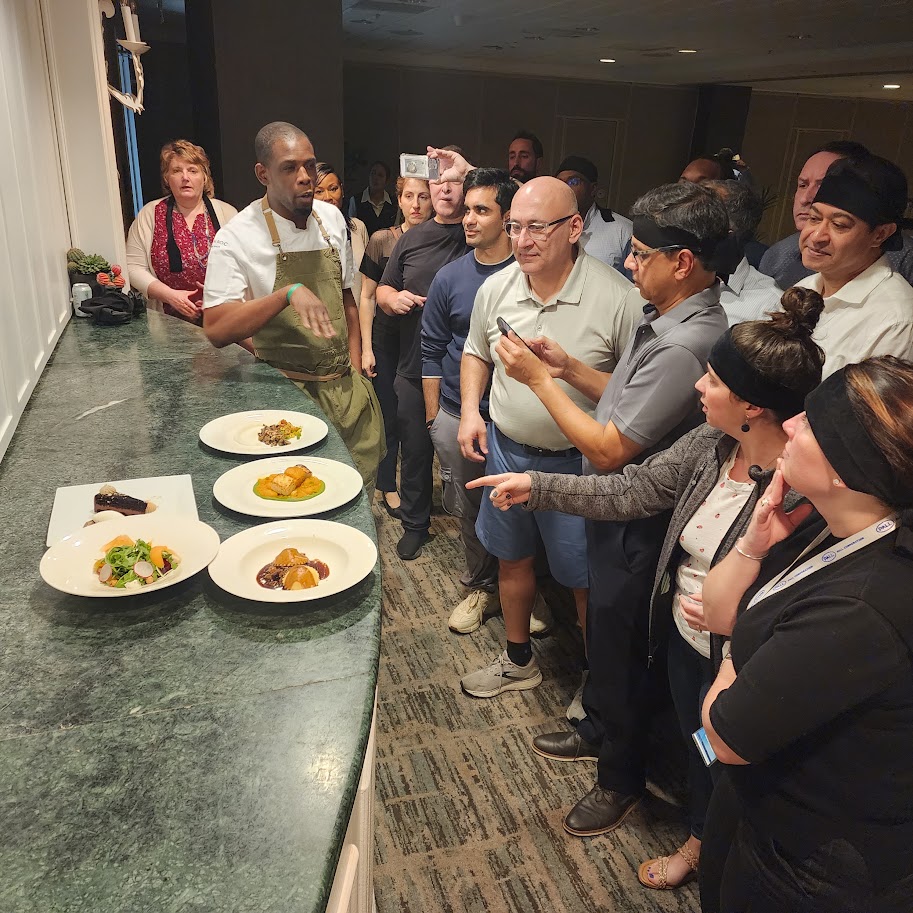
A lunch and learn is a short, optional session held over lunch in which one person teaches colleagues something useful. It is the cheapest learning format a company has: no travel, no venue, a speaker who already works there and food you would often provide anyway. It is also easy to get wrong. A vague topic, a speaker who reads slides and a sandwich platter that runs out by 12:10 will empty the room by the third session.
This guide covers both halves. First, how to run one: format, a 45 to 60 minute agenda, food, hybrid set-up, recruiting internal speakers and getting people to come back. Then sixty lunch and learn topics for employees, grouped into eight categories, with a note on which ones need a trained facilitator rather than a volunteer.
How to run a lunch and learn people attend
Choose the format
A 45 to 60 minute agenda
- 0:00 to 0:10, food and arrival. Serve food before the talk. People who are queuing are not listening.
- 0:10 to 0:15, opening. The host introduces the speaker and states the one outcome of the session.
- 0:15 to 0:35, content. Twenty minutes maximum, with one example from inside the company.
- 0:35 to 0:50, practice or questions. Pairs try the technique, or the room asks questions. Seed the first question yourself.
- 0:50 to 0:55, one action. Each person writes the one thing they will try this week.
- 0:55 to 1:00, close. Share the slides or notes and announce the next session.
For a 45-minute slot, cut the content to fifteen minutes and the practice to ten. Do not cut the food time.
Food, hybrid set-up and speakers
Food
Order a margin above the number registered; walk-ins are common and running out is remembered. Ask for dietary needs at registration, label every dish, and serve the dietary options first or set them aside so they are not taken by others. Choose food that can be eaten with one hand while taking notes: wraps, grain bowls and salads work better than anything that needs a knife. Remote attendees get either a meal voucher or nothing; whichever you choose, apply it consistently. Check with HR whether attendance counts as working time in your location before you make sessions mandatory or schedule them during an unpaid break.
Hybrid set-up
Assign two hosts: one in the room and one who watches the chat. Use a room microphone that picks up questions from the floor, or have the room host repeat every question. Share slides from a laptop on the call, not by pointing a camera at a screen. Record the session for people in other time zones, and say at the start that it is being recorded. The hybrid team building guide covers the same design problem for team activities.
Inviting internal speakers
The best internal speakers are not always the most senior. Ask managers and team channels, "What do colleagues always come to you for?" The answers are your topic list: the analyst everyone asks about spreadsheets, the account manager who writes clear proposals, the engineer who explains things well. Give each speaker a one-page brief: the audience, the one outcome, twenty minutes of content, one internal example and a run-through a week before. Thank them publicly afterwards.
Getting people to attend
- Title the outcome. "Run a meeting that ends on time" fills a room; "Meeting effectiveness" does not.
- Same slot, every time. Second Tuesday of the month at noon becomes a habit.
- Ask before you schedule. A two-question poll on topics and times beats guessing.
- Keep it optional. Mandatory attendance turns a perk into a meeting.
- Publish the series. A three-month calendar shows the programme is real and lets people plan.
- Close the loop. Send a one-line follow-up with the action from the session.
60 lunch and learn topics for employees
Each topic is phrased as a session title. Adjust the wording to the outcome your team needs.
Communication (1 to 8)
- Write an email people answer the same day
- Run a meeting that ends on time with decisions recorded
- Present a status update in three minutes
- Ask questions that get useful answers
- Explain your work to someone outside your department
- Listen without planning your reply
- Write a clear project brief on one page
- Handle a difficult conversation with a client
For activities that build these skills as a group, see team building activities for better communication skills.
Feedback (9 to 15)
- Give feedback that is specific and kind
- Receive feedback without defending yourself
- Ask your manager for feedback, and what to ask
- Peer feedback after a project
- Feedback across teams and time zones
- Recognising colleagues in a way that lands
- Turning feedback into a plan for next month
Personality and working styles (16 to 22)
- Introverts and extroverts in the same meeting
- How you prefer to receive information, and why it matters
- Working styles under deadline pressure
- Introduction to DISC styles
- Introduction to Myers-Briggs preferences
- Introduction to the Enneagram at work
- Cognitive diversity: why the team needs people who think differently
Topics 19 to 21 are introductions only. A full assessment and debrief needs a trained practitioner; see the facilitator section below. The guide to team building activities for introverts pairs well with topic 16.
Leadership (23 to 30)
- Delegating without losing track
- Running a useful one-to-one
- Setting priorities when everything is urgent
- Leading a meeting you do not chair
- Making decisions with incomplete information
- Leading change your team did not choose
- From peer to manager: the first ninety days
- Leading a hybrid team
Wellbeing habits (31 to 37)
These are practical sessions about how people organise their working day. Keep them practical and avoid health promises; if a topic touches on health, invite a qualified professional or your benefits provider.
- A walk-through of your employee benefits, led by HR
- Setting notification and email boundaries
- Planning lunch breaks you take away from your desk
- Organising a home desk set-up, led by facilities
- Planning time off so work does not pile up
- Personal finance basics: understanding your retirement plan options, led by your plan provider
- Batch cooking for busy weeks
The guide to wellness activities for employees has more ideas in this category.
Career skills (38 to 45)
- Spreadsheet shortcuts that save time every week
- Writing your own development plan
- Building a network inside the company
- Preparing for a performance conversation
- Negotiating priorities with your manager
- Using the new tool or system everyone has
- Public speaking for people who avoid it
- Time management for people with too many meetings
Team-building mini-sessions (46 to 52)
A lunch slot is long enough for one short activity and a debrief. These work best in person with tables.
- A ten-minute build challenge with a five-minute debrief
- Two truths and a lie, work edition
- A team trivia round about the company
- Minute to Win It games, three rounds
- A desk scavenger hunt
- Questions-of-the-day speed rounds
- A "this or that" warm-up for new teams
The quick team building activities collection has more five-to-fifteen-minute options, the Minute to Win It games for work guide has rules and supplies, and the questions of the day for work list feeds topics 51 and 52.
Culture and company knowledge (53 to 60)
- How the company makes money, explained by finance
- A day in the life of another department
- What our customers say, read aloud
- The story of a project that went well
- Our values in practice: examples from this year
- Meet the leadership team: open questions
- New starter welcome: how things work here
- Volunteering and giving programmes, and how to join one
Topic 59 fits an onboarding programme; the team building for new hires guide covers the rest of the first ninety days. Topic 31 or a development session also fits well inside an employee appreciation week.
When to bring in a facilitator
An internal speaker is right for knowledge: the benefits plan, a tool, how a department works. A trained facilitator is worth the cost when the session must change how people behave, which takes practice and feedback, or when it uses a personality assessment, which needs someone qualified to interpret results.
Most of FullTilt's team building training modules run longer than a lunch hour, so a common pattern is to use a lunch and learn as a short introduction and book the full module for teams that want to go further. Ask whether a shorter format fits your slot when you request a quote.
Communication and soft skills
- Optimal Time Management: small groups work through time management tasks framed as a business simulation, then present what they did.
- The Art of Presenting: presentation skills, typically followed by a team building program where the skills are put into practice.
- 360 Degree Behavioural Matrix: an experiential session on communication and behavioural styles, starting with icebreakers and moving into designed challenges.
- Cross-Boundary Communication: listening, and asking for, giving and receiving feedback, practised through hands-on challenges.
These sit within FullTilt's communication and soft skills programs.
Feedback, habits and leadership
- Clear and Productive Feedback: CAP stands for Clear, Authentic and Productive, and the module is designed to make feedback a regular ritual.
- 8 Productive Practices: eight team habits, in a half-day or full-day format.
- Authentic Leadership: an experiential program on leadership styles and building trust.
- Mission, Vision and Values: a customised two-to-four-hour session that produces documents such as a mission statement and core values.
- Mandala Leadership Project: teams create mandala designs on wooden panels that are joined into one image around a theme; two to three hours, from 12 to 500+ participants.
See the full leadership training and experiential learning listings.
Personality workshops
FullTilt's DISC workshop, Myers-Briggs (MBTI) workshop and Enneagram workshop follow the same steps: each person completes the assessment, receives their type, works through the results with a practitioner and then applies them to how the team works together. The Enneagram workshops guide and the guide to DISC assessment workshops explain what each covers, and the team building workshops guide compares workshop formats more broadly. Pricing for facilitated sessions: $3,000+ total event; per-person varies; confirm in your quote.
Hypothetical planning example: not a FullTilt client case, delivered program or quote. A 60-person office runs a monthly lunch and learn with internal speakers for spreadsheets, benefits and a day in the life of finance. In March it uses the slot for a twenty-minute introduction to working styles, then books a half-day facilitated DISC workshop in April for the two teams that asked for more.
Frequently asked questions