


New Year team building experiences can reset trust faster than any policy change—if they’re done right.
January feels like a clean slate. Employees return to work with New Year’s resolutions fresh in mind. Others are determined to stay “dry” in January. Some are just glad that the stress of the festive season is gone for another year. But there’s a real issue when it comes to teamwork.
The real problem is that teams don’t return to work refreshed. They come back fragmented. Different energy levels. Half-finished goals. And a corporate hangover from Q4 that’s worse than anything experienced on New Year’s Day. So, HR leaders schedule a kickoff, a few icebreakers, and hope momentum magically appears. It usually doesn’t.
Most New Year’s team building activities focus on morale instead of trust. Yes, they’re fun. In reality, they’re forgettable, lack focused outcomes, and are disconnected from how work actually gets done. By February, teams have slid right back into their silos, hesitation, unclear ownership, and slow decisions.
At FullTilt Team Development, we know that the right New Year team building experiences do something different. They’re based on experiential learning sessions in which teams are placed in situations where communication matters, accountability is required, and leadership behavior becomes visible. Not theory. Not talk. Real moments that change how people rely on each other.
Why January Team Building Fails More Than Any Other Month
Team building activities must motivate employees in January. However, HR leaders treat these events as a reset button instead of a stress test. They assume that time off at Christmas and New Year fixed things. It didn’t. Although employees return to work with renewed motivation, that alone isn’t enough to keep them productive.
Research published in Harvard Business Review identified January as the month when businesses experience their lowest productivity. Employees find it tough to transition from holiday modes back into work rhythms. Also, 41 percent of Americans say their mental health gets worse during the holiday season.
HR analysts describe the productivity dip as the “January Effect.” From a team building perspective, this can be a strategic window to launch engagement initiatives to help “Q1 energies stabilize.”
Give teams easy, light team building activities in the New Year, and you’ll get similes, a few pictures for LinkedIn feeds, and buzz around the office. But the cracks in teamwork that existed in Q4 are still there. Only this time, employee morale is at its lowest at the start of the year.
Team building in January works better when you use it to see how teams actually operate once the pressure is back.
What Teams Actually Need Before Q1 Planning Starts
Most teams jump straight into Q1 planning because the calendar tells them to. Goals, timelines, roadmaps. It looks decisive. But when the basics aren’t there, all that planning just hardens the same habits that slowed things down last year.
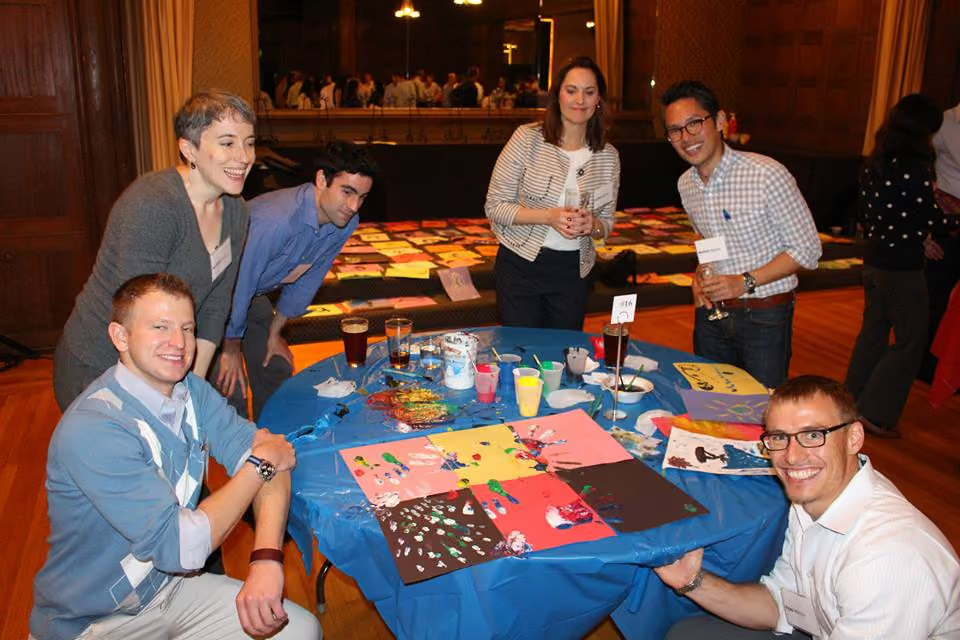
Teams need three things to ensure Q1 doesn’t just look organized on paper but actually works: trust, clarity, and psychological safety.
Trust. Getting teamwork started in Q1 is like trying to start an engine on a cold morning. It turns over, catches for a second, then sputters. With employees, there’s some hesitation at the start, a bit of extra checking, and some projects drag longer than usual.
Build trust in early January, and that friction fades fast. Work moves without checking. A team event like The Amazing Race is a great way for team members to share ideas, work together, and improve their problem-solving skills.
Clarity. One of the nine Cs of effective team building, clear communication, is vital for momentum and high productivity in Q1. Without it, teamwork feels like everyone is moving, but no one’s fully sure which direction they’re going in or when the best time to make decisions is.
Incorporating a module like Clear and Productive Feedback into your New Year’s team building activities ensures clarity. Teams see early on how to express themselves and understand others.
Psychological safety. After returning from the festive break, it’s easy for team members to appear fine on the surface while real concerns stay unspoken. People are wary of voicing doubts and challenging ideas, and many hesitate to share opinions in meetings.
Creating conditions where everyone in a group can speak up without fear of judgment changes the way teams work. Team leaders discover that it’s possible to address problems while they’re still manageable. Experiential team learning based on personality tests like Myers-Briggs can strengthen psychological safety in the workplace.
How to Choose the Right New Year Team Experience
The best activities to strengthen team trust in January revolve around outcomes, not fun. You need team events that are easy to organize, produce fast results, and last longer than someone’s New Year’s resolution.
Momentum
Does work feel busy in January but strangely slow? Are projects technically moving, yet nothing seems to gain speed? Building momentum in January is one of the greatest challenges HR leaders face.
Teams need experiences that restore pace through doing, not talking, so forward motion comes back naturally. New Year’s team building ideas to boost momentum should include micro-events like Minute to Win It.
Leadership
Do teams hesitate in January, waiting for direction that never quite comes? Do leaders jump in late or stay quiet too long? Leadership gaps feel sharper at the start of the year, when people aren’t sure who should guide the work, make the call, or move things forward.
Teams need experiences that surface leadership in real time: guiding others, inspiring action, mentoring peers, using influence well, and setting clear strategic direction.
Conflict Resolution
It’s common for small issues in Q4 to linger through January without ever getting addressed. Employees become guarded and tend to work around points of tension rather than address them. Nothing blows up, but nervous collaboration is like driving with the brakes on.
The right New Year’s team building activities give teams a way to release tension safely. Experiential learning modules like Cross-Boundary Communication help teams work through differences, diffuse misunderstandings, and repair small cracks before they turn into gaping holes.
Emotional Intelligence
Do you need to align your team for the New Year and get everyone working on the same page? Any sort of team building activity that increases self-awareness and empathy will work. This ensures that feedback lands as intended and that friction between colleagues disappears.
FullTilt Team Development has a range of experiential modules based on the DISC personality test, the Enneagram Framework, and the MBTI test. Together, they help people read team moods, stay sensitive to others, and strengthen relationship awareness before missteps turn personal.
Decision Making
HR leaders often say that poor decision-making in January is one of the principal reasons work stalls. Teams get caught up evaluating choices and end up making poor judgment calls. After all, who wants to make the wrong call this early in the year?
Activities to strengthen team trust in January also help develop analytical thinking to choose the best paths. Team members learn to support one another to ensure the best possible outcome once decisions are made.
The Elevated Raceway is an example of a New Year’s team building activity that supports strong decision-making.
Trust-Building Experiences That Set the Tone for the Year
Trust doesn’t usually collapse in January. It thins out. People hesitate. They double-check. Follow-through feels less certain than it should. Maybe by February, trust is regained—but do you really want January to be your least productive month of the year?
.avif)
FullTilt Team Development designs trust-building experiences that surface reliability early. Teams learn to take ownership of decisions, sort out priorities early in Q1, and commit together.
8 Productive Practices
Nothing’s technically wrong in the group. The work gets done. Meetings happen. But you notice that the same small issues keep circling back—missed handoffs, vague priorities, quiet frustration when things slip. The problem is hard to resolve because it’s not due to a single clear failure. It’s the habits underneath.
8 Productive Practices is designed to teach habits that increase productivity and teamwork. The hands-on challenges are built around eight specific routines—proactive action, planning, prioritizing, sharing success, communicating, cooperating, practicing success, and trusting. These help participants turn abstract concepts into tangible skills they can take back to the office.
Outcome: Teams become more efficient and engaged, and workflows improve.
Book 8 Productive Practices as an effective team building idea to support your Q1 strategy.
Mission Incredible
We’ve all seen it happen. A team dives into a big push, splits up fast, and starts moving. Ten minutes later, two people are solving the same problem, one key detail never made it across the room, and time is leaking while everyone stays busy.
Mission Incredible resolves coordination breakdowns when employees must work under pressure. Teams face a series of interrelated challenges in which plans shift, information must travel, and roles adjust in real time. Participants must learn quickly what happens when updates stall or decisions lag—and what changes when communication stays tight.
Outcome: Stronger communication, better problem-solving, and faster adjustment when plans change.
Want new year team building ideas that reveal how teams coordinate under pressure? Book Mission Incredible for your next corporate team event in January.
Anything It Takes
A lack of effort is rarely an issue with teamwork. Teams care. They show up. The real problems show when plans change and no one is sure of the direction. The thing is, good intentions don’t always survive pressure, and follow-through thins out once the work stops being neat.
Anything It Takes resolves that gap between intent and execution. Teams work together on a real, purpose-driven project where planning, coordination, and commitment matter from start to finish. When timelines tighten or decisions shift, there’s nowhere to hide. What holds together—and what doesn’t—becomes clear fast.
Outcome: Stronger ownership, follow-through, and shared responsibility under pressure.
Want new year team building ideas that test commitment, not just motivation? Try Anything It Takes for your January team event and to help charitable causes in the local community.
End-Hunger Games
Trust doesn’t always come from solving work problems together. Sometimes it shows up when the work isn’t about work at all. Early January does that to teams. People pay attention to what feels real and what feels performative.
End Hunger Games challenges teams to complete shared tasks that benefit charitable causes. Groups plan and build themed structures using donated non-perishable food items. The winner is the team with the most elaborate structure. At this New Year’s team building activity, the real winners are the local food banks that receive the donated items.
Outcome: Stronger trust and camaraderie rooted in shared purpose.
If January is when your team leans into community service or a volunteer day, book End Hunger Games as the natural choice.
Q1 Kickoff Experiences That Drive Alignment, Not Just Energy
Most Q1 kickoffs sound good in the room and fade fast after. People leave upbeat, then go back to different priorities and mixed signals.

What are the best Q1 kickoff ideas for corporate team building? Basically, any team event that gets participants working together to develop solutions within limited time frames. FullTilt Team Development has a wide range of these events, but The Amazing Race is one of the most popular for January.
The Amazing Race
Have you ever noticed how teams can communicate constantly and still miss the point? It happens all the time. People share information, but decisions stall. Then they try to move ahead with a project based on what they heard first. At the same time, others wait for clarity that never arrives.
The Amazing Race aims to help team members communicate better and work more closely together. Each team faces a sequence of challenges spread across multiple locations. Groups must develop a strategy, share information as it comes in, divide responsibilities, and make decisions under time pressure.
Racing against other teams adds an element of excitement and forces them to develop strategic thinking and overcome obstacles together.
Outcome: Clearer communication, sharper planning, and stronger execution under pressure.
Looking for corporate team building that goes beyond energy and exposes real coordination gaps? Discover The Amazing Race for teams that need faster decisions and clearer execution in January.
Goal-Setting Experiences That Don’t Collapse by February
Returning to work after the Christmas holidays can feel like a burdensome drag. So, it’s no wonder that it’s easy to lose sight of team goals. Yes, they may look fine on paper, but when the real work shows up, trade-offs get avoided and expectations quietly soften.
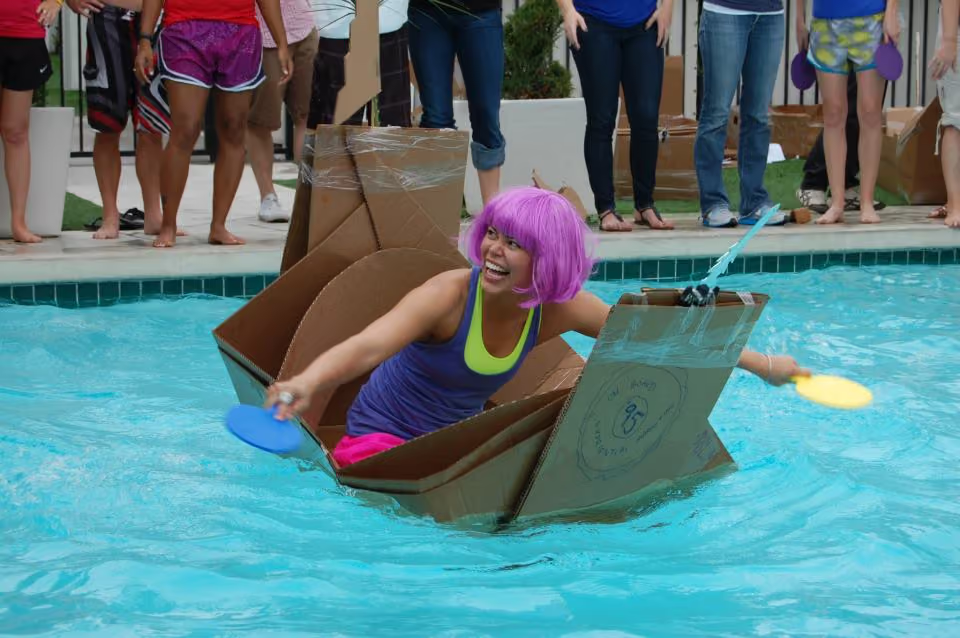
What you need are fun-filled team building activities that energize teams, get them thinking outside the box, and help them set goals to accomplish almost impossible tasks in the shortest time possible.
Cardboard Boat Build
On paper, the plan makes perfect sense—that’s until the materials hit the table and suddenly, no one knows what to do. All you need for teamwork to spiral into chaos are new priorities, time constraints, and basing decisions on assumptions. It’s why chats in the meeting room run smoothly, while execution doesn’t.
The Cardboard Boat Build challenge puts teams in a sink-or-swim situation—literally. Teams must assign responsibilities, adapt, and show mutual support to design and construct a functional boat using only cardboard, tape, and basic materials. The real test of teamwork comes when each team is racing to the other side of the lake or pool with a passenger aboard.
Outcome: Goals get clearer when execution replaces discussion.
Looking for fun team building activities to strengthen team trust in January? Book the Cardboard Boat Build so teams can learn what holds up under pressure.
Domino Effect Challenge
Teams rarely see how much their work depends on everyone else’s timing. One delay feels minor. One handoff slips. The impact shows up later, somewhere else, and it’s hard to trace back. By the time the problem is visible, fixing it usually means rework.
Domino Effect Challenge puts that dependency front and center. Teams design and build a large Rube Goldberg–style machine—an elaborate contraption that performs a simple task. This requires teammates to work closely together, practicing active listening, and showing confidence in others. If they get all elements in place, the final piece of the chain reaction drops into place.
Outcome: Clearer ownership and stronger coordination across interdependent work.
Looking for corporate team building that shows how small breakdowns ripple across teams? Discover the Domino Effect Challenge as a new year team building idea that makes interdependence impossible to ignore.
Leadership Workshops That Reset Expectations Early
January has a way of exposing leadership habits. Teams pause, waiting to see who’s stepping in. Leaders hang back, then jump in all at once. It creates confusion fast.
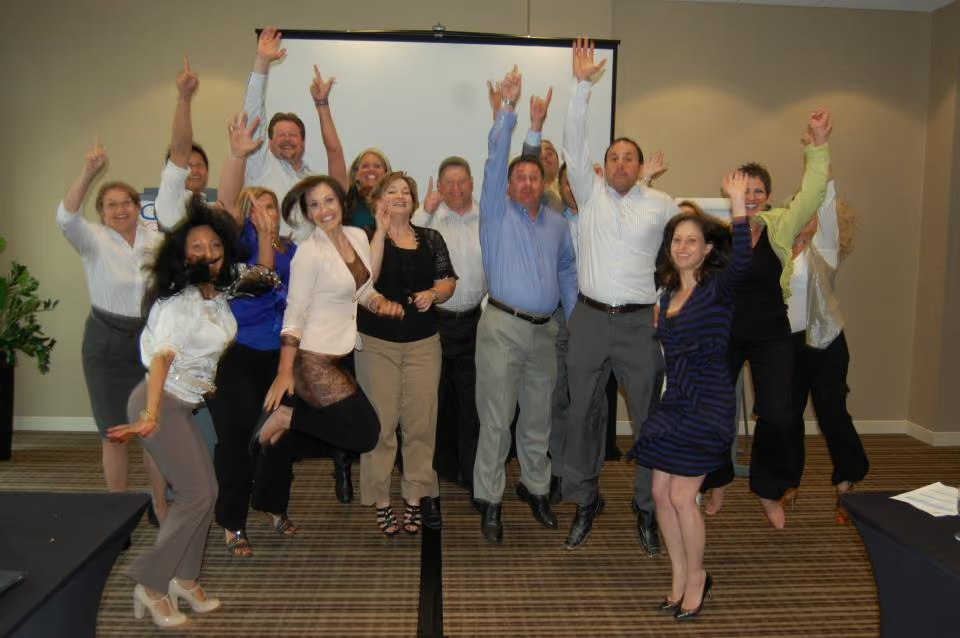
The solution? Organizing New Year leadership workshops for HR managers to ensure teams get clear direction. FullTilt Team Development creates bespoke leadership experiences to bring those patterns into the open early, so teams aren’t guessing who’s leading once New Year’s Day has passed and Q1 targets become a real priority.
Authentic Leadership
Chat with any experienced leader and they tell you the same thing: leadership gaps rarely show up in meetings. They surface when outcomes are uncertain or work gets messy. Poor leaders will hesitate, overcorrect, or pull back. The result? Momentum takes a hit, and the team doesn’t know how to react.
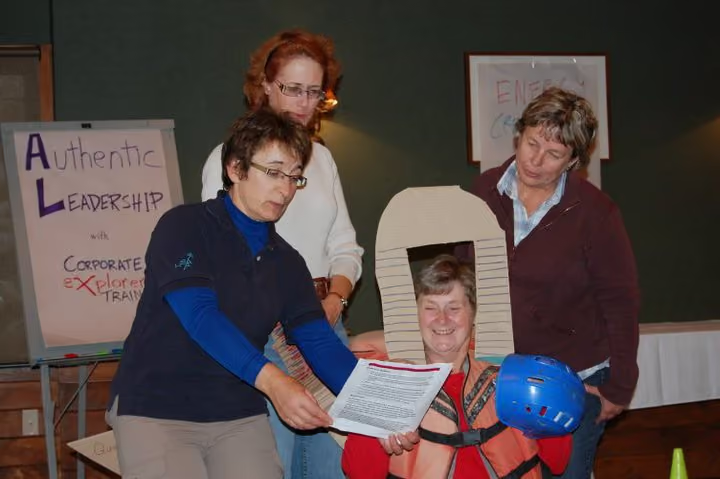
FullTilt Team Development created the Authentic Leadership module to teach the skills needed to motivate and provide clear direction. Participants complete simple tasks multiple times, each time tweaking their approach until they streamline the process. It’s also useful for identifying various leadership styles.
Outcome: Clearer leadership behavior and stronger trust when outcomes are uncertain.
Looking for corporate team building that strengthens leadership and trust early in the year? Secure the Authentic Leadership workshop as a new year team building experience focused on real leadership behavior, not theory.
360-Degree Behavioral Matrix
It’s incredible how teams can sit in the same meetings for years and still talk past each other. We’ve all seen the scenario: One person wants quick answers. Another needs context. Then the shy employee, who’s usually quiet, gets labeled “checked out.” And you’ve always got the extrovert whose voice is always heard.
Rather than being a problem, the 360-Degree Behavioral Matrix teaches teams about personality traits. Not that some are better than others. But everyone brings something to the table. It blends familiar frameworks such as Myers-Briggs, StrengthsFinder, and DISC while keeping it experiential.
Carefully designed modules help participants identify “types” in real time and practice new behavioral concepts through another round of challenges.
Outcome: Clearer communication and stronger emotional intelligence across the team.
Looking for corporate team bonding that improves communication styles and teamwork early in the year? Discover the 360-Degree Behavioral Matrix as a New Year team building experience that helps teams understand how they each communicate best.
The Mandala Leadership Project
Have you ever noticed how “vision” sounds clear at the top and muddled everywhere else? Leadership talks direction. Teams hear pieces of it. What happens by the time goals reach the floor? Everyone’s working hard, but pulling in slightly different directions. It’s like the pieces of the picture never quite fit together.
The Mandala Leadership Project changes that. It’s an interactive activity that brings teams together to build a shared message. Team members work on individual wooden panels, each creating a section that represents part of the company’s vision. The work requires coordination, alignment, and agreement for the final image to make sense.
Outcome: Clearer alignment around vision and shared goals.
Looking for corporate team building that helps teams align around a vision instead of just hearing it? Book The Great Mandala as a mindful team building experience for the New Year, focused on shared direction and clarity.
Making Team Building Work for Remote and Hybrid Teams
Remote and hybrid team building works best when work becomes visible again. Why? The biggest challenge for hybrid and remote workers isn’t motivation. It’s more about unseen effort, unclear decisions, small misunderstandings, and a lack of trust signals. Because they’re not “in-person,” their struggles often go unnoticed.
What are the three most common challenges facing hybrid workers, and how can team building address them?
Invisibility. In remote and hybrid teams, contributions often go unseen. To prevent this, remote and hybrid workers must be involved in decision-making. They should never feel overlooked. Addressing this requires intentional visibility—digital-first workflows, inclusive communication norms, and shared recognition that makes effort and input equally visible, regardless of location.
Trust decay. It’s easy for distrust to weaken teams in remote locations because silence gets misread. Therefore, trust must be rebuilt deliberately through clear expectations, consistent accountability, and leaders modelling openness. Regular check-ins encourage reliability and ensure respect stays visible even when teams aren’t in the same room.
Alignment drift. Hybrid teams often drift because they’re out of the loop regarding collaborative goals. Effective team building creates shared pressure points where teams—in-person and remote—work toward common goals and can provide feedback to each other.
How HR Should Measure Whether a January Event Worked
Team building after the New Year usually feels successful in the moment. For many workers, it’s a fun extension of the festive period. So, attendance is high, feedback is positive, and energy levels lift for a short time. Then February arrives, teams retreat back into their silos, and the same pre-Christmas issues surface again.
The challenge for HR is to defend the cost of team building to management. Here lies the real risk. If managers only see smiles and pictures of “thumbs-up,” they’re highly unlikely to agree on a regular budget for holiday team building activities. Corporate events become more of a “nice-to-have” than a performance lever.
To measure ROI properly, HR needs a simple, repeatable process:
- Describe what’s broken now: Write down two or three specific issues the team is experiencing now. Slow decisions. Missed handoffs. Leadership bottlenecks. If it’s not visible before January, it can’t be measured after.
- Decide what would look different if it worked: Create benchmarks to measure progress. Fewer follow-up emails. Faster approvals. Shorter meetings. Earlier issue escalation. These are observable behaviors, not survey answers.
- Give team building time to work: Don’t check the week after the HR event. Look one month later. Has decision speed improved? Are teams chasing less? Are leaders intervening differently? Short-term enthusiasm fades fast. Behavior change doesn’t.
- Pinpoint where problems moved: A good January event doesn’t eliminate problems. It shifts them. Note what improved, what didn’t, and what became clearer. That insight alone is ROI—it tells HR where to focus next.
- Skip long reports: Document outcomes in plain language. Capture three bullets: what got easier, what still breaks, and what needs reinforcement. That’s what leadership actually uses.
When HR measures January events this way, team building stops being a morale play. It becomes a diagnostic tool—one that leaders are far more willing to fund again.
Why Choose FullTilt for New Year’s Team Building
January sets the tone for the rest of the year. Contact FullTilt Team Development for New Year team building activities that focus on trust, alignment, and how teams actually work once normal pressure returns.
These aren’t feel-good sessions or one-off events. They’re experiential team building experiences built to change behavior early, so Q1 momentum doesn’t fade by February.
New Year’s Team Building Experiences: FAQs
What are the best New Year’s team-building ideas to improve trust?
In short, the ones that put teams back into real work conditions quickly. Trust returns when employees see who follows through, who shares information, and who adapts when priorities shift. January works best when teams practice relying on each other, not just talking about doing better in the New Year.
How can HR reconnect teams after the holiday break?
Don’t start with speeches or warm-ups. Most teams reconnect faster when they’re doing something together that feels like work again. Shared tasks, light pressure, and a reason to coordinate usually bring people back into sync quicker than social activities.
What are the best Q1 kickoff ideas for corporate teams?
The best kickoffs for the first quarter of the New Year give teams something concrete to line up around. Forget vision slides. Something where priorities, roles, and decisions naturally show up. Teams must leave knowing how they’ll work together, not just what they’re aiming for—it sticks longer.
How do you align your team for the new year?
You align a team by fixing how people work together before you lock in goals. That means clarifying who makes decisions, how information gets shared, and where work usually slows down. Once those basics are clear, planning stops being theoretical, and teams stay aligned longer.
What goal-setting team activities work best in January meetings?
The ones that force teams to choose priorities instead of lists. In January meetings, teams are good at agreeing on goals but poor at deciding what to prioritize when time and resources are limited. Activities work best when they expose that tension early, and teams can decide on what’s most important.
How should HR measure whether a January team event worked?
HR should measure January team events by what changes afterward. Faster decisions, fewer follow-ups, cleaner handoffs, and clearer ownership in the weeks that follow matter more than post-event surveys or attendance numbers.