

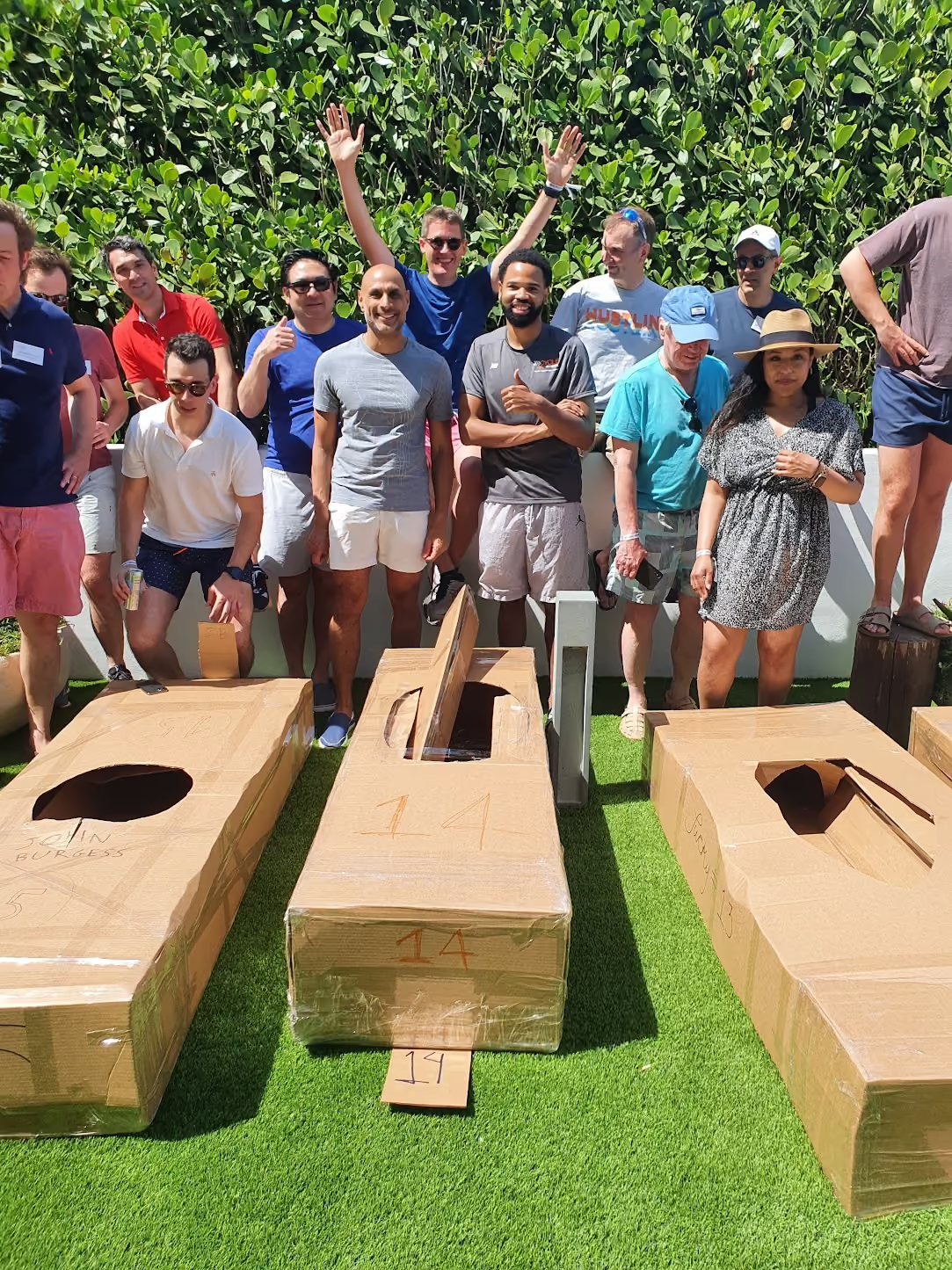
Every company has run this offsite: a beautiful venue, a packed agenda, two days of slides and discussion — and three weeks later, nobody can name a single thing that changed. The venue wasn't the problem. The agenda wasn't even the problem. The problem was that the most senior person in the room was also trying to run the room, the discussions had no referee, the connection time was an unstructured dinner, and nothing forced decisions into commitments.
A fully facilitated offsite fixes exactly that. A professional team designs the arc, runs every session and experience, manages energy and timing, keeps leaders participating instead of producing, and lands the two days in commitments people actually keep. This guide explains what "fully facilitated" includes, when it's worth it, what the agendas look like, and how to choose the partner — whether that's FullTilt's offsite and event team or anyone else.
One scope note so this guide complements rather than repeats what we've already written: for where to go, see the best U.S. retreat locations guide; for the full logistics playbook, see planning a company retreat; and for whether you need a leadership offsite or a whole-team retreat, see offsite vs retreat. This guide is about who runs it and what running it well looks like.
What a fully facilitated offsite actually includes
Unpacked, a genuinely full-service engagement covers six layers:
- Design consultation. Before any agenda exists: what decision or change is this offsite for, what does success look like 30 days later, and what does the team's current dynamic require? Purpose-first design is the single strongest predictor of an offsite that matters.
- Agenda architecture. The arc across the day(s) — strategy blocks, experiences, recovery time, and the closing commitments session — sequenced so energy peaks where the hard conversations sit.
- Session facilitation. A neutral professional running the working discussions: keeping airtime honest, naming the elephant, parking tangents, and pushing "good discussion" into actual decisions. This frees the most senior leader to be a participant — often the biggest single upgrade.
- Facilitated team experiences. The shared challenge that does the bonding work dinner can't — run with professional staff and equipment, matched to the group. (More below.)
- Energy and logistics management on the day. Timing, transitions, room resets, weather calls — invisible when done well, fatal when absent.
- The commitments close. Decisions get owners and dates before anyone leaves; the facilitator captures them and hands the team its own follow-through plan.
Note what's deliberately not on that list: booking flights and hotels. Venue and travel are logistics you (or a booking platform) can handle; the facilitated layer is the part that requires craft. The best value comes from pairing a modest venue with strong facilitation, not the reverse — the same budget logic as our venue guide.
Why facilitation is the hinge of the whole offsite
Offsites fail in remarkably consistent ways, and every one of them is a facilitation gap:
- The boss runs the room. When the CEO facilitates, the CEO's opinion facilitates. Dissent softens, juniors go quiet, and the offsite's most expensive resource — candid senior conversation — never happens. A neutral facilitator changes the physics of the room.
- Discussion without a referee. The loudest three voices consume the airtime, the hard topic gets orbited but never landed, and "great discussion" substitutes for decisions.
- Unstructured "bonding." Dinner and drinks bond the people who already get along. A facilitated shared challenge — a build, a competition, a mission — bonds across cliques and hierarchy, because the structure mixes people deliberately. It's the entire argument of experiential learning for teams.
- Decisions that evaporate. Without a structured close, the offsite produces energy that Monday's inbox absorbs in 48 hours. Commitments with owners and dates, captured before departure, are the antidote.
The stakes justify the craft: with U.S. engagement at roughly 31% — an 11-year low per Gallup's 2026 research — the offsite is often the one moment a year the whole team is present, in person, and paying attention. Spending that moment on slides in a pretty room is the expensive mistake.
Self-run vs venue package vs fully facilitated
Fair framing: a self-run offsite with a genuinely skilled internal facilitator can work — some teams have that person. The trap is assuming you do because someone is willing. Willingness and craft are different things, and the offsite is an expensive place to discover the difference.
Sample facilitated agendas that actually work
One-day leadership offsite (5–15 people)
- 8:30 — Arrival, coffee, facilitator frames the day's one decision
- 9:00–12:00 — Facilitated strategy blocks (90 min each, short breaks): diagnosis, then options
- 12:00 — Working lunch, deliberately light
- 1:00–2:30 — Facilitated team experience (a build challenge or mission-style event — the reset that makes the afternoon's candor possible)
- 2:45–4:15 — Decision session: the facilitator drives from options to a call
- 4:15–5:00 — Commitments close: owners, dates, the 30-day check-in booked before leaving
Two-day team offsite (20–100 people)
- Day 1 AM — State of the business + facilitated working sessions in mixed breakouts
- Day 1 PM — The signature shared experience: an outdoor challenge, a boat build and regatta, or a charity bike build — followed by a genuinely free evening
- Day 2 AM — Priorities and planning, energized by yesterday's shared story
- Day 2 PM — Short closing experience or awards, then the commitments session and departure
Company gathering / annual all-hands (100–500+)
Content blocks run in plenary; the connection work runs as a large-scale parallel experience — a field-day olympics, a city race, or a mass charity build — with facilitator density scaled to the headcount. The mechanics of keeping 300 people simultaneously engaged are their own discipline; our large-groups guide and large-group programs cover them.
The pattern across all three: strategy in the morning, experience in the afternoon, commitments before departure, and one facilitated shared challenge per day — never zero, rarely more than one. Activities don't replace the strategic work; they're what makes the strategic work honest.
The experience layer: what to actually run
The facilitated experience is the offsite's emotional anchor — the story people tell afterward. Matching it to the group is the craft:
For leadership teams (5–20)
Formats with substance under the fun: the Mandala Leadership Challenge, Dining in the Dark, or a precision build like Domino Effect — experiences that surface how the team actually communicates, then debrief it. Pair with agenda ideas from leadership retreat ideas.
For whole teams (20–100)
Energy plus mixing: Survival X, Amazing Race around the venue's city, Iron Chef for food-loving teams, or the boat build for a finale everyone films.
For values-driven closes
End the offsite by giving back: a bicycle build or End-Hunger Games makes the final memory a donation reveal — the strongest close we run, detailed in the charity & CSR companies guide.
For offsites with a development mandate
Weave in structured training: Mission-Vision-Values workshops for alignment offsites, feedback modules for teams repairing candor, or cross-boundary communication for post-reorg groups — alongside the broader experiential training programs.
Offsite types and who they're for
- Leadership/executive offsite: 5–20 senior people, one big decision or alignment goal, 1–2 days. Facilitation is non-negotiable here — it's what lets the CEO argue a position instead of chairing.
- Team or department offsite: 20–100 people, connection plus planning, usually 2 days. The mixed-breakout + shared-experience pattern above.
- Cross-functional offsite: teams that must collaborate but don't share a manager — the format examined in cross-functional retreats.
- Company gathering / annual meeting: 100–500+, alignment at scale plus the connection moment remote work removed — increasingly the highest-stakes offsite of the year, especially for distributed companies rebuilding culture (see rebuilding culture after remote work).
- Seasonal offsites: summer formats get their own treatment in summer offsite events; the broader benefits case is in the benefits of offsite team building.
What fully facilitated offsites cost
Think of the budget as three stacked layers, each with its own logic:
- Venue + travel + lodging — the layer most guides obsess over, and the one with the widest discretion. City, season, and star-rating drive it; a modest venue with great facilitation beats the reverse every time.
- The facilitation layer — session facilitation and experience delivery, typically priced per person or per day. This is where the offsite's outcome actually lives; protect it in the budget before upgrading rooms.
- Extras — AV, transport between venues, evening hospitality.
Cost levers that matter: headcount (per-person facilitation rates generally improve at scale), duration, experience format (build and charity events include materials — for charity builds, that's the donation), and how much working-session facilitation you want alongside the experiences. Get the facilitated layer quoted all-in per person, then build venue decisions around it. For a like-for-like comparison across providers, the checklist in our 8-questions guide applies directly — and for making the case internally, measuring the ROI of team building gives you the before/after framework.
Choosing an offsite facilitation partner
Six things separate a facilitation partner from an activity vendor:
- They ask about the decision, not the date, first. A partner who opens with "what needs to be different 30 days after?" is designing; one who opens with a catalog is selling.
- They can run the working sessions, not just the games. Ask directly: who facilitates our strategy discussions, and what's their approach when the room deadlocks?
- Their experiences scale to your real headcount with staffing ratios to match — and they'll show you comparable events.
- They deliver at your venue, wherever it is. The partner comes to the offsite; the offsite doesn't relocate to the partner. FullTilt delivers across the US, Canada, and Mexico, at any venue you book.
- The close is structured. Ask what the last 45 minutes look like. If the answer doesn't include commitments, owners, and capture, keep looking.
- All-in pricing, fast responses. One per-person quote for the facilitated layer; pre-sale responsiveness that predicts event-week reliability. (Ours: 15 minutes.)
The bottom line
The venue gets the photos, but facilitation gets the results. If your offsite is meant to change something — a decision, a dynamic, a year — put a professional in charge of the room and the experiences, keep your leaders in participant seats, and don't let anyone leave before commitments have owners and dates.
FullTilt Team Development delivers the fully facilitated model anywhere in North America — working-session facilitation, signature experiences, and the commitments close, at whatever venue you choose. Tell us your goal, headcount, and dates and we'll design the arc with you.