

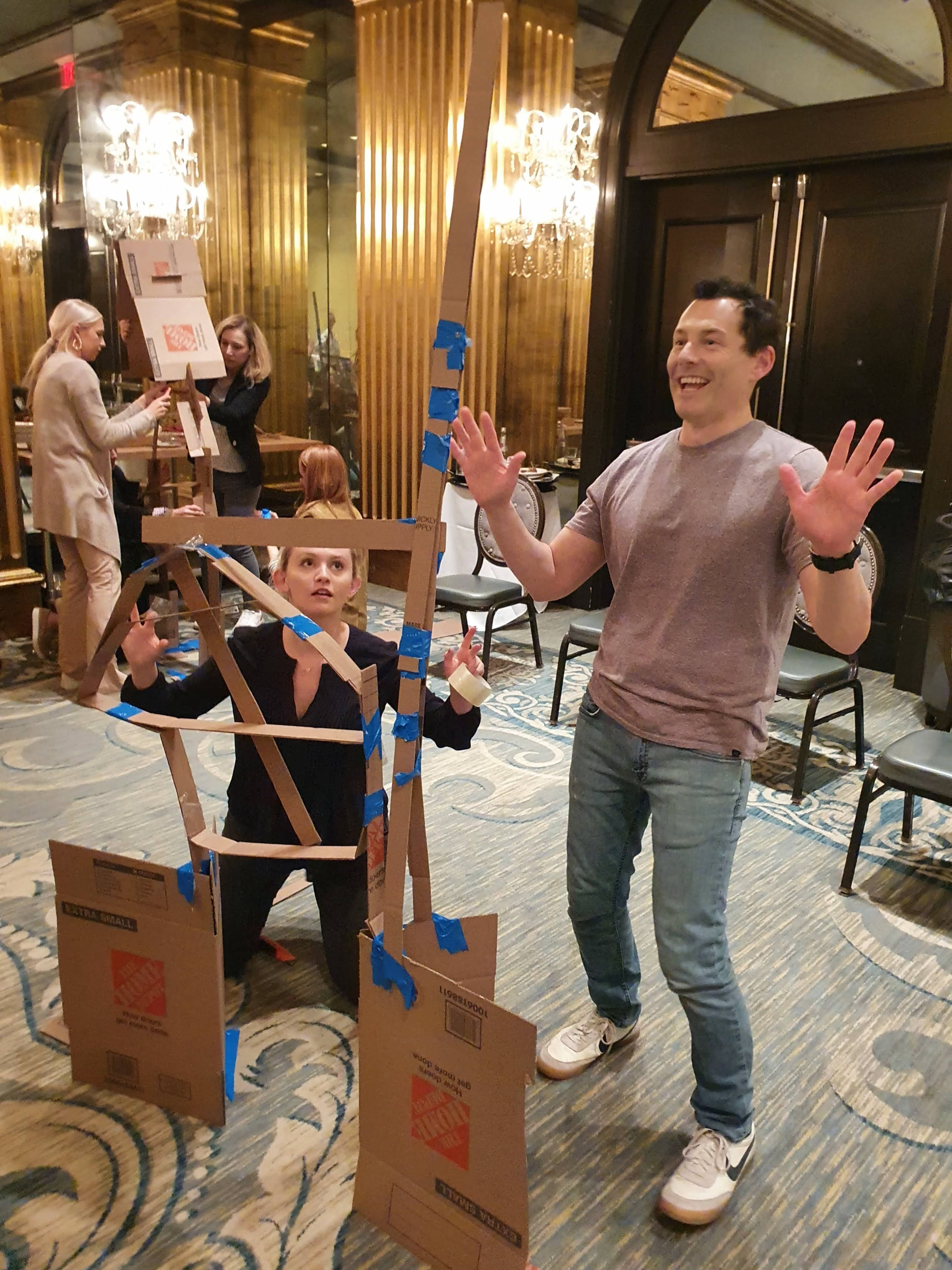
Two companies book the same activity for the same size group in the same month. One event becomes the story the team still references a year later; the other produces polite participation and an early drift toward the parking lot. Same format, same equipment, same catering. The variable — nearly always — was the human running the room.
This is the industry's open secret: the activity is the container; facilitation is the product. Yet "facilitator" remains a vague word to most buyers — somewhere between emcee, camp counselor, and person-with-a-clipboard — which makes it the easiest place for cheap providers to quietly cut, and the hardest line for buyers to evaluate. A great facilitator is closer to a blend of stage director, referee, systems observer, and coach, doing skilled invisible work at every stage of the event. This guide makes that work visible: the before/during/after of real facilitation, the specific mechanisms that separate great from adequate, what to demand when you book, and — because honesty is the house style — the genuine cases where you can skip the professional and run it yourself.
What a facilitator actually does (the before / during / after)
Before: the invisible 60%
By the time participants arrive, most of the facilitation is already done. Format selection tuned to the actual room (a competitive bracket for the sales org; a collaborative build for the post-merger group that must NOT be split into old-company teams). Roster engineering — the quiet art of mixing departments, separating cliques, distributing energy-givers, and placing the new hires where they'll be teammates rather than guests. A run-of-show with timing buffers where events actually slip. And a briefing plan that gets sixty people from milling to playing in under ten minutes — which, if you've ever watched an amateur attempt it, is where DIY events lose their first half hour.
During: the visible craft
- Energy management. Rooms have arcs. Professionals read them — tightening a round that's dragging, extending one that's cooking, moving the finale earlier when the afternoon's fading — because the schedule serves the energy, never the reverse.
- Neutral authority. An outside facilitator can do what no colleague-organizer can: put the VP on dish duty, call the fastest team's rules violation, and pull the silent analyst into the strategy role — with zero workplace politics attached, because they're an outsider whose authority expires at teardown. This mechanism alone justifies most of the fee, and it's why the best events use an outside expert rather than the game-est person in HR.
- Inclusion by mechanism. Great facilitators don't cajole quiet people — they design structures where quiet people participate automatically: rotating roles, fixed think-time, one-answer-per-team rules, tasks matched to observed strengths. The difference between "everyone had a role" and "the loud third had fun" is the difference the fee buys.
- Live adjustment. Rain arrives; a team dominates unfairly; the CEO shows up unannounced with clients; the venue's loading dock is locked. A professional has seen each of these dozens of times and carries the adjustment — the reason experienced crews make chaotic days look boring. (This repertoire is precisely what a first-time internal organizer can't have, per the honest accounting in DIY vs hiring.)
After: the debrief — where the value actually transfers
The event produces raw material; the debrief refines it. Fifteen minutes, well-run: what did your team do well, what pattern surprised you, where does this show up at work. It sounds simple; the craft is in making it land — sequencing questions so insights build, drawing the observation from the participant rather than announcing it, and closing on one concrete carry-forward. This is the mechanism of experiential learning, and it's the part venue-based entertainment (escape rooms, axe throwing, game bars) structurally never provides — the game master's job ends at the leaderboard.
What separates great facilitators from adequate ones
The full trait list lives in the facilitator qualities guide; here's the compressed field version — the four tells you can spot within minutes:
- They learn names fast and use them constantly. A facilitator addressing sixty strangers by name inside an hour has done this hundreds of times; a facilitator saying "you in the blue shirt" hasn't.
- They referee against the strong, not the weak. Adequate facilitators let the winning team steamroll (it's easier); great ones enforce the rules that keep the game alive for everyone — because the event's purpose is the whole room's experience, not the podium's.
- They talk less as the event goes on. The great ones engineer the room to run itself, receding from emcee to observer — collecting the material they'll use in the debrief. Wall-to-wall mic time is a performance; facilitation is orchestration.
- They handle the heckler, the skeptic, and the boss identically: with structure. No pleading, no embarrassment — the resistant participant gets a role that makes resistance boring (judge, timekeeper, quality inspector) and is usually competing hard within twenty minutes. The distinction between this craft and manufactured enthusiasm is the exact subject of facilitator vs camp counselor.
Behind the traits sits a body of technique — group development research (every facilitator can read forming/storming in a live room), energy-arc design borrowed from live events, and the question craft of good coaching. The point isn't that buyers need the theory; it's that the theory exists, which is why "our office manager is really outgoing" isn't a substitute, and why the best corporate facilitators are a hiring category of their own.
The standards to demand when you book
- Facilitator-to-participant ratio. For interactive formats, roughly one facilitator per 20–30 participants; complex builds and multi-zone events need crew density beyond that (zone leads, floaters, a lead caller). One emcee with a microphone for 100 people is a show — enjoyable, possibly, but nobody is watching the quiet tables. Ask for the ratio in writing; it's the fastest quality test in the industry, and its absence explains most cheap quotes (where facilitation sits in the price).
- A pre-event design conversation. If nobody asks about your team's mix, goal, sensitivities, and history before the day, the "facilitation" is a script. Real providers interview before they design — it's step one of the turnkey standard.
- Roster engineering included. "Teams will be assigned to mix departments" should be a sentence in the proposal. Self-sorting is the silent killer of mixing goals.
- A named debrief. Ask "how does the event close?" — the answer should include a facilitated reflection, not just awards. No debrief, no transfer.
- Repeat-crew continuity for programs. If you're running a recurring annual program, ask whether the same lead facilitator carries your account — the compounding (they remember your people, your rivalries, your inside jokes) is half the program's magic.
- The vetting questions beyond facilitation — insurance, guarantees, references — are covered in the 8 questions to ask before you book and the broader what team building companies do guide.
When you genuinely don't need a professional
Honesty corner: facilitation is a tier, not a religion. Skip the professional for the meeting layer and small-team rituals — the weekly game from the meeting-games library, a brain-teaser round, an icebreaker run by the manager using the craft rules in the icebreakers hub. Under ~25 people who already know each other, with low stakes and a simple format, a well-prepped internal host does fine — and outsourcing it would be silly. The professional tier starts where the amateur one predictably fails: 25+ headcounts, cross-department mixing, milestone stakes, equipment-heavy formats, and any event where the organizer's own participation matters. (The classic failure patterns when that line gets ignored: the mistakes list and why activities fail — read them and count how many are facilitation failures. It's nearly all of them.)
One engagement footnote worth carrying into the budget meeting: with U.S. engagement near an eleven-year low (~31% per Gallup's 2026 reporting), the events a company does run carry more cultural load than ever — Gallup attributes roughly 70% of team-engagement variance to the manager, and a facilitated event plus a good debrief is one of the few tools that upgrades how the manager and team interact, not just how the afternoon felt.
The bottom line
Buy the facilitator, not the activity. The format list on any provider's site is table stakes; what you're actually purchasing is the design before, the craft during, and the debrief after — the invisible work that decides whether your budget produced a story or a shrug. Demand the ratio, demand the design conversation, demand the debrief. And for everything smaller, run it yourself with pride — the libraries are free and the manager's own voice is the right one for the weekly ritual.
Every FullTilt event ships fully facilitated — professional crews, engineered rosters, real debriefs — at offices and venues across North America. Tell us about your team — we respond in 15 minutes.