

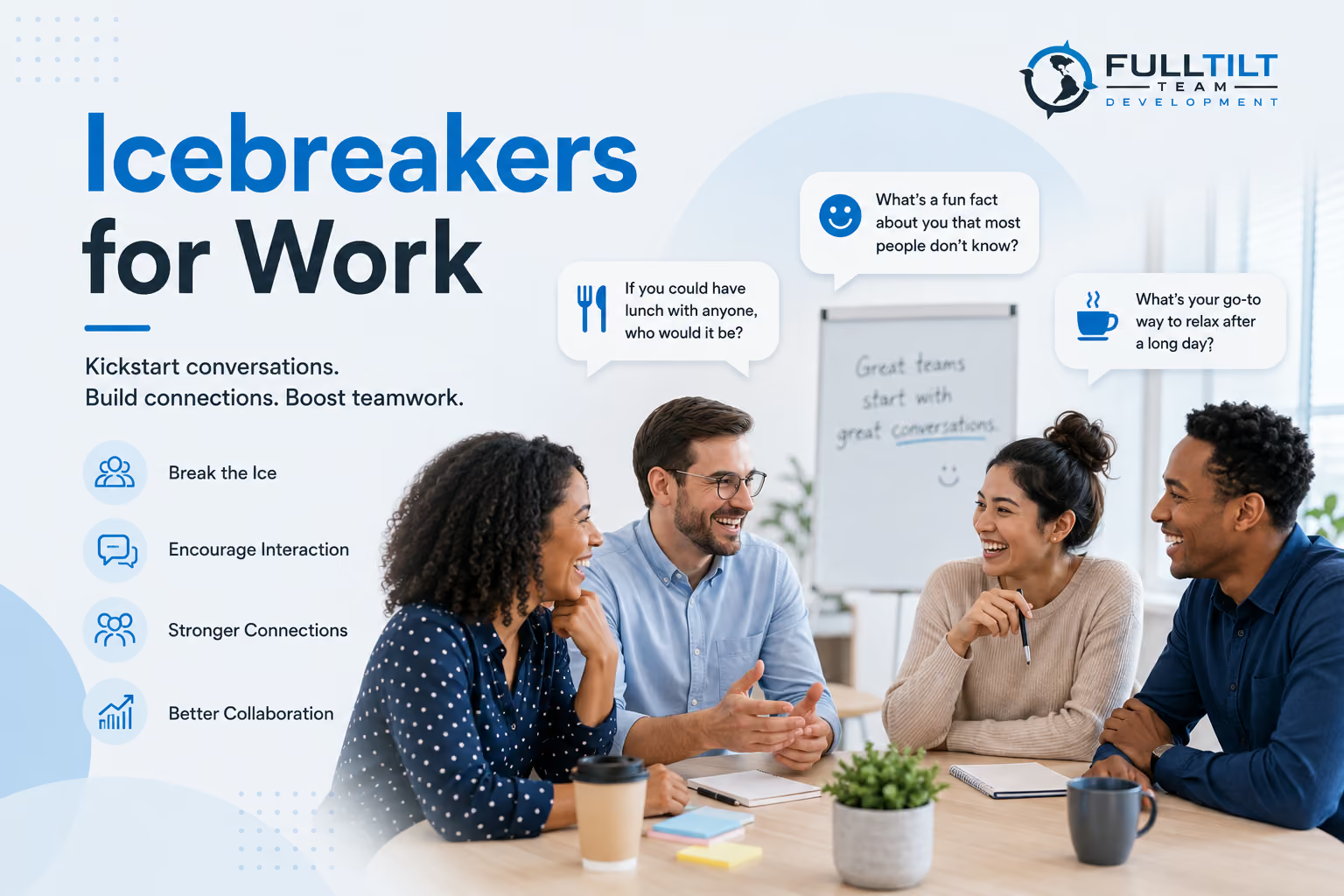
Icebreakers have a reputation problem, and it's earned. Almost everyone has suffered a bad one: the forced "fun fact" circle, the awkward two truths from a manager who overshared, the twenty minutes of a meeting sacrificed to a game nobody wanted. Done wrong, icebreakers create the exact discomfort they're supposed to melt.
Done right, they're one of the highest-leverage five-minute investments in a team's week: they get every voice in the room speaking early (the single best predictor of who'll contribute later), they surface commonality between people who only know each other's job titles, and they reset energy in long sessions. The difference between the two outcomes is entirely in the craft — picking the right format for the situation, keeping it short, and never demanding more vulnerability than the room has earned.
This hub organizes the whole toolkit. For deep question banks, our dedicated libraries go further: icebreaker questions for work, plus the new would-you-rather questions and get-to-know-you questions collections. This page is the map.
The golden rules (read these before picking a game)
- Ten minutes, hard cap. An icebreaker is an appetizer. If it's the main course, it's not an icebreaker — it's a (probably unwanted) activity.
- Match the trust level. Strangers get "coffee or tea?"; established teams can handle "what's a work opinion you've changed?". Escalation is earned, never scheduled.
- Leader answers first. Whoever runs the round models the depth. Go light, and the room stays comfortable; overshare, and the room panics.
- Every voice once. The real purpose: research on meetings consistently shows early participation predicts later participation. The icebreaker is a participation unlock, not entertainment.
- Always offer a pass. "Or pass to the next person, totally fine" costs nothing and removes the dread that gives icebreakers their bad name — a core principle of inclusive team building.
Question-based icebreakers (the reliable workhorses)
Question rounds are the safest format in the toolkit — zero props, zero athleticism, calibrated to any trust level:
- Would you rather… — the fastest laugh in the format. Forced choice means nobody has to be interesting, just opinionated. Our full library with facilitation notes: would-you-rather questions for work.
- Get-to-know-you rounds — the onboarding and new-team staple, from surface to substance: get-to-know-you questions for work.
- Classic openers & themed questions — the master list lives in icebreaker questions for team building.
- Two truths and a lie — still works, with one fix: give people 60 seconds to think before anyone answers. The dread is in the improvising, not the game.
- This-or-that speed rounds — ten binary choices, hands up, thirty seconds. The lowest-stakes energy reset that exists; perfect for virtual and hybrid rooms where physical games die.
Game-based icebreakers (for rooms with some energy)
- Human bingo / scavenger-style mixers — find someone who's lived abroad, someone with a weird talent. Gets people out of chairs and across cliques; bigger versions in our scavenger hunt ideas.
- Line-ups and map games — order yourselves by distance from hometown, birthday month, coffee consumption. Physical, silent-friendly, hilarious with 20+.
- One-word check-ins — everyone opens with one word for how they're arriving. Thirty seconds of genuine signal for meetings that matter.
- Desert-island / rank-the-list debates — small groups rank survival items or pizza toppings; the debate is the icebreaker.
- Quick-fire minute games — for event settings, one round of a Minute to Win It station warms a big room up fast; the full menu of short formats is in 40 quick team building activities.
Icebreakers by situation
Regular team meetings
One question, three minutes, rotating picker. The rotation matters — ownership beats novelty. A season's worth of options: 30 games for meetings.
Brand-new teams and onboarding cohorts
Structured beats spontaneous: human bingo, then a get-to-know-you round in pairs before the full circle. New people find speaking to one person easy and a circle terrifying. (New-manager playbook: first 90 days.)
Large events and all-hands
Skip the circle entirely — 200 people can't take turns. Use table-based speed rounds, line-up games, or app-based polls; then let the main event do the real mixing (that's the job of formats like those in the large-groups guide).
Multigenerational and mixed-culture rooms
Avoid pop-culture-dependent questions (they date-stamp and exclude); food, travel, and hypotheticals are universal. More in multigenerational team building.
Icebreakers to retire (and why)
- The mandatory fun-fact circle. High dread, low payoff — people spend everyone else's turns rehearsing their own. Replace with pairs-first formats.
- Anything requiring touch. The trust-fall family is done. Physical formats need explicit opt-in and an established room.
- Deep vulnerability with strangers. "Share a failure that shaped you" is a great question — for month six, not minute six.
- The 30-minute icebreaker. By definition not an icebreaker; nothing kills a meeting's credibility faster.
- Repeat offenders. Any format used more than a few times running becomes furniture. Rotate — that's what the libraries above are for.
The honest limit: icebreakers warm rooms, experiences build teams
Here's the thing this hub owes you: an icebreaker's ceiling is a warmer room. It cannot repair trust, fix communication, or bond a team — five minutes of questions doesn't change how people work together; shared challenges do. This isn't a knock on icebreakers (we just spent two thousand words on them); it's the reason the industry has been steadily moving from icebreakers-as-culture toward experience-based team building — a shift we've mapped in why experience-based team building is replacing icebreakers.
The practical takeaway: use icebreakers for what they're for (meetings, warm-ups, onboarding moments), and when the goal is the team itself, book the real thing — a chain-reaction build, a half-day anchor event, a charity build. The icebreaker opens the meeting; the experience changes the team.
The bottom line
Icebreakers are a craft tool, not a culture strategy: keep them short, match the trust level, get every voice in early, and rotate formats from the libraries linked above. And when the moment calls for more than a warmer room, give the team an experience worth remembering.
Talk to FullTilt about facilitated events from meeting energizers to 500-person experience days — anywhere in North America.