

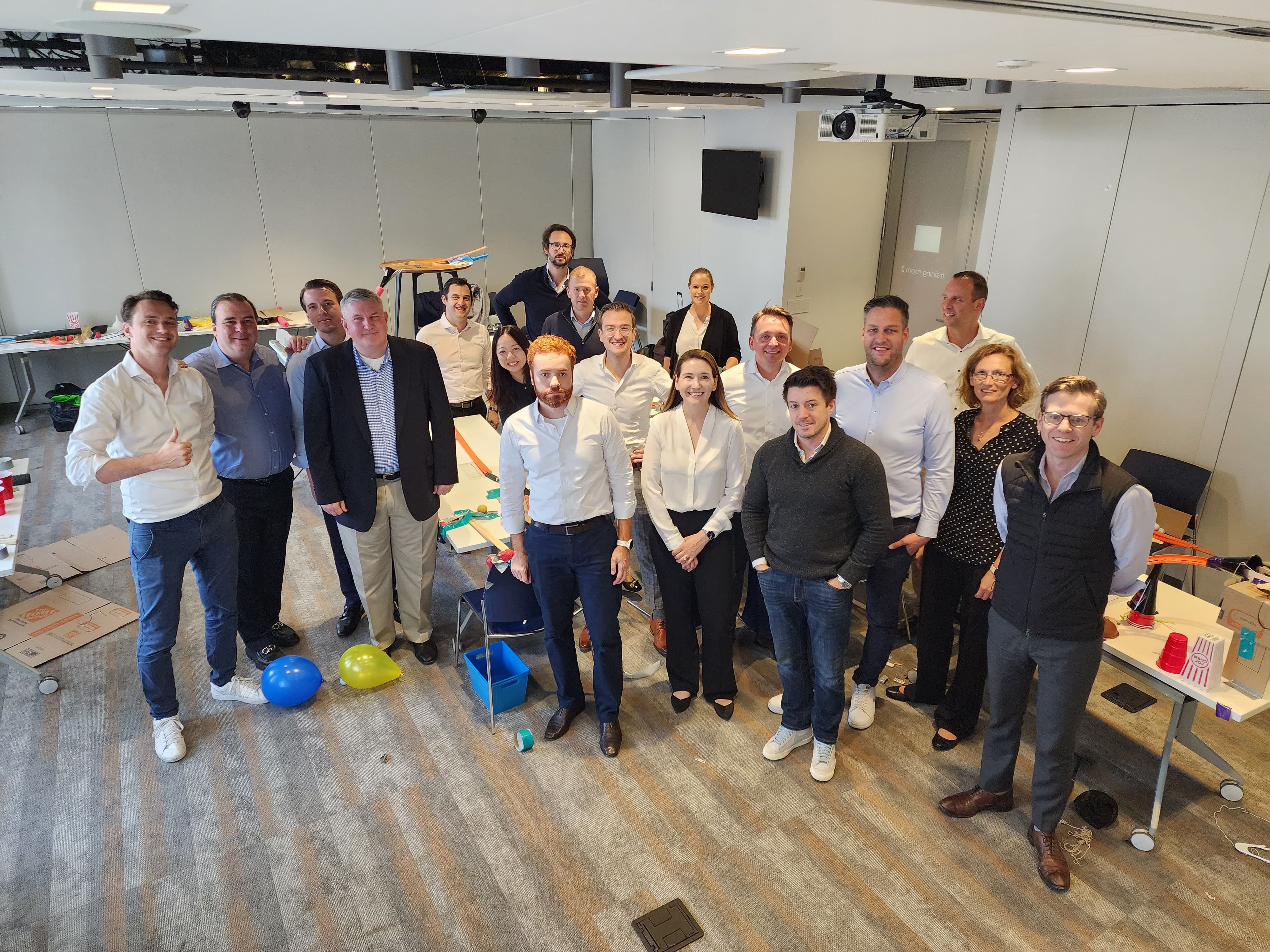
"Team building company" is one of those categories — like "marketing agency" or "consultant" — where the label covers wildly different businesses. Behind the same two words you'll find: full-service operators with professional crews and truckloads of equipment; solo facilitators with a duffel bag of rope; venues that host activities; marketplaces that resell other people's events; and training firms that do workshops with a fun garnish. All legitimate businesses. All completely different products. And the buyer who doesn't know the taxonomy ends up comparing a crewed 200-person production against a two-hour venue booking as if they were the same quote line.
So this is the handbook the category should have published years ago: what the service actually consists of when it's done completely, the four provider types and which situations each fits, what the market genuinely charges in 2026, how to vet in under an hour, the red flags that reliably predict disappointment — and, because we'd rather be trusted than maximally booked, the honest cases where you shouldn't hire anyone at all.
What a team building company actually does (the complete service, itemized)
The seven components, and why each exists:
- Design consultation. Before anything is booked, a real company interviews: headcount, department mix, goal (celebrate? integrate? energize?), history, sensitivities, venue situation. The output is 2–3 fitted format recommendations with pricing — not a catalog PDF. This is where a post-merger group gets steered away from old-company-vs-new-company team splits, and where the value begins.
- Professional facilitation. The core product — the crew that briefs, referees, manages energy, engineers inclusion, and adjusts live. The full craft is documented in what facilitators actually do; the buyer's version: ask for the ratio (1:20–30 for interactive formats) in writing.
- Equipment and materials. Everything the format needs, professionally maintained, amortized across hundreds of events — the reason a crewed chain-reaction build or boat regatta can't be assembled from a craft store run.
- Logistics: transport, setup, teardown. The crew arrives hours early, transforms your space, and returns it afterward. If a quote excludes setup labor, your facilities team just joined the event staff.
- Day-of event management. Timeline ownership, vendor coordination, and the contingency repertoire — the written rain plan, the plan for the team that's steamrolling, the plan for the CEO arriving with surprise guests.
- The debrief. The facilitated close that converts fun into insight (the transfer mechanism) — and the component most reliably missing from entertainment-first providers.
- Accountability. Liability insurance they'll certificate to your venue, and — the strongest signal in the category — a guarantee with money behind it. (FullTilt backs every event with a $500 guarantee; any operator confident in their delivery can afford one, which is exactly why asking about it is so clarifying.)
That's the complete product. It's also the checklist to run any quote against — the turnkey standard in list form — because the cheapest quote in your inbox is usually missing items 1, 5, and 6, and charging you separately for 4.
The four provider types (and which one your event needs)
- Full-service operators. Companies with employed crews, owned equipment, and delivered events at your location — the model built for corporate scale (15 to 500+), mixed groups, and stakes. This is FullTilt's category, and the right one for the anchor events that carry your culture calendar. Deep-dive on the category leaders' shared traits: team building companies for corporate events.
- Solo facilitators and boutique trainers. One skilled person, workshop-scale formats, often development-focused. Genuinely excellent for leadership offsites and sub-20 intensive sessions; structurally unable to produce the 150-person production — not a knock, a spec. (For the leadership tier specifically: executive team building.)
- Activity venues. Escape rooms, game bars, axe ranges — entertainment businesses that host groups. Great social outings under ~30 people; no facilitation, capacity-capped, and the "team building" is whatever happens to occur (the honest venue analysis).
- Marketplaces and resellers. Platforms listing hundreds of experiences delivered by third parties. Convenient for browsing; the trade-off is accountability — the platform sold it, someone you've never vetted delivers it, and quality control lives in the gap. If you book through one, run the same vetting on the actual delivering operator.
The matching rule in one line: venues for small social outings, solo facilitators for intensive workshops, marketplaces for browsing, full-service operators for everything with real headcount or real stakes. Most bad experiences in this industry are type mismatches, not bad companies.
What team building companies cost in 2026
The honest market picture — expanded band-by-band in the full 2026 cost guide — compresses to this: professionally facilitated events run $25–$150 per person (light programming below that, signature builds and charity events toward and above the top), event minimums run $1,500–$5,000, per-person pricing falls steeply with group size, and hosting at your own office deletes the largest optional line (venue rental). Three pricing-model notes specific to comparing companies:
- Per-person vs flat-fee: operators quote per-person above ~20 participants and flat below; both are fine — what matters is that the quote states its inclusions against the seven-component checklist above.
- The discovery-call tax: companies that can't quote without a scheduled call are pricing your patience. Serious operators price from three inputs — headcount, date, venue situation — same day.
- Program pricing: annual arrangements (four quarterly anchors booked together) price below à-la-carte and hold your dates through peak seasons — the model and math in the team building partner guide. If you'll book twice this year, price the year.
How to vet in under an hour (and the red flags)
The full eight-question battery is in how to choose a team building company — the compressed version: ask the facilitator ratio (in writing), the rain question ("what happens if weather breaks an outdoor event?" — the answer reveals whether contingency planning exists), the inclusions list against the seven components, insurance certification, and references from corporate groups your size. Then weigh the response experience itself — speed, specificity, whether anyone asked about your team before recommending formats.
Red flags that reliably predict the bad afternoon: no design conversation before a proposal; "plus travel, TBD"; stock photography exclusively (real operators drown in real event photos); facilitation mentioned nowhere in the quote; pressure tactics on dates; and reviews that are all consumer parties, no corporate groups. The failure modes these produce are documented — the classic mistakes and why events fail — and nearly all trace back to a vetting question that never got asked.
When you don't need a team building company at all
Category honesty, one paragraph: for meeting games, icebreaker rounds, and small-team rituals under ~25 people, hire no one — the free libraries (meeting games, icebreakers, brain teasers) plus a prepared manager beat a hired stranger at that scale. The professional tier starts where amateur delivery predictably fails: 25+ headcounts, cross-department mixing, milestone stakes, equipment-heavy formats. The full decision framework, salary-hour math included, is DIY vs hiring a team building company — and if you land on hiring, everything above is how to do it well. Browse what the full-service tier looks like in practice: the FullTilt events menu.
The bottom line
The category is confusing on purpose exactly once — until you know the taxonomy. Match the provider type to the event, run every quote against the seven components, ask the ratio and the rain question, and let the response experience finish the vetting. Do that, and "find a team building company" becomes a one-afternoon task with a predictable ending: a professional crew at your office, a room full of colleagues who forgot to check their phones, and your name attached to the event everyone mentions in the retro.
FullTilt is a full-service operator — professional crews, owned equipment, engineered facilitation, and a $500 guarantee, delivered at offices and venues across North America. Send headcount, date, and city — exact pricing in 15 minutes, no discovery call required.