

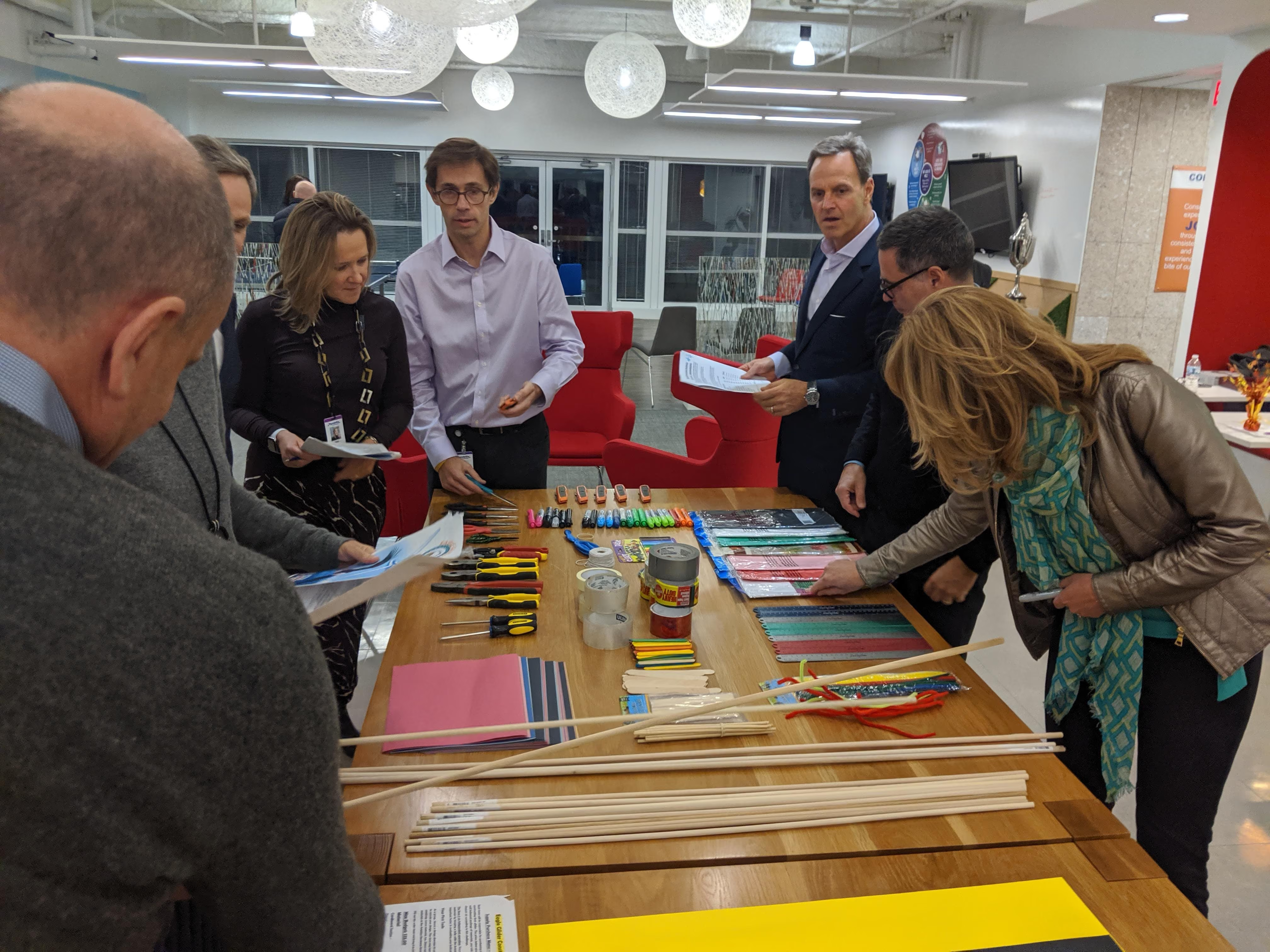
Let's start where most vendor content won't: DIY team building is sometimes the right call. A ten-person team running a weekly game from a free library, a manager opening meetings with a two-minute round, a Friday trivia hour organized in a Slack thread — these are legitimately good, legitimately free, and hiring anyone for them would be silly. We publish the raw material for exactly this — icebreaker libraries, meeting games, zero-prep activities, brain teasers — precisely because the DIY tier matters and should be excellent.
The comparison gets interesting — and the DIY math quietly collapses — at the event tier: the quarterly anchor, the all-department afternoon, the offsite block, the visit from leadership. That's where "we'll do it ourselves" stops meaning "free" and starts meaning "our most expensive people will spend thirty unbudgeted hours producing an amateur version of a solved problem." This guide draws the line precisely: what DIY actually costs when you count it honestly, what facilitation actually buys, and which side of the line your next event falls on.
Where DIY genuinely wins (use these, they're free)
- The meeting layer. Two-minute openers, question rounds, would-you-rather votes, get-to-know-you rotations — this layer should never be outsourced; it's managers' connective tissue, and it works precisely because it's homegrown and constant (the micro-moments playbook).
- Small intact teams, low stakes. A 12-person team's monthly game hour, a project team's launch-day trivia — grab the free activity library and run it. The social risk is near zero because everyone already knows each other.
- The in-between weeks of a real program. Companies running quarterly professional anchors keep the between-weeks alive with self-run moments — the architecture in continuous team building. DIY isn't the opposite of hiring; done right, it's the complement.
The true cost of DIY at the event tier (count everything)
Now the tier where the math flips. Take the standard scenario — a 50-person cross-department afternoon — and cost the DIY version the way finance would:
- Planning hours: 30–50, minimum. Format research, equipment sourcing, run-of-show writing, team assignments, supply runs, space setup, contingency thinking. At a loaded cost of $50–$100/hour for the HR manager or chief-of-staff doing it, that's $1,500–$5,000 in salary before anything is purchased — invisible on the event budget, fully real on the P&L.
- Equipment one-offs: $300–$1,500. Supplies bought once, used once, closeted forever. Professional crews amortize equipment across hundreds of events; you can't.
- The organizer tax. The person who planned it spends the event running it — managing the timer, refereeing disputes, fixing the speaker — which means the company's most culture-invested person is the only one who doesn't get to participate. Unpriceable, and every DIY organizer knows exactly this feeling.
- The no-plan-B premium. When the activity runs short, a team dominates unfairly, rain arrives, or energy dies at minute 40, a first-time organizer has no move. Professionals carry a hundred events' worth of adjustments — that's the actual product (what great facilitators do, and the difference between a facilitator and a camp counselor).
- The redo risk. The most expensive outcome isn't a mediocre event — it's a bad one, which actively costs goodwill and makes the next event harder to get people to attend. The failure patterns are well-documented: the classic mistakes and why activities fail — nearly all of them are facilitation failures, not format failures.
Total honest DIY cost for that 50-person afternoon: $1,800–$6,500 in salary and supplies — against professional facilitation that, per market rates in the 2026 cost guide, typically quotes $2,000–$5,000 for the same headcount at your office. The price gap most planners assume exists... mostly doesn't. What remains is a quality gap, pointing the other way.
What facilitation actually buys (the part invoices can't show)
Beyond the logistics, the professional premium purchases three things DIY structurally can't produce:
- Inclusion engineering. An outside facilitator pulls in the quiet half of the room — the people a colleague-organizer can't push without it being weird, because tomorrow they're peers again. Neutral authority is a real mechanism, not a vibe (why the outside expert matters).
- The debrief. The 15 minutes that converts fun into insight — who noticed what, which team habits showed up, what maps to Monday — is a facilitation craft, and it's the part DIY events skip entirely (how experiential learning actually transfers).
- The spectacle floor. Some formats simply cannot be DIY'd: a chain-reaction build, a boat regatta, a charity bike build with real recipients — the events that become company legend live behind equipment and crew you can't rent piecemeal. Browse that tier at team building events.
With engagement at a decade low (Gallup 2026 puts it near 31%), the anchor events carry more load than they used to — they're many employees' strongest positive memory of the company in a given quarter. That's a strange thing to assign to whoever on the team seemed most organized.
The two-minute decision framework
Ask four questions; any "yes" points to hiring:
- Is the group over ~25 people? Above this line, coordination complexity outruns amateur bandwidth and the salary math flips decisively.
- Are you mixing people who don't know each other? Cross-department and multi-office events need engineered rosters and facilitated inclusion — the two things DIY does worst.
- Do the stakes matter? Milestone celebrations, leadership visits, post-reorg resets, onboarding cohorts — occasions where a flat event has a real cost deserve a professional floor under them.
- Is the organizer someone whose participation matters? If the person who'd plan it is also someone the team needs at the event, don't spend them on logistics.
All four noes? DIY it proudly with the free libraries, and spend nothing. Mostly yeses? Get a real number before deciding — the price gap is smaller than assumed, sometimes negative (what events actually cost). And if you land on hiring, choose well: the 8 questions to ask before you book covers vendor vetting, and the turnkey guide defines what a complete service includes. The mature end state for most companies is the hybrid: managers run the weekly rituals, a standing partner runs the quarterly anchors, and neither pretends to be the other.
The bottom line
This was never really DIY versus hiring — it's DIY and hiring, each at the tier it's built for. Run the weekly rituals yourself with pride and zero budget. Bring in professionals for the moments that carry weight: the big room, the mixed departments, the milestone, the cohort. Count your own hours honestly when you compare, and let the organizer attend their own event for once.
FullTilt handles the anchor tier — fully managed events at your office or venue, anywhere in North America. Get the number for your headcount and do the comparison with real figures — quote in 15 minutes.