

A half day is the corporate sweet spot — long enough for a real experience, short enough that nobody's calendar collapses. Here's how to structure it, what to run, and the agenda mistakes that waste the afternoon.
Full-day offsites are a big ask. Lunch-hour activities barely warm the room up. Which is why, when companies actually book team building, the majority land in the same window: the half day — roughly 3 to 4 hours, usually an afternoon, often stapled to a quarterly meeting or an all-hands morning.
The half day is popular because the math works: one meal instead of two, no travel-day logistics, no "who covers the phones" crisis — and still enough time for a full experience arc with briefing, real play, and a debrief. But the format has its own failure mode: teams treat 3.5 hours like a buffet and cram in four activities, a speech, and a slideshow, ending with none of it landing.
This guide gives you the structure that works, agendas for the three most common half-day scenarios, the activities that fit the window (and the ones that don't), and the planning checklist. It's the mid-length sibling of our guides to full team building days and 5–15 minute quick activities — the half day sits exactly between them.
The half-day structure that works
Why one anchor beats a buffet: experiences need time to develop. Teams spend the first 20 minutes of any activity figuring out how to work together; the good stuff — strategy, role-finding, the comeback, the finale — happens after that warm-up is paid for. Stack four 40-minute activities and you buy four warm-ups and zero payoffs. Run one 2-hour arc and you get the full curve, plus a debrief with something real to discuss — the mechanism explained in experiential learning for teams.
The other structural rule: put the meeting before the activity, never after. Content lands fine on a fresh morning room; nothing lands on a room that just ran a boat race. Morning meeting, lunch, afternoon experience, energized close — that ordering wins basically every time (the same physics behind agenda design in our sales kickoff guide).
Three ready-to-use half-day agendas
Scenario 1: The quarterly meeting + team afternoon (most common)
- 9:00–11:45 — Business content (your meeting)
- 11:45–12:30 — Lunch, provider sets up during it
- 12:30–12:45 — Briefing, teams formed (mixed across departments, deliberately)
- 12:45–2:45 — Anchor experience
- 2:45–3:15 — Awards + facilitated debrief tied to the morning's theme
- 3:15 — Done — early enough that nobody resents it
Scenario 2: The standalone team afternoon
1:00 arrival, 1:15 briefing, 1:30–3:30 anchor experience, 3:30 awards, 4:00 optional social close. Clean, no meeting attached — the format for morale resets, milestone celebrations, and fall planning-season events.
Scenario 3: The half-day with a purpose
Same skeleton as Scenario 2, with a charity build as the anchor — the afternoon ends with a donation handover instead of just a trophy. For teams that want the time to mean something beyond morale, this is the strongest 3-hour investment there is; formats and partners in our charity team building guide.
The best activities for a half day
The window fits any format with a 90–120 minute arc. The ones companies book most, all delivered fully managed at your location:
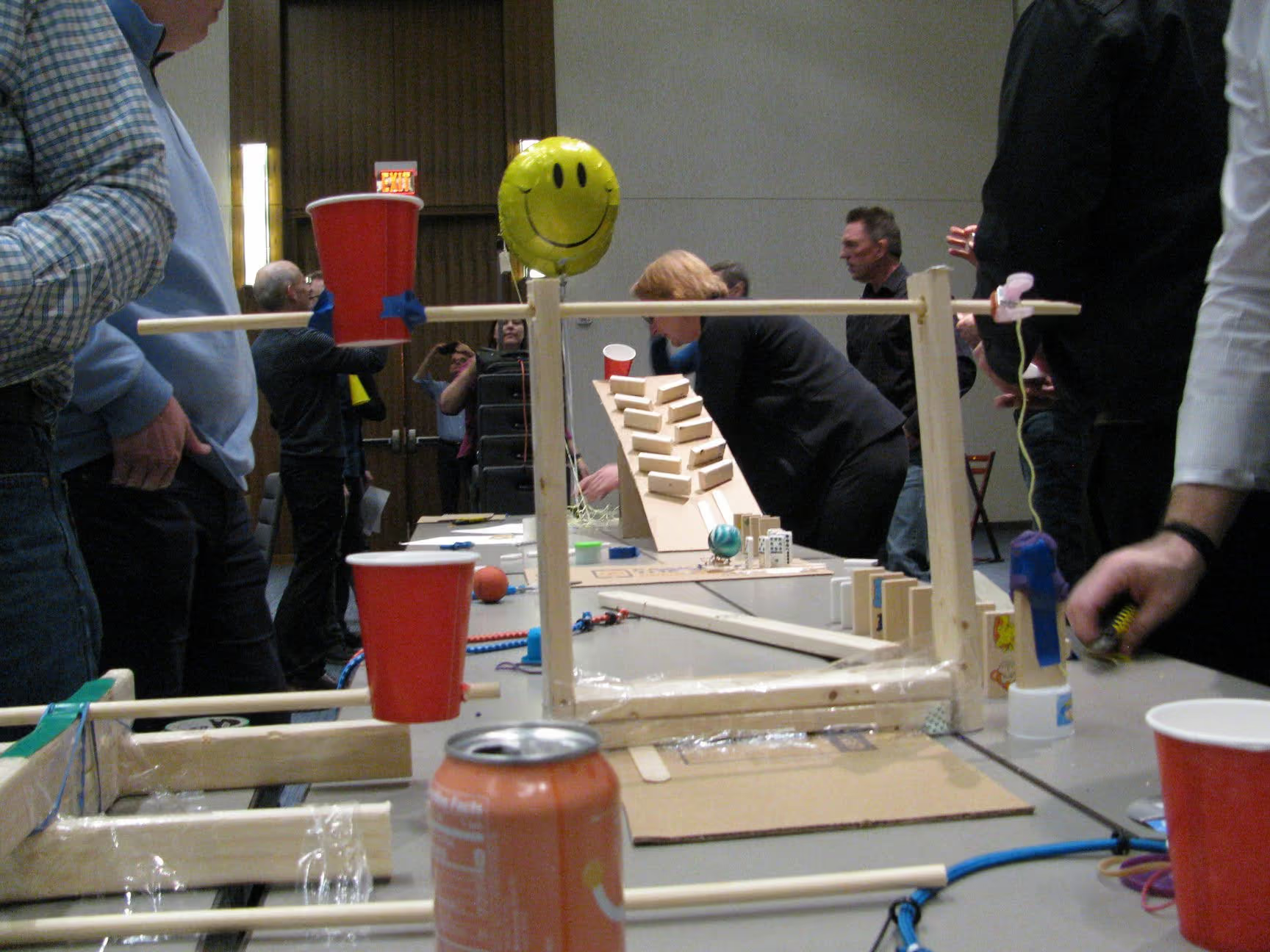
- Chain-reaction builds — the Domino Effect Challenge is the archetypal half-day anchor: design, build, connect, one room-wide finale, debrief. Why it works so well is its own article: our Domino Effect guide.
- Field-day competitions — Beach Olympics or Minute to Win It tournaments: parallel stations, brackets, a trophy.
- City races — an Amazing Race or scavenger hunt around your neighborhood or venue city fills 2 hours perfectly and doubles as fresh air.
- Build challenges — Cardboard Boat Build (with regatta finale) and Pit Stop Challenge compress beautifully into the window.
- Culinary showdowns — Iron Chef, especially when the half day ends at dinner time and the teams eat what they made.
- Charity anchors — Bicycle Build Challenge and End-Hunger Games both run their full arc, donation reveal included, inside 2.5 hours.
Browse the full menu on team building events or filter by indoor and outdoor formats.
What doesn't fit a half day
- Deep training workshops. Real skills modules — feedback, cross-boundary communication — deserve their own session rather than 40 squeezed minutes. Pair them with an experience across a full day or an offsite instead.
- Travel-heavy plans. If the venue is 45 minutes away, you just spent a third of the event in cars. Half days want on-site or near-site delivery — the "we come to you" model covered in our turnkey guide.
- Four stacked mini-activities. The buffet problem from above — variety without depth. If you want variety, that's what station-based formats are for: one activity, many stations.
- The activity-after-dinner plan. Energy physics again: experience before food and speeches, not after.
Group sizes and logistics
10–25: everything works; small groups even gain intimacy in the window (more options: small-group activities). 25–100: the classic half-day range — parallel-team anchors keep everyone active. 100–500+: completely doable in 3–4 hours if professionally staffed: parallel build zones or stations, facilitator density to match, tight transitions. Large-group half days are actually a specialty of ours — the operations behind them live in the large-groups guide and large-group programs.
Venue-wise, the half day is the most flexible format there is: your office (conference room or parking lot), a hotel ballroom, a nearby park. Everything arrives with the crew — equipment, materials, setup, teardown.
Cost and booking
Half-day events are quoted per person, all-in — facilitators, equipment, travel, setup. The levers are the same as any format: headcount (rates improve at scale), activity type (builds and charity events include materials — for charity builds that's the donation itself), and location. Because the half day skips venue rentals, second meals, and travel days, it consistently delivers the best experience-per-dollar of any format — one reason it's the most-booked window in the industry. Booking lead time: 4–6 weeks for most dates; more for 150+ groups or fall peak season. Full planning depth: how to organize effective events.
The bottom line
Three good hours beat eight mediocre ones. Give the afternoon one anchor experience with a real arc, put it after the meeting, protect the debrief, and the half day punches far above its calendar weight.
FullTilt delivers fully managed half-day events anywhere in North America, 10 to 500+ people. Send your headcount, city, and date — quote within 15 minutes.