

Every team contains multitudes. The analyst who needs to read the data twice before speaking. The creative who has solved the problem before the brief is finished. The systems thinker mapping dependencies while everyone else is still framing the question. The introvert with the most incisive insight in the room — who never gets the floor in a meeting designed for whoever speaks first.
Traditional team building activities were designed for a homogeneous idea of what a team looks like: extroverted, verbally dominant, comfortable with spontaneous interaction, and motivated by competition or social performance. That model excludes a significant portion of every workforce — and it leaves the most valuable cognitive contributions on the table.
Cognitive diversity team building is the intentional design of experiences that allow different thinking styles to contribute, collaborate, and lead. It is not about lowering the bar or accommodating weakness. It is about building the kind of psychological safety and structural flexibility that allows every type of thinker to perform at their highest level — and allows teams to access the full range of human intelligence they have already hired.
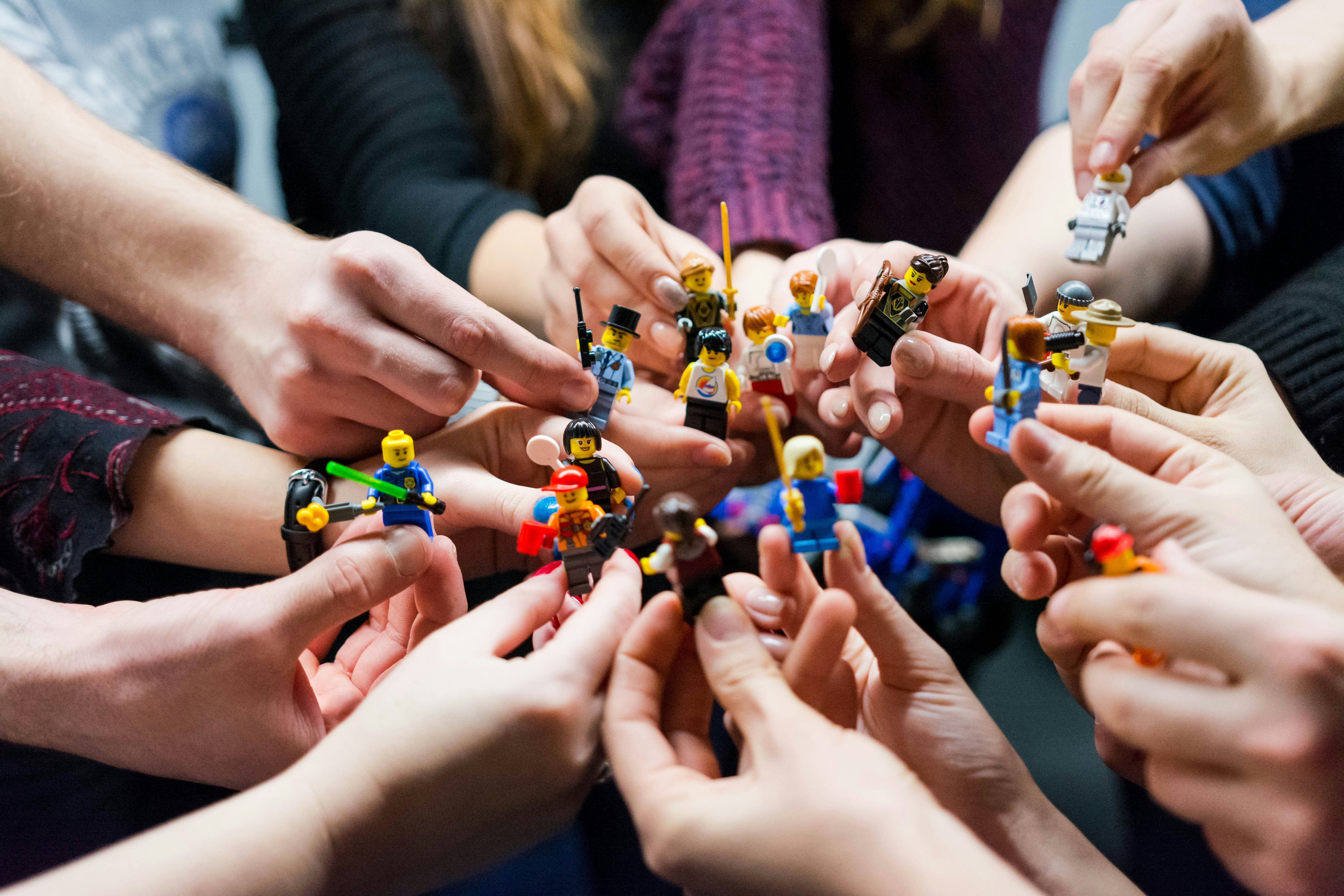
Organizations with cognitively diverse teams consistently outperform homogeneous ones on complex problem-solving, innovation, and adaptability. The future of high-performing teams lies in inclusive collaboration, not uniform thinking.
This guide covers what cognitive diversity actually means, why it matters to team performance, the specific activities that work across different thinking styles, and how HR leaders and managers can build team cultures where every type of thinker thrives.
What Is Cognitive Diversity in the Workplace?
Cognitive diversity refers to differences in how people process information, approach problems, and communicate solutions. It is distinct from demographic diversity — which addresses who people are in terms of identity, background, and experience — though the two often intersect and reinforce each other.
Where demographic diversity asks "who is in the room?", cognitive diversity asks "how do the people in the room think?"
In practice, a cognitively diverse team might include:
Analytical thinkers — who process data before forming conclusions, prefer evidence over intuition, and excel at identifying errors and inconsistencies in complex systems.
Creative thinkers — who generate novel connections between unrelated concepts, thrive on ambiguity, and perform best when given space for exploration before being asked to converge on a solution.
Systems thinkers — who instinctively map dependencies, identify downstream consequences, and ask "what breaks if this changes?" before any decision is made.
Risk takers — who tolerate uncertainty well, move quickly under pressure, and generate the decisional momentum that keeps teams from stalling.
Process-driven employees — who build the repeatable structures, documentation, and workflows that allow creative ideas to become operational realities.
Big-picture visionaries — who hold the long-term strategic frame and pull teams back from short-term optimization that sacrifices direction.
Introverts and reflective thinkers — who produce their best thinking in quiet, after processing, and whose contributions are systematically undervalued in meeting formats that reward whoever speaks first.
Neurodiverse employees — including individuals with ADHD, autism spectrum conditions, dyslexia, dyscalculia, and other neurological variations — who bring specific cognitive strengths including hyperfocus, pattern recognition, creative problem-solving, and attention to detail that neurotypical employees often cannot match in those specific areas.
Cognitive diversity refers to differences in how people process information and solve problems — and diverse thinking styles create stronger decision-making environments precisely because they prevent the premature consensus that causes expensive mistakes.
The risk of a cognitively homogeneous team is not that they are unintelligent. It is that they are intelligent in the same ways, which means they share the same blind spots. Groupthink is not a failure of effort — it is a structural consequence of cognitive sameness.
Why Cognitive Diversity Matters for Team Performance
The business case for cognitive diversity is not abstract. It is visible in the quality of decisions, the speed of innovation, the robustness of solutions, and the retention of employees who currently feel excluded from teams that were not designed with them in mind.
Better Problem Solving
Complex problems require multiple cognitive approaches applied in sequence. An analytical thinker structures the problem correctly. A creative thinker generates solution options the team would not have considered independently. A systems thinker evaluates second-order consequences. A process-driven employee translates the chosen solution into executable steps. A risk-tolerant team member maintains momentum through the uncertainty of implementation.
When a team is cognitively homogeneous, some of these steps are skipped — not deliberately, but because no one in the room is naturally oriented toward them. The result is solutions that are analytically sound but operationally fragile, or creative but untested, or bold but poorly sequenced. Team-based problem solving only reaches its full potential when the team contains the full range of cognitive orientations the problem requires.
Increased Innovation and Creativity
Innovation happens when different thinking styles intersect. The research on this is consistent: teams with greater cognitive diversity generate more novel ideas, evaluate them more rigorously, and implement them more successfully than teams where everyone approaches the problem from the same angle.
This is not because diversity is inherently comfortable. Cognitively diverse teams often feel less cohesive, more conflicted, and harder to manage than homogeneous ones — especially at first. The friction is the point. When an analytical thinker challenges a creative's untested assumption, or a systems thinker slows down a risk-taker's rush to action, the resulting tension produces better outcomes than either would reach independently. Building team cohesion that lasts in a cognitively diverse group requires intentional facilitation — but the performance dividend is significant.
Reduced Groupthink
Groupthink is one of the most dangerous and underdiagnosed risks in high-performing teams. It occurs when social cohesion, authority dynamics, or shared cognitive orientation suppress dissent and produce false consensus. The results range from poor product decisions to catastrophic organizational failures.
Cognitive diversity is one of the most reliable structural defenses against groupthink — because when team members genuinely think differently, they naturally surface contradictions, challenge assumptions, and resist premature closure. Psychological safety in teams is the enabling condition: diverse thinkers can only contribute their contrarian value if the team culture allows disagreement without social cost.
Stronger Communication Across Departments
Cross-functional collaboration consistently breaks down at the boundaries between departments that think differently. Engineering thinks in systems and constraints. Marketing thinks in narratives and audiences. Finance thinks in risk and return. Operations thinks in processes and reliability. When these groups cannot communicate across cognitive styles, strategic initiatives stall at handoff points.
Cross-functional team building that is designed around cognitive diversity gives team members shared language, mutual respect for different thinking modes, and practical experience collaborating across their natural orientations. The result is faster, more productive cross-departmental work.
Higher Employee Retention and Engagement
Employees who feel that their thinking style is undervalued, excluded, or actively penalized by their team's culture do not stay. Introverts who are repeatedly overlooked in meeting formats that reward the loudest voice. Neurodiverse employees who are held to neurotypical behavioral standards that have nothing to do with their performance. Analytical thinkers on creative teams who are dismissed as unimaginative. Creative thinkers on analytical teams who are dismissed as impractical.
Employee engagement is fundamentally a question of whether people feel that their contribution matters. For cognitively diverse employees, the answer to that question depends almost entirely on whether the team's structure and culture can accommodate how they think — not just what they produce.
Challenges of Managing Different Thinking Styles at Work
Building a cognitively diverse team is not enough. Managing one requires intentional design at every level — meeting formats, decision processes, feedback systems, and team building programs included.
Not every employee engages the same way. Inclusive collaboration requires intentional facilitation. The failure modes of cognitively diverse teams are predictable, which means they are preventable.
Miscommunication across cognitive styles. An analytical thinker presenting data to a big-picture visionary, or a creative thinker pitching to a process-oriented manager, often generates frustration on both sides not because either party is wrong but because they are communicating in different cognitive registers. Communication skills training that explicitly addresses cognitive style differences reduces this friction significantly.
Introverts being systematically overshadowed. Most meeting formats — round-table discussion, open brainstorming, real-time debate — are structurally biased toward extroverted communication styles. Introverts and reflective thinkers, who process before speaking, consistently lose floor time to those who think aloud. Their contributions, which are often more considered and less impulsive, go unheard. This is not a personality problem — it is a facilitation design problem.
Fast thinkers vs reflective thinkers. Decision velocity mismatches are one of the most common and least recognized sources of team conflict. Fast thinkers experience reflective thinkers as obstacles. Reflective thinkers experience fast thinkers as reckless. Both are right and both are wrong. The solution is not to make one style adapt to the other — it is to design processes that give both styles their required input at different stages.
Conflict between structure and creativity. Process-driven employees and creative thinkers often find each other baffling. The process-driver sees the creative as chaotic and uncommitted to follow-through. The creative sees the process-driver as rigid and imagination-suppressing. Both contributions are essential to any project that must be both innovative and executable. Team building interventions that place these styles in collaborative challenge formats often produce mutual appreciation that no amount of HR messaging achieves.
Sensory overload during traditional team activities. Many conventional team building formats — loud venues, high-energy group games, forced social interaction over extended periods — are actively hostile to certain neurodiverse employees and to introverts generally. When an employee leaves a team building event more drained than when they arrived, the program has failed them regardless of how energizing it was for everyone else.
Traditional team building fatigue. Employees who have sat through enough icebreakers, trust falls, and personality quizzes that felt irrelevant to their actual work become pre-emptively resistant to any team building program. Why experience-based team building is replacing icebreakers is precisely because the old formats failed too many people too many times.
Best Cognitive Diversity Team Building Activities
The activities that work across different thinking styles share a common architecture: they offer multiple valid entry points, reward different types of contribution, do not require extroverted performance to succeed, and create conditions where the full range of cognitive diversity becomes a competitive advantage rather than a coordination challenge.
Problem-Solving Escape Challenges
Structured problem-solving challenges — escape room formats, multi-stage puzzle sequences, mission-based simulations — are among the most cognitively inclusive team building formats available. They work because they contain multiple parallel problem types that reward different thinking styles simultaneously.
Analytical thinkers decode the logical constraints. Systems thinkers map how the puzzle components relate to each other. Creative thinkers find the non-obvious connection that breaks the logjam. Process-driven employees track what has been tried and eliminate dead ends. Risk takers make the calls when the team is paralyzed by incomplete information.
The Mission Incredible challenge from FullTilt is a structured, professionally facilitated experience that places teams inside a multi-stage collaborative mission requiring exactly this kind of cognitive distribution. No single thinking style can solve it alone — which means every thinking style has a genuine contribution to make.
The Broken Bear challenge uses diagnostic problem-solving under time pressure, rewarding analytical precision alongside creative lateral thinking. It surfaces natural cognitive contributions in a format that feels inherently engaging rather than artificially therapeutic.
Professionally facilitated problem-solving experiences consistently outperform self-directed ones for cognitively diverse groups because a skilled facilitator can actively draw out contributions from quieter thinkers, reframe challenges to allow different cognitive approaches, and debrief the experience in ways that build lasting mutual appreciation across thinking styles.
Creative Storytelling and Collaborative Making Workshops
For teams that include strong creative thinkers, communicators, designers, and marketers — and for any team working on brand, culture, or strategy challenges — collaborative storytelling and creative making workshops create exceptional engagement.
These formats work because they legitimize creative cognition in a team context that often implicitly privileges analytical output. When the task is explicitly creative, the thinkers who are habitually marginalized in data-driven environments become the natural leaders — which builds confidence, reciprocal respect, and a more accurate understanding of what different team members bring.
The Outstanding Performance Through Art program from FullTilt places teams in a collaborative creative challenge that produces a shared artifact — building the experience of working together toward a creative goal that has no single correct answer. This format is particularly powerful for teams where analytical dominance has suppressed creative contribution.
The Lights, Camera, Action program extends this into collaborative storytelling and production — engaging creative, narrative, and organizational thinking simultaneously in a format that creates genuine shared accomplishment.
Silent Collaboration Challenges
Not all collaboration needs to be loud. Some of the most effective cognitive diversity team building uses constrained or silent formats — where teams must solve problems with limited verbal communication — to reveal thinking styles that are systematically invisible in standard meeting and workshop formats.
When verbal dominance is removed as a collaboration mechanism, teams are forced to observe, gesture, demonstrate, and build shared understanding through action rather than argument. Introverts and reflective thinkers frequently emerge as natural coordinators in these formats. Analytical thinkers find their precision suddenly legible to the group. Creative thinkers discover that their spatial thinking, which is hard to explain verbally, becomes a tangible asset.
Silent exercises often reveal hidden leadership styles — and they consistently produce the experience of being genuinely surprised by a colleague's contribution. That surprise is the foundation of the mutual respect that makes cognitively diverse teams work.
The Domino Effect Challenge requires precise, coordinated team action with limited verbal communication — creating exactly these conditions for reflective and visual thinkers to lead.
The Inukshuk Challenge uses collaborative physical construction to surface spatial thinking, systems reasoning, and non-verbal coordination in a format that naturally distributes contribution across different cognitive modes.
Strategy-Based Team Simulations
Business simulations, resource allocation games, survival challenges, and strategic decision exercises engage a cluster of cognitive styles — analytical, systems, risk-oriented, and leadership-oriented thinking — in a format that mirrors the complexity of real organizational decisions.
These formats are particularly effective for leadership teams, operations teams, engineers, and finance professionals because they honor the cognitive currency these groups already value (data, logic, strategy, consequence-mapping) while creating conditions where creative and intuitive thinkers add demonstrable value at specific decision inflection points.
The Survival X: Corporate Castaways challenge from FullTilt places teams in a resource-constrained scenario requiring strategic prioritization, creative problem-solving, and coordinated execution — a format that allows different cognitive strengths to emerge at different stages of the challenge.
The Fantasy Island challenge uses strategic planning and resource allocation under uncertainty, engaging the full cognitive range from analytical modeling to creative improvisation.
Strategy-based simulations work particularly well as the experiential component of a broader leadership development program — because the debrief of who contributed what, and when, generates lasting insight into cognitive diversity that abstract training rarely achieves.
Outdoor Adventure Team Building with Multiple Participation Modes
Outdoor team building has a reputation for rewarding extroversion and physical dominance — the loudest person leads the group, the most physically confident person sets the pace. When designed this way, it excludes exactly the thinking styles that diverse teams most need to engage.
Cognitive diversity-aware outdoor programs are designed with multiple parallel participation modes: optional leadership rotations that give reflective thinkers space to lead, observation-based roles that engage analytical and systems thinkers, and collaborative design elements that reward creative contribution alongside physical coordination.
The Human Dog Sled challenge requires coordinated communication, trust, and distributed role-taking — with different team members required to lead, guide, and support at different stages. No single cognitive style can dominate it.
The Beach Olympics format allows for event selection and role assignment that distributes contribution across physical, strategic, creative, and organizational thinking — when facilitated with cognitive inclusion in mind.
Avoid designing outdoor activities that only reward extroversion or physical dominance. The goal of outdoor cognitive diversity programming is to take people out of the cognitive hierarchies that their day-to-day work environment reinforces and create new contexts where different strengths become visible.
Innovation Labs and Hackathon-Style Challenges
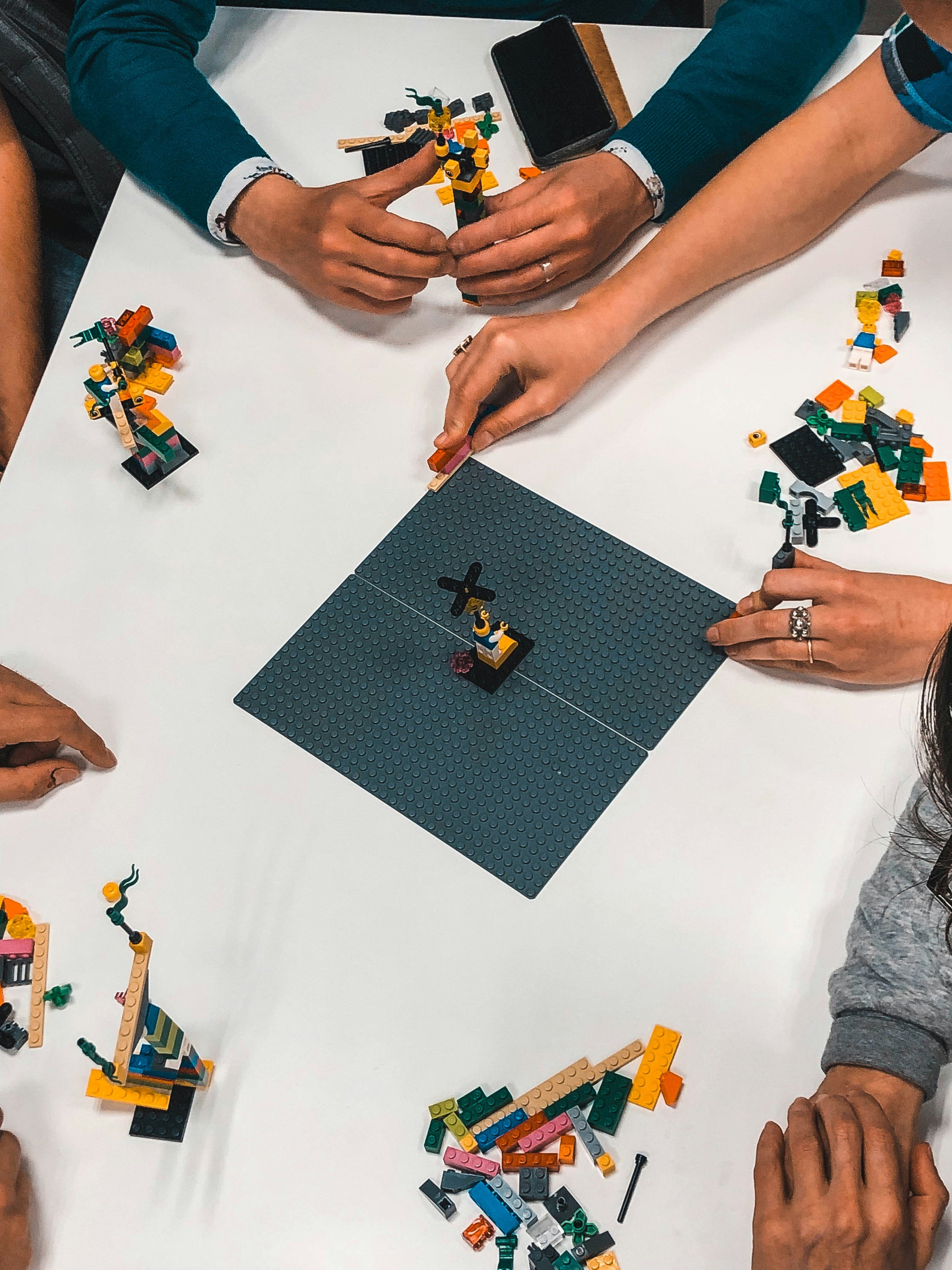
Innovation thrives when multiple cognitive styles intersect. Hackathon-format team building — rapid ideation, prototype building, and cross-functional pitch challenges — creates the specific conditions under which cognitive diversity delivers its highest return.
These formats work because they have a built-in division of cognitive labor: the ideation phase rewards creative and intuitive thinkers; the constraint analysis phase rewards analytical thinkers; the systems design phase rewards systems thinkers; the prototype build rewards process-driven and spatial thinkers; the pitch rewards communicators and narrative thinkers. The entire cognitive range of a diverse team is genuinely necessary to succeed.
The Maker Bootcamp challenge from FullTilt builds exactly this kind of rapid innovation experience — placing teams in a creation-under-constraint format that requires creative generation, analytical evaluation, and collaborative execution in sequence.
The STEM Kit Building program combines design thinking, technical problem-solving, and collaborative construction in a format that surfaces engineering, creative, and organizational thinking simultaneously.
The Interstellar Rocket Challenge places teams in a rapid-build innovation challenge requiring creative design, analytical testing, and strategic decision-making under time pressure — one of the most cognitively demanding and rewarding formats for mixed-style teams.
How to Design Inclusive Team Building Activities
The difference between a team building program that serves cognitive diversity and one that accidentally excludes it is almost entirely in the design decisions made before the activity begins.
Create Multiple Participation Styles
Every activity should have more than one way to contribute successfully. If the only path to team success runs through verbal fluency, real-time decision-making, and extroverted leadership, the program is not cognitively inclusive regardless of how "fun" it feels to the majority. Design for parallel contribution: some roles require analysis, some require creative generation, some require coordination, some require quiet precision.
Avoid Forced Socialization
The worst cognitive diversity failure mode in team building is mandatory social performance: icebreakers that require personal disclosure, games that require spontaneous verbal wit, or formats where "engagement" is measured by volume and energy. Team building activities that everyone hates are almost universally those that require people to perform in ways that feel unnatural to their cognitive and personality style.
Design for genuine engagement — which for introverts and reflective thinkers often means lower social pressure, processing time, and contribution formats that do not require real-time verbal performance.
Offer Quiet Processing Time
Build structured pauses into team building programs. Before a group discussion, give individuals two minutes to write their thoughts. Before a decision, allow a brief reflection period. Before a creative brief, give people time to think alone before thinking together.
These design choices cost almost nothing and dramatically improve the quality and range of contributions from reflective thinkers, introverts, and neurodiverse employees who are penalized by formats that reward whoever speaks first.
Micro team building moments embedded in regular work rhythms — brief, structured, low-pressure — are often more effective at building cognitive inclusion than large events, precisely because they allow ongoing practice rather than a single high-stakes social performance.
Build Psychological Safety
Psychological safety is the precondition for cognitive diversity to function. If team members do not feel safe contributing a dissenting analysis, a creative idea that might be wrong, or a systems concern that slows the group down, they will default to the path of least social resistance — which is agreement with the dominant cognitive style in the room.
Building psychological safety requires consistent leadership behavior, structured facilitation, and explicit team norms that protect intellectual risk-taking. Team building programs that create low-stakes contexts for intellectual contribution — where being wrong or different has no social cost — are among the most effective tools for building the psychological safety that makes cognitive diversity productive.
Balance Competitive and Collaborative Elements
Purely competitive team building formats tend to amplify existing cognitive hierarchies — the fastest thinkers win, the most verbally dominant team members lead, and the quieter or more reflective contributors become passengers. Purely collaborative formats can lack the productive tension that surfaces different thinking styles.
The most effective cognitive diversity team building balances both: collaborative challenge within a competitive frame, where teams must integrate different thinking styles to succeed against external rather than internal competition.
Train Facilitators on Neurodiversity Awareness
The facilitator is the most important design element in any cognitive diversity team building program. A skilled facilitator actively draws out quieter contributors, reframes challenges to allow different cognitive approaches, and structures debrief conversations that name and honor different thinking styles explicitly.
Expert outside facilitators who understand neurodiversity, cognitive style differences, and inclusive facilitation techniques consistently produce better outcomes from cognitively diverse groups than self-directed activities — because they can see and respond to cognitive exclusion in real time rather than building it into the program design.
Cognitive Diversity and Neurodiversity: Understanding the Connection
Neurodiversity is a subset of cognitive diversity — and increasingly one of the most important areas of focus in modern HR strategy. Neurodiversity refers specifically to neurological variations including ADHD, autism spectrum conditions, dyslexia, dyscalculia, Tourette syndrome, and other conditions that involve atypical brain function.
Neurodiversity should be viewed as a workplace advantage, not a limitation. The evidence supports this: neurodiverse employees bring specific cognitive capabilities that neurotypical employees cannot reliably replicate.
ADHD is associated with hyperfocus in areas of genuine interest, high-speed pattern recognition, creative risk-taking, entrepreneurial energy, and the ability to maintain performance under high-stimulation conditions that exhaust neurotypical colleagues. The same neurological wiring that makes standard meeting formats painful can make an ADHD employee extraordinarily effective in fast-moving, high-stakes, creative environments.
Autism spectrum conditions are associated with exceptional attention to detail, deep expertise in specific domains, resistance to social pressure that can distort judgment, pattern recognition across large data sets, and systematic thinking that catches inconsistencies that others miss. Autistic employees are often among the most reliable and technically precise in any team — when they are supported by communication structures and sensory environments that allow them to perform.
Dyslexia is associated with three-dimensional spatial reasoning, holistic pattern recognition, creative problem-solving, and entrepreneurial thinking. Many of the most successful creative directors, architects, entrepreneurs, and strategic thinkers are dyslexic — not despite their dyslexia but in part because of the alternative cognitive paths it develops.
Team building for neurodiverse employees does not require a separate program. It requires inclusive design: multiple participation modes, sensory-aware environment choices, advance communication about what to expect, structured contribution formats that do not penalize processing differences, and explicit facilitation that values different kinds of contribution.
Empathy activities for team building are a powerful complement to cognitive diversity programming — building the interpersonal understanding that allows neurotypical and neurodiverse team members to appreciate each other's contribution rather than experiencing it as friction.
Inclusive team building activities designed with neurodiversity in mind consistently improve the experience for all participants — because the design choices that make activities accessible to neurodiverse employees (clear structure, multiple contribution modes, sensory awareness, processing time) also improve the experience for introverts, reflective thinkers, and anyone else who does not thrive under social performance pressure.
How HR Leaders Can Build More Inclusive Team Cultures
Team building should reinforce workplace inclusion — not become a one-off event that temporarily surfaces diversity without building the structural conditions that make it sustainable.
Redesign meeting formats. The standard round-table discussion systematically privileges verbal fluency and extroversion. Structured input methods — written pre-reads, silent brainstorming before group discussion, anonymous idea submission, and designated speaking turns — give different cognitive styles equal access to the decision process. Collaboration architecture at the meeting level is the foundation of inclusive team culture.
Communicate preferences, not just positions. Many cognitive style conflicts are invisible because team members express their thinking preferences as personality conflicts rather than cognitive differences. Training that helps people articulate how they think, what they need from a team context, and what they bring to different stages of a project creates shared language that reduces friction and builds genuine appreciation.
Build leadership awareness. Managers who are unaware of cognitive diversity tend to build teams in their own cognitive image — hiring people who think like them, designing processes that work for them, and evaluating performance through their own cognitive lens. Leadership development team building that includes cognitive style awareness produces managers who actively seek cognitive diversity rather than accidentally suppressing it.
Create asynchronous collaboration channels. Real-time collaboration formats are cognitively inaccessible to a significant portion of any workforce. Reflective thinkers, introverts, and many neurodiverse employees produce their best work asynchronously — given time to process, draft, and refine before contributing. Building asynchronous channels into standard workflow design is one of the highest-return inclusion investments any team can make. The future of work schedules is increasingly asynchronous-first — which benefits cognitively diverse teams significantly.
Build feedback loops that capture different cognitive contributions. Standard performance management tends to measure the types of contribution that are most visible — verbal, real-time, extroverted, decisive. Quieter, more considered contributions — the analytical review that prevented an expensive mistake, the systems map that clarified a complex decision, the creative reframe that unlocked a stalled project — are often invisible in conventional performance frameworks. Employee training programs that build cognitive style awareness among managers improve the quality and equity of performance recognition significantly.
Use employee resource groups intentionally. ERGs for neurodiverse employees, introverts, or other cognitively distinct groups can build community, surface systemic barriers, and generate practical recommendations for inclusive design. They are most effective when they have direct access to leadership and produce actionable structural changes rather than only peer support.
Make inclusion the goal of team building, not the byproduct. How to use team building activities to promote employee engagement starts with defining which employees are currently under-engaged — and designing specifically to reach them. The employees who are most disengaged from traditional team building formats are frequently the most cognitively valuable: the deep analytical thinkers, the systems mappers, the quiet innovators who never found a team culture that made their contribution feel welcome.
How FullTilt Designs Team Building for Different Thinking Styles
FullTilt's approach to cognitive diversity team building is built around three design principles: multiple engagement formats within every program, facilitation that actively draws out different thinking styles, and measurable outcomes that go beyond participant enjoyment to include behavioral change and team performance improvement.
Every FullTilt program is designed to create genuine shared challenge — the kind of experience where different cognitive styles are not just tolerated but actively required for success. This is not accidental. It is the result of program architecture that builds in analytical, creative, systems, and process-oriented roles at different stages of every challenge.
For in-person teams, FullTilt's most popular team building programs include problem-solving formats, creative collaboration challenges, and outdoor adventure experiences — all designed with multiple participation modes that prevent cognitive monoculture from dominating.
For large groups, FullTilt's large group team building formats are specifically architected for cognitive diversity at scale — creating sub-team structures that allow different thinking styles to lead at different stages, and cross-pollination formats that give the full group exposure to different cognitive contributions.
For leadership teams, FullTilt's leadership team building activities include cognitive style awareness as an explicit debrief element — helping leaders understand not just what their team achieved but how different thinking styles contributed, where cognitive friction emerged, and what structural changes would allow the team's cognitive diversity to generate more consistent value.
For teams focused on professional growth, FullTilt's professional development training programs include the DISC Personality Assessment, Myers-Briggs (MBTI), and Enneagram Framework — structured tools for building the self-awareness and mutual understanding that make cognitive diversity a team asset rather than a source of friction.
For teams with a CSR or community dimension, charitable team building programs like the Helping Hands Program and End Hunger Games create shared purpose across cognitive styles — because contributing to something larger than the team itself is one of the most powerful cognitive inclusors in existence. Shared values create bridges that shared thinking styles cannot.
FullTilt's soft skills training and experiential training programs are designed to be integrated with team building experiences — creating a complete cognitive diversity development pathway from awareness to behavioral change to cultural embedding.
The goal is not a single event. It is a continuous team building cadence that builds cognitive inclusion into team culture over time — making it the default rather than the exception.
Final Thought: The Best Teams Think Differently
The best teams are not made of identical people who think alike, work alike, and agree easily. They are built from people who think differently but have learned to collaborate effectively — who have developed enough mutual understanding of each other's cognitive styles to harness the full range of human intelligence they collectively represent.
Cognitive diversity is not a compliance goal or a HR initiative to manage. It is a performance strategy. The teams that build genuine cognitive inclusion — that design their collaboration for the full range of thinkers they have hired rather than the narrow band their activities were built for — consistently produce better decisions, more durable innovations, and stronger employee engagement than those that do not.
The future of high-performing teams lies in inclusive collaboration, not uniform thinking.
The activities exist. The facilitation expertise exists. The research is clear. The question is whether your team building program is designed to access the full cognitive potential of the people already in your organization — or whether it is designed for the 40% who were already comfortable.
Contact FullTilt to design a cognitive diversity team building program built around the specific thinking styles, neurodiversity considerations, and collaboration challenges of your team.
Frequently Asked Questions About Cognitive Diversity Team Building
What is cognitive diversity in the workplace?
Cognitive diversity in the workplace refers to differences in how team members process information, approach problems, generate ideas, and communicate solutions. It includes thinking style differences such as analytical vs creative, sequential vs holistic, risk-tolerant vs risk-averse, and introverted vs extroverted processing modes — as well as neurological variations including ADHD, autism spectrum conditions, dyslexia, and other neurodiverse profiles. Cognitive diversity refers to differences in how people process information and solve problems, and diverse thinking styles create stronger decision-making environments by preventing the premature consensus that produces expensive mistakes.
How does cognitive diversity improve team performance?
Cognitively diverse teams produce better problem-solving, greater innovation, reduced groupthink, stronger cross-departmental communication, and higher employee retention. These outcomes occur because different thinking styles provide complementary contributions at different stages of complex work — analytical thinkers structure problems, creative thinkers generate options, systems thinkers evaluate consequences, process-driven employees execute reliably, and risk-tolerant thinkers maintain momentum through uncertainty. Team performance improvement strategies consistently identify cognitive diversity as one of the highest-return investments available to any team.
What are examples of cognitive diversity at work?
Examples of cognitive diversity at work include: an engineer who maps system dependencies before any code is written alongside a designer who generates user experience solutions before the technical constraints are defined; a finance analyst who models downside scenarios alongside a sales leader who moves on gut intuition and market feel; an autistic team member whose pattern recognition catches data anomalies alongside a dyslexic team member whose spatial creativity produces the product concept; an introvert who produces the most thorough written analysis alongside an extrovert who communicates that analysis to stakeholders most effectively.
What team building activities work best for neurodiverse employees?
Team building activities that work best for neurodiverse employees share these design features: multiple valid participation modes so no single style dominates, structured contribution formats that do not require real-time verbal performance, advance communication about the activity structure so participants can prepare, sensory-aware environment design, processing time built into the activity flow, and skilled facilitation that actively draws out quieter contributors. Specific formats that perform well include structured problem-solving challenges, collaborative making and construction programs, strategy simulations with distributed roles, and silent coordination challenges. Inclusive team building activities designed with neurodiversity in mind consistently improve the experience for all participants.
How can HR leaders create inclusive team building programs?
HR leaders can create inclusive team building programs by starting with a clear diagnostic of which employees are currently underserved by existing formats, designing activities with multiple participation modes, selecting facilitators with explicit neurodiversity and cognitive style awareness, building asynchronous contribution options into program design, avoiding forced socialization formats, measuring success by the breadth of participation rather than the average satisfaction score, and integrating team building into a continuous engagement cadence rather than treating it as a one-off event.
Why is psychological safety important in team collaboration?
Psychological safety is the precondition for cognitive diversity to produce value. When team members do not feel safe contributing a dissenting analysis, an unconventional creative idea, or a systems concern that slows the group down, they default to agreement with the dominant cognitive style — and the team loses the full range of thinking it needs for complex decisions. Building psychological safety through team building creates the low-stakes contexts for intellectual risk-taking that transfer into higher-stakes workplace collaboration. Without psychological safety, cognitive diversity is present but silent — which produces neither the benefit of inclusion nor the comfort of homogeneity.
What is the difference between diversity and cognitive diversity?
Demographic diversity addresses who people are — their identity, background, gender, race, culture, age, and lived experience. Cognitive diversity addresses how people think — their problem-solving approaches, information processing styles, communication preferences, and neurological wiring. The two often intersect: people from different demographic backgrounds frequently bring different cognitive perspectives shaped by their distinct experiences. But cognitive diversity can exist within demographically homogeneous teams, and demographic diversity does not guarantee cognitive diversity if selection and cultural processes systematically filter for the same thinking style. Inclusive workplace culture requires intentional attention to both dimensions.