

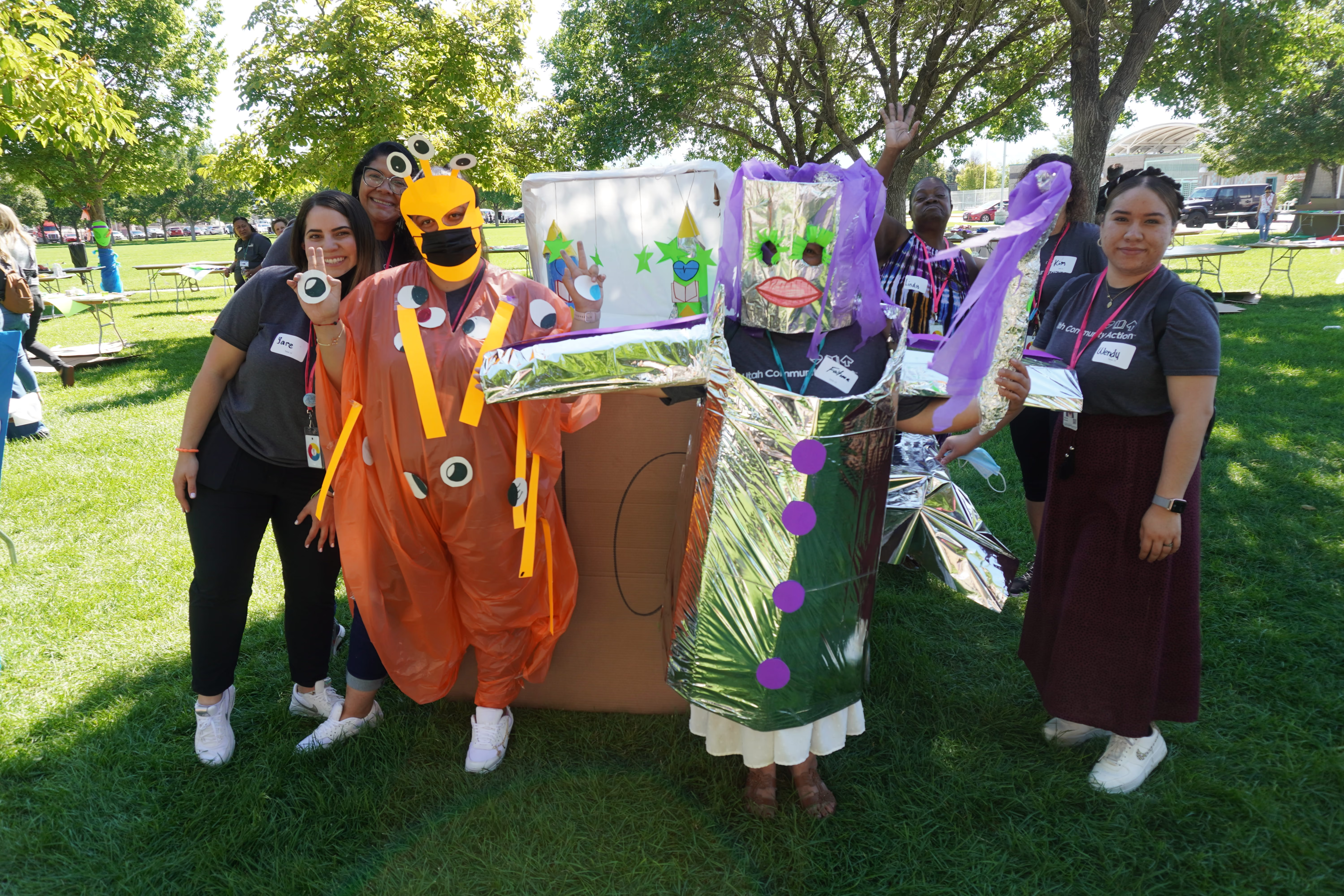
Picture the standard company holiday party, because you've been to it: a rented restaurant room, assigned-ish tables, people talking to the same colleagues they talk to every day, one speech, background music slightly too loud, and a quiet exodus starting around 8:40. It costs real money — often the single biggest people-budget line of the year — and by January it has produced exactly one lasting outcome: a receipt.
Here's the reframe that changes everything: the holiday party is the one night a year the entire company is in one room with permission to have fun. That's not a catering opportunity — it's the best team building slot on the calendar, already budgeted, already attended, already emotionally primed. Companies that treat it that way — replacing the passive dinner with a shared experience (and usually keeping the dinner as the second act) — get the celebration and the connection for roughly the same spend.
This guide is the playbook for that swap: the party formats that actually work, matched to group size and vibe; the December-specific logistics; the inclusivity design that makes "holiday" mean everyone; and the timeline — which starts now, because December capacity is sold in September and October, every year, without exception (why fall books out first).
Why the dinner format fails (a systems diagnosis, not a taste one)
Three structural flaws, none fixable with better catering:
- The seating trap. People sit with their teams — the exact people they already spend forty hours a week with. The company's one full-room night produces zero new connections by design.
- The passivity problem. Dinner gives people nothing to do together, which means the socially confident thrive and everyone else checks the time. (The same reason unstructured mixers underperform structured ones everywhere — the case made in why experiences are replacing icebreakers.)
- The story vacuum. Nothing happens at a dinner. There's no moment to retell, no photo that means anything, no "remember when." The event evaporates by the following Tuesday — an expensive way to produce nothing.
An engagement footnote makes the stakes real: with Gallup's 2026 numbers putting U.S. engagement around 31% — an eleven-year low — the year-end gathering is one of the few moments a company gets to make everyone feel the place is worth belonging to. Spending it on chicken and a speech is a waste of the season's best raw material.
The two-act party: experience first, celebration second
The format that consistently works isn't "activity instead of party" — it's activity as Act One, party as Act Two. Ninety minutes to two hours of a facilitated shared experience on mixed teams, flowing directly into food, drinks, music, and awards. The architecture solves every dinner flaw at once: mixing happens on purpose (rosters engineered across departments), everyone has something to do and talk about, and Act Two's socializing runs on the fuel Act One created — people arrive at the party portion already laughing about something that just happened. The awards ceremony bridges the acts and gives the evening its narrative spine.
Bonus: Act One usually happens in the afternoon, which lets companies run the whole thing as an extended half-day format — work morning, experience afternoon, celebration evening — capturing everyone before holiday calendars scatter and making attendance effortless for parents and commuters (a real inclusion issue with evening-only parties; more below).
The best holiday party formats for 2026
The charity build — December's strongest play
Nothing fits the season like a party whose centerpiece is giving. Teams compete and build — bikes for local kids, care kits, food-bank hauls, even guitars for school music programs — and the finale is the handover, often with recipients present. It's the only party format that reliably produces tears of the good kind, it photographs like the company's values made visible, and it converts the party budget into actual goods for actual people. Full format menu and planning detail: the charity guide.
The game-show spectacular
A Minute to Win It tournament in holiday dress — bracket structure, mixed-department teams, an emcee, increasingly ridiculous challenges, a trophy someone will defend at their desk until spring. The most reliably fun format in the catalog, works indoors in any December weather, scales from 20 to 300, and needs nothing from the venue but a room.
The winter builds
Competition with a physical payoff: Spuds of Thunder for maximum comedy, a Domino Effect build for the single best finale in team building — the whole company holding its breath around one chain reaction is peak holiday-party energy (why that moment outperforms everything).
The culinary competition
An Iron Chef battle is the elegant dinner-replacement: teams cook, judges judge, and then — the trick — the competition food becomes part of the meal. For wine-culture teams, a Divine Wine experience plays the sophisticated version. Both merge Act One and Act Two into one seamless evening.
The performance night
Lights, Camera, Action turns departments into film crews and the party into a premiere — the screening is the entertainment, and the resulting footage outlives every party photo ever taken. Junkyard Orchestra does the same with music for groups that want to end the year loud.
More seasonal ammunition
For activity-level ideas beyond the party formats — including smaller-scale and in-office options — the existing seasonal libraries go deeper: 15 Christmas team building activities, high-impact Christmas activities, and winter event planning. For January follow-through, new-year experiences keep the momentum.
Matching format to group size
- 15–40 people: The culinary battle or a wine experience — intimate formats where everyone's in one story. A single-bracket game show also shines here. Small-group design principles: the small-groups guide.
- 40–120 people: The sweet spot for everything — charity builds with 6–15 teams, game-show tournaments with real bracket drama, film nights with enough crews for a genuine festival. Run it at your office and the venue line disappears (the office playbook).
- 120–500+: Multi-zone operations — parallel activity stations, wave scheduling, and a single shared finale (the domino reveal, the donation handover, the awards). This tier is bought on operational competence; the mechanics are in the the large-groups guide and large-group programs.
- Distributed companies: December is the natural gather month — many hybrid companies make the holiday party their Q4 fly-in anchor (the hybrid model), with per-office satellite parties run to one consistent standard in each city.
Making "holiday" mean everyone
The experience-first format is quietly the most inclusive party design available, because the centerpiece is an activity rather than a specific tradition. Design rules that finish the job:
- Theme the season, not a holiday. "Winter Games," "Year-End Championship," "The Giving Build" — celebration frames that include every tradition and none. (Full inclusive-design framework: inclusive team building.)
- Make alcohol a sidebar, never the spine. Activity-first parties do this automatically — the fun doesn't depend on the bar, which changes the night for non-drinkers, early-career staff, and everyone's HR team.
- Respect the clock. The afternoon-into-evening shape lets parents and long-commuters fully attend Act One even if they skip Act Two — versus the evening-only party they simply miss.
- Design roles, not just teams. Good facilitation gives the quiet accountant and the sales extrovert equally real jobs — strategist, builder, timekeeper, judge — so participation never means performance. Physical accessibility gets engineered per person, not assumed.
December logistics and the booking timeline that actually matters
- Book by mid-October. The industry's December delivery capacity — crews, equipment, dates — sells out 6–10 weeks ahead, and the first two weeks of December go first. Booking in November means choosing from what's left; booking in September means choosing, period.
- Pick week 1–2 of December. Attendance drops sharply after the 15th as PTO begins. The first Friday of December is the unofficial championship slot.
- Afternoon-into-evening beats evening-only. Better attendance, better inclusion, and the venue math improves — your office hosts Act One free, and only Act Two needs catering.
- One planning conversation covers everything if you go turnkey: format, teams, equipment, crew, setup, awards, teardown (what fully managed includes). HR's job shrinks to the guest list and the toast.
- Fold it into the annual rhythm. The holiday event is the natural Q4 anchor of a yearly program — book it inside an annual partner arrangement and next December's date is already held before this year's wrapping paper is recycled. More event-calendar context: the corporate event ideas guide.
The bottom line
You're already spending the money. You already have the room, the date, and everyone's attendance. The only question is whether December produces a receipt or a story — and that's decided entirely by format. Replace the passive dinner with a shared experience, keep the celebration as the reward, point the whole thing at giving if you want the strongest version, and book it before October closes the calendar.
FullTilt designs and delivers holiday experience events — charity builds, tournaments, culinary battles, and more — fully managed at offices and venues across North America. Tell us your headcount and your week — we respond in 15 minutes, and December dates are going now.