

By function · Customer service
Support teams absorb every customer's worst day, then get judged on a scoreboard. The team building that works for them is not a pizza party. It is structured recovery, better handoffs with product and engineering, and recognition that actually reaches the frontline. Here is how to build it, shift constraints included.
FullTilt Team Development · Updated September 2026 · 15 min read
Ask a support manager what their team needs and you will rarely hear "an icebreaker." You will hear about the agent who took forty angry calls before lunch, the escalation that sat with engineering for nine days, the new hire who quit in week six, and the quarterly all-hands where sales got the applause and support got a slide. Customer service teams are measured constantly, recognized rarely, and asked to absorb the emotional cost of every product defect and shipping delay in the company.
That is why generic team building lands so badly with them. A trust fall does not address emotional labor. A happy hour does not fix the handoff to product. What works is deliberately designed: activities that let people recover, that put agents in the same room as the teams who can remove the root causes, and that make recognition visible to the people who never see it. Gallup's 2026 reporting puts U.S. engagement at an eleven-year low of 31%, and roughly 70% of the variance in team engagement traces back to the manager, which for support leaders is both a warning and a lever.
This guide is built for that lever. It covers the four outcomes support team building should target, how to schedule around coverage, 30 activities grouped by what they fix, and how to measure the effect on attrition and internal escalation time. It complements our function-specific guides for sales teams, engineers and finance teams, and the broader look at high-burnout industries.
Why support teams need different team building
Emotional labor with no recovery window
A support agent's day is a sequence of other people's problems, often delivered with frustration, and the ticket after a brutal call arrives in seconds. Other roles have natural recovery gaps between hard moments. Support does not, which is why resilience and recovery, not "fun," is the first design goal. The workplace mental-health dimension is covered in how team building can improve mental health at work.
Measured constantly, recognized rarely
Average handle time, first-contact resolution, CSAT, occupancy: support is one of the most instrumented functions in any company. The dashboards are useful, but they create a culture where people are only ever visible when a number dips. Any program that does not include a recognition mechanism is leaving the biggest lever untouched.
Dependent on teams they rarely meet
Most of what frustrates customers is not caused by support and cannot be fixed by support. The bug is engineering's, the policy is finance's, the delay is logistics'. When agents have no relationship with those teams, escalations become tickets in a void. When they have shared a build or a competition with a PM, escalations become a message to someone they know. That relationship is the highest-ROI thing team building can create for a support org, which is the same lesson in why cross-functional teams fail.
Shift structures that make "everyone in one room" impossible
The queue does not pause. Any program that assumes the whole team can leave at 2 p.m. is a program that will not happen. Formats have to be short, repeatable and cohort-friendly, which rules out most all-day offsites and favors the half-day and on-site models described in half-day team building and office team building.
The four outcomes that matter for support teams
Every activity in this guide maps to one of these. If a proposed event maps to none of them, it is a party, which is fine, but it is not team building for support.
- Recovery and resilience. Give people a genuine break from the queue that also builds the peer relationships they lean on afterward.
- Cross-team handoffs. Build relationships with product, engineering, operations and sales so escalations move faster and with less friction.
- Communication under pressure. Practice the exact skill the job demands (clear, calm, structured communication with incomplete information) in a setting where the stakes are a game, not a customer.
- Recognition that reaches the frontline. Make good work visible to peers and to the rest of the company in a way that a dashboard never does.
Running events around shift coverage
This is where most support team building dies in planning. The fix is a cohort model:
- Split into two or three cohorts and run the identical program for each, either across one day (morning, midday, afternoon) or across a week. Facilitated programs are built for exact repetition; self-run events tend to drift by the third cohort.
- Pick the low-volume window. Pull the last 90 days of contact-volume data by hour and weekday. Mid-week, mid-morning is common, but your data decides.
- Arrange overflow coverage with a partner team, a BPO, or a temporary self-service push, and adjust the SLA for the window in writing with stakeholders. Nobody objects to a planned 90-minute dip announced two weeks out; everyone objects to a surprise.
- Keep sessions to 60 to 120 minutes. Long enough to do something real, short enough that the queue survives. The quick activities library covers the 15-minute end of the spectrum for shift huddles.
- Include remote and outsourced agents deliberately. Distributed support is the norm; the hybrid playbook covers how to give remote cohorts their own hosted session rather than a webcam view.
Recovery and resilience activities (1 to 8)
1. The decompression build
60 to 90 min · cohorts of 12 to 40 · facilitated
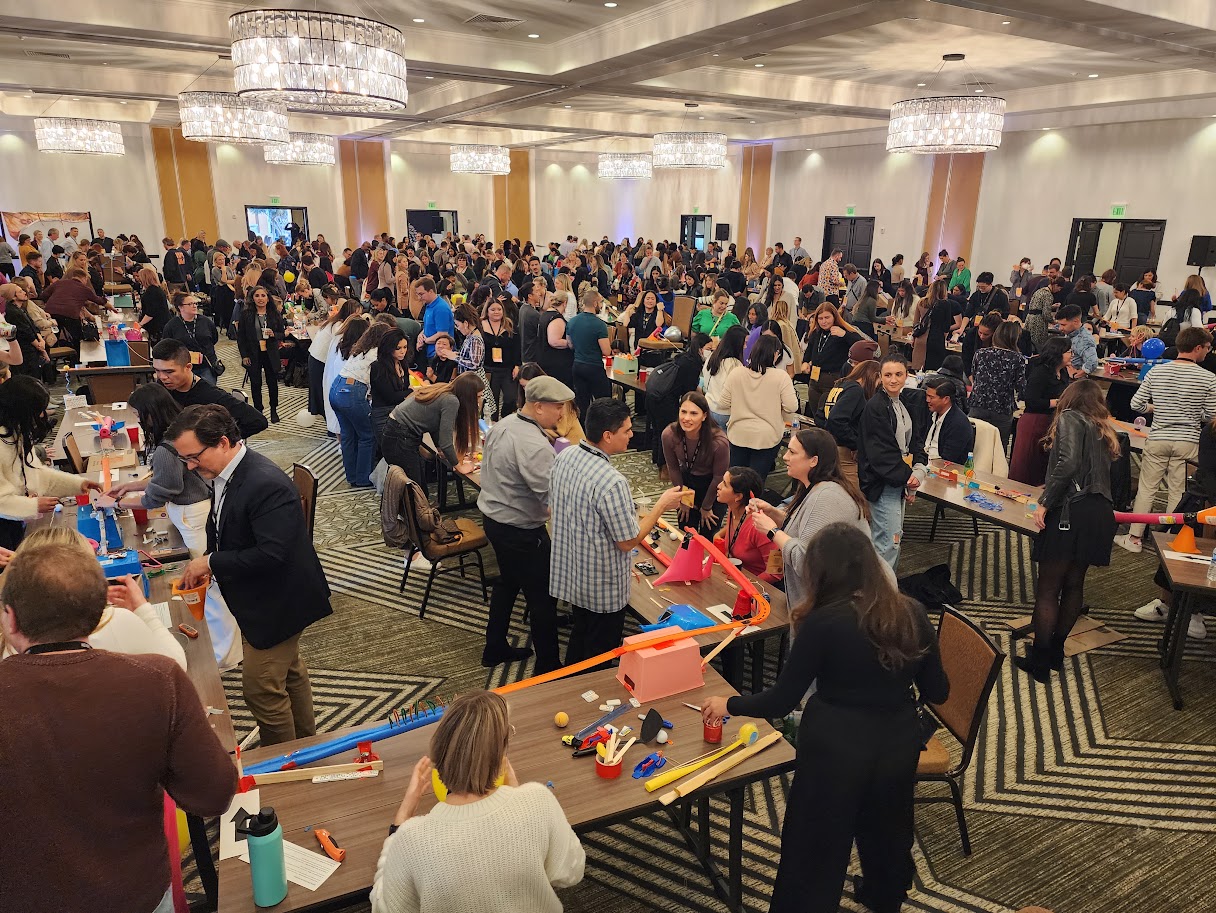
A hands-on construction challenge with no customer, no phone and a tangible result: a cardboard boat, a domino chain, a rocket. The point is absorption. Ninety minutes of focused, physical problem-solving is a better reset than ninety minutes of "relaxing," and the team leaves with something they made.
2. Peer support triads
30 min · groups of 3 · none
Structured conversation in threes: one person describes the hardest interaction of the week, the second reflects it back, the third names one thing the first person did well. Rotate. It formalizes the informal debrief that good support teams already do and extends it to new hires who have nobody to debrief with.
3. The worst-call hall of fame
20 min · any size
Agents submit anonymized "you will not believe this" interactions; the team votes on the most absurd. Laughing at the shared absurdity of the job is a documented coping mechanism in frontline work, and it turns isolated bad days into collective folklore.
4. Micro-recovery rituals for shift huddles
5 min · any size
A two-minute breathing reset, a one-word check-in, a quick "win of the shift" round. Tiny, but run daily they matter more than any single event. Our micro team building moments guide has a full set.
5. Culinary competition on the low-volume day
2 hours · 20 to 100
An Iron Chef style cook-off in the lowest-volume window of the month. Physical, social, nothing to do with tickets, and the food becomes the team meal.
6. Wellness challenge with a team scoreboard
4 weeks · any size
Steps, sleep, or hydration tracked by team rather than individual. The team framing matters: support agents tend to compete hard when the score is shared. Ideas in 14 wellness activities for employees.
7. The off-phone charity hour
60 to 90 min · cohorts of 15 to 60
A care-kit assembly for a local shelter (Mission Incredible: Backpack Care Kit). Support people are, by selection, helpers; giving them a chance to help someone who says thank you is disproportionately restorative.
8. Quarterly "queue-free" half day
3 to 4 hours · full team in cohorts
A recurring commitment that is more powerful than any single event: once a quarter, each cohort gets a facilitated half day off the queue. Predictability is the benefit. The cadence argument is in how often should you do team building.
Cross-team handoff activities with product and engineering (9 to 16)
These are the highest-value activities in the guide. Every one puts support in mixed teams with the people who own root causes.
9. The mixed-team build
2 hours · 30 to 200 · facilitated
Deliberately mixed teams (two agents, one PM, one engineer, one ops person) tackle a build like the Bicycle Build Challenge or Cardboard Train-ing Express. The relationships formed in two hours of shared problem-solving are the ones that make next month's escalation a Slack message instead of a ticket.
10. Ticket-to-root-cause relay
60 min · mixed teams of 5
Give each team five anonymized real tickets. Support explains the customer impact, engineering explains the technical cause, product explains the trade-off. Each team presents one ticket where they would change the current process. Half workshop, half team building, and it produces an actual backlog.
11. Swap-a-shift shadowing
2 hours · pairs
PMs and engineers sit with an agent for two hours of live queue (listening only). Then the agent sits in a sprint planning or design review. Not a game, but nothing builds cross-team empathy faster.
12. The escalation escape room
60 min · mixed teams of 6
An escape-style puzzle chain where each clue requires information only one function holds (the agent has the customer history, the engineer has the log, the PM has the roadmap). Teams learn viscerally that nobody can solve it alone. Design notes in escape room team building.
13. Product feedback jam
90 min · 20 to 60
Agents pitch the three product changes that would most reduce ticket volume; product and engineering vote and commit to investigating one. The commitment is the team-building part; agents remember whether it was honored.
14. Cross-functional Amazing Race
2 to 3 hours · 30 to 300
Mixed teams race between stations that each demand a different function's strength. Our Amazing Race program is built for exactly this kind of deliberate mixing.
15. Joint charity build
2 to 3 hours · 30 to 500+
A company-wide Helping Hands prosthetic-hand assembly or bike build with support and engineering on shared teams. Purpose plus mixing. The full range of formats is in the charity team building guide.
16. The "day in the life" storytelling round
30 min · any size
Three agents tell the true story of one ticket from first contact to resolution, including every handoff and wait. Engineers and PMs listen. No slides. The reaction in the room is usually the beginning of a process change.
Communication-under-pressure challenges (17 to 23)
Support's core skill is calm, structured communication with incomplete information and a clock running. These formats practice it in a setting where a mistake costs points instead of a customer. For the underlying communication mechanics, see team building activities for better communication.
17. Blindfold build with a single speaker
30 min · teams of 5
One person can see the target structure but cannot touch; the builders are blindfolded. The speaker must give instructions clearly enough to work. It is the support call, physically.
18. Minute to Win It: support edition
60 to 90 min · 20 to 300
Sixty-second challenges under a countdown, in a bracket. Minute to Win It is fast, loud, and structurally close to the pace of a queue, which is exactly why support teams love it.
19. Telephone with a technical script
15 min · teams of 6 to 8
A technical instruction is whispered down a line of eight people; the last person performs it. Compare the result with the original. Funny, and a sharp lesson in why written handoffs beat verbal ones.
20. The de-escalation improv round
45 min · groups of 8 to 12 · facilitated
Facilitator plays the frustrated customer with a twist card (wrong account, language barrier, deadline). Agents practice in pairs, then swap. Debrief on what worked. Closer to training than team building, so pair it with something lighter.
21. Trivia with a handle-time clock
45 min · any size
Product-knowledge trivia where teams score for accuracy and speed. Build it with the structures in trivia team building and use real knowledge-base questions.
22. Scavenger hunt in the knowledge base
30 min · teams of 3
Teams race to find answers to twenty obscure questions using only the internal KB. Surfaces documentation gaps and doubles as onboarding for new hires; see team building for new hires.
23. Broken Bear repair challenge
90 min · 20 to 150
Teams diagnose and repair a "patient" against the clock with limited instructions, which is a support ticket in disguise. Our Broken Bear program also ends with the repaired bears donated to children's charities.
Recognition rituals that reach the frontline (24 to 30)
Recognition is the cheapest lever in this guide and the most often skipped. The rules that make it work, drawn from the same research behind our employee appreciation week guide: specific beats generic, peer-driven beats top-down, and public beats private for the things that deserve it.
24. Save of the week, with the ticket
Each week, one interaction is read aloud (anonymized) in the huddle with what the agent did well. Specific, real, and it teaches the whole team what excellent looks like.
25. The cross-team thank-you wall
Engineers and PMs post thanks to specific agents for specific escalations, and vice versa. The cross-functional direction is the point: it makes the relationship visible to leadership.
26. Customer-voice reading
Monthly, read three unsolicited positive customer comments aloud, naming the agent. Support hears complaints all day; hearing the praise out loud is disproportionately powerful.
27. Peer-voted quarterly awards with real categories
Calmest under fire, best documentation, most-helped-a-teammate. Peer-voted, announced at a company all-hands so the rest of the org sees it. The categories should reward the behaviors you want more of.
28. The escalation graduation
When a long-running escalation is finally fixed, bring the agent who fought for it and the engineer who fixed it up together. It closes the loop publicly and teaches the company that support drives product quality.
29. Support week
One week a year (many companies align it with Customer Service Week in early October) where other departments cover small tasks, leadership takes a shift, and the anchor event is a facilitated program. Ideas in employee appreciation day ideas.
30. Written gratitude from the teams support protects
Sales, product and leadership each write one specific note to the support team about a moment support saved a deal, a launch or a relationship. Read them at the end of an event. Same mechanics as the gratitude rituals in Thanksgiving team building, and the format that support managers tell us lands hardest.
How to measure whether it worked
Do not promise a CSAT jump from a team event; too many other variables move CSAT. Measure the things team building actually touches:
The full framework, including how to build a before-and-after comparison that finance will accept, is in team building ROI and measuring the ROI of team building. Gallup's 2026 meta-analysis links top-quartile engagement to roughly 23% higher profitability and about 18% higher productivity in sales, which is the language to use when you present the plan upward.
Mistakes to avoid
- Scheduling on top of peak volume. The team spends the event watching the queue counter and resents it.
- Running it without product and engineering. You get a nicer support team and the same nine-day escalations.
- Mandatory "fun" after a brutal week. Opt-in, always, and read the room; a recovery session may need to be quieter than planned.
- Treating it as a substitute for staffing. Team building cannot fix an understaffed queue, a bad script, or a broken product. The full list of what it will not fix is in seven things team building will never fix.
- One event, then nothing. The cohort half day works because it recurs. A single event in a year of pressure reads as a gesture.
- Forgetting the remote and outsourced agents. If a third of your queue is handled by people who never get invited, the program teaches them exactly where they stand.
The bottom line
Support teams do not need more fun. They need recovery, relationships with the people who own root causes, practice at the skill the job demands, and recognition that reaches them. Design for those four things, schedule in cohorts so the queue survives, include the engineers, and measure attrition and escalation time instead of hoping for a CSAT bump. Do that and team building becomes part of how the support org runs, not a break from it.
FullTilt Team Development runs repeatable cohort sessions, mixed-team builds, and charity programs for support organizations across North America, at your site or a venue, for 15 to 500 or more participants. Tell us your headcount, your shifts and your lowest-volume window; you will have a plan and a price in 15 minutes.